Brief Summary
Read full entryBiology
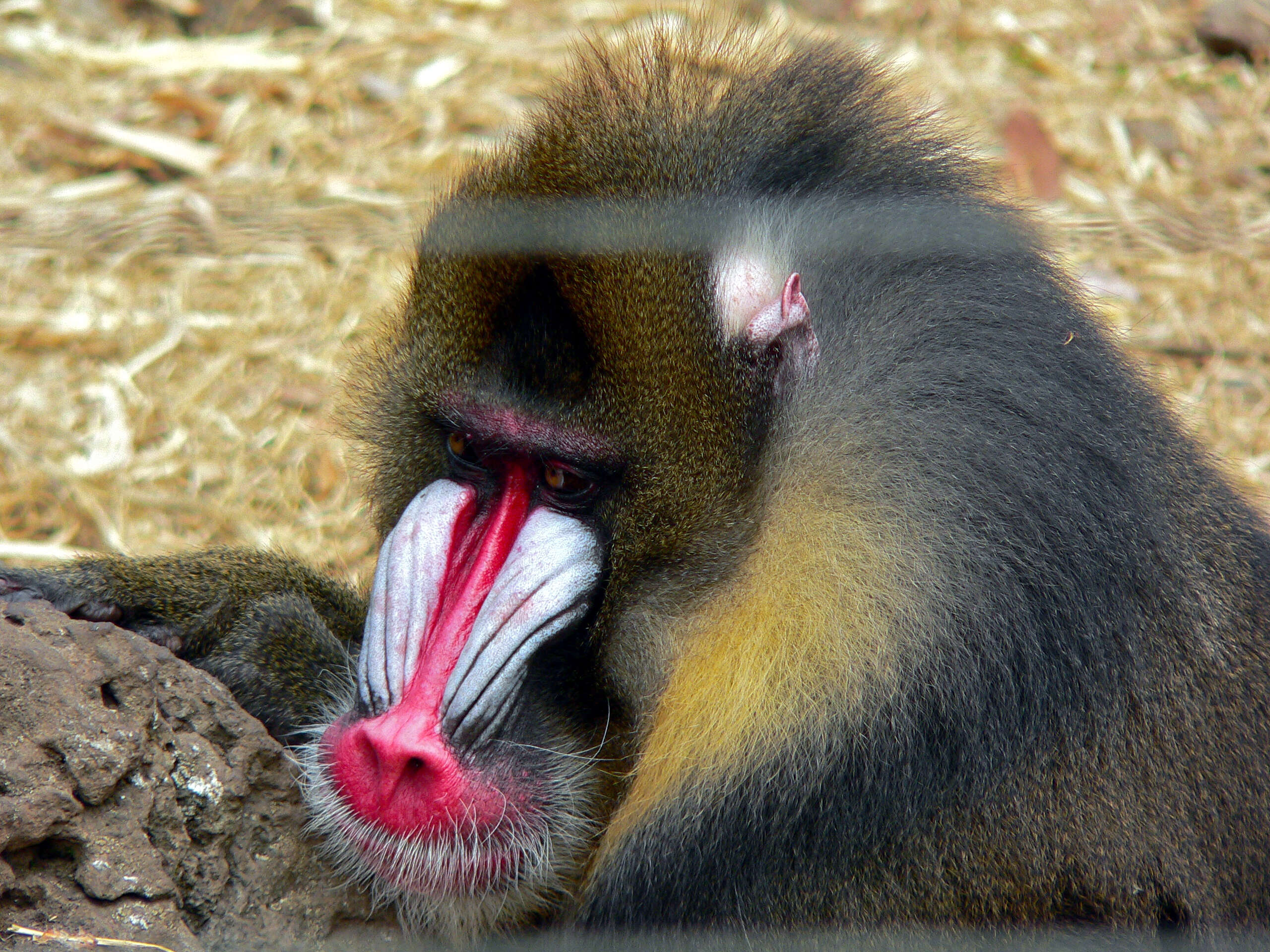
Mandrills live in mixed groups of up to 40, which come together to form troops of more than 600 individuals. There is a strict hierarchy amongst the group: a dominant male, huge and vividly coloured, heads each group, mating with fertile females and fathering almost all of the infants (6). A troop moves over a range of up to 50 km², scent-marking the territory and defending it against rivals. Groups are extremely noisy, with individuals communicating with deep grunts and high pitched crowing as they feed; when it is time to move on the alpha male emits a two-phase grunt. Mandrills spend most of their day foraging for fruits and seeds, eggs and small animals, and when night falls they retire to the trees for safety (5). When the females are receptive their rumps swell and become a more intense red, signaling her reproductive status as 'in oestrus'. Females give birth to one offspring every 18 months or so. The infant clings to her belly, and when it is heavier rides on her back (5).Trusted