Overview

Brief Summary

Biology

Elephants are highly intelligent and long-lived animals; Asian elephants may live as long as 70 years (5). They are extremely sociable and occur in groups of related females, led by the oldest female known as the 'matriarch'. Groups of Asian elephants average six to seven individuals, and will occasionally join with other groups to form herds; although these are more transient than those of African savanna elephants (2). Males leave their natal group when then reach sexual maturity at around six to seven years of age, after which time they are predominantly solitary (2). When males reach 20 years old they start coming into 'musth', an extreme state of arousal when levels of testosterone in the blood may increase 20 times (2). This state lasts about three weeks and during this time the individual will become aggressive and wander widely in search of females (2). Musth may cause males to fight for access to females and also increases their attractiveness to females. Cows only reach sexual maturity at ten years of age (6), and the interval between births may be as long as four years owing to the long gestation time and infant dependency (4). The single calf may suckle from other females in the group as well as their own mother (4). Elephants use their dextrous trunk to pluck at grasses and pass them into their mouths; the average daily intake of food is 150 kilograms of vegetation a day (5). Grasses make up the mainstay of the Asian elephant's diet but scrub and bark are also eaten, and calves may eat their mothers dung to obtain nutrients (2). Where elephants occur near plantations they will readily feed on banana or rice crops. Asian elephants have had a close relationship with man over the centuries; they are still used to clear timber particularly in some of the more inaccessible forests of the continent, and play an important role in the religious and cultural history of the region (2).
Creative Commons Attribution Non Commercial Share Alike 3.0 (CC BY-NC-SA 3.0)

© Wildscreen

Source: ARKive

Trusted

Article rating from 0 people

Average rating: 2.5 of 5

Comprehensive Description

Description

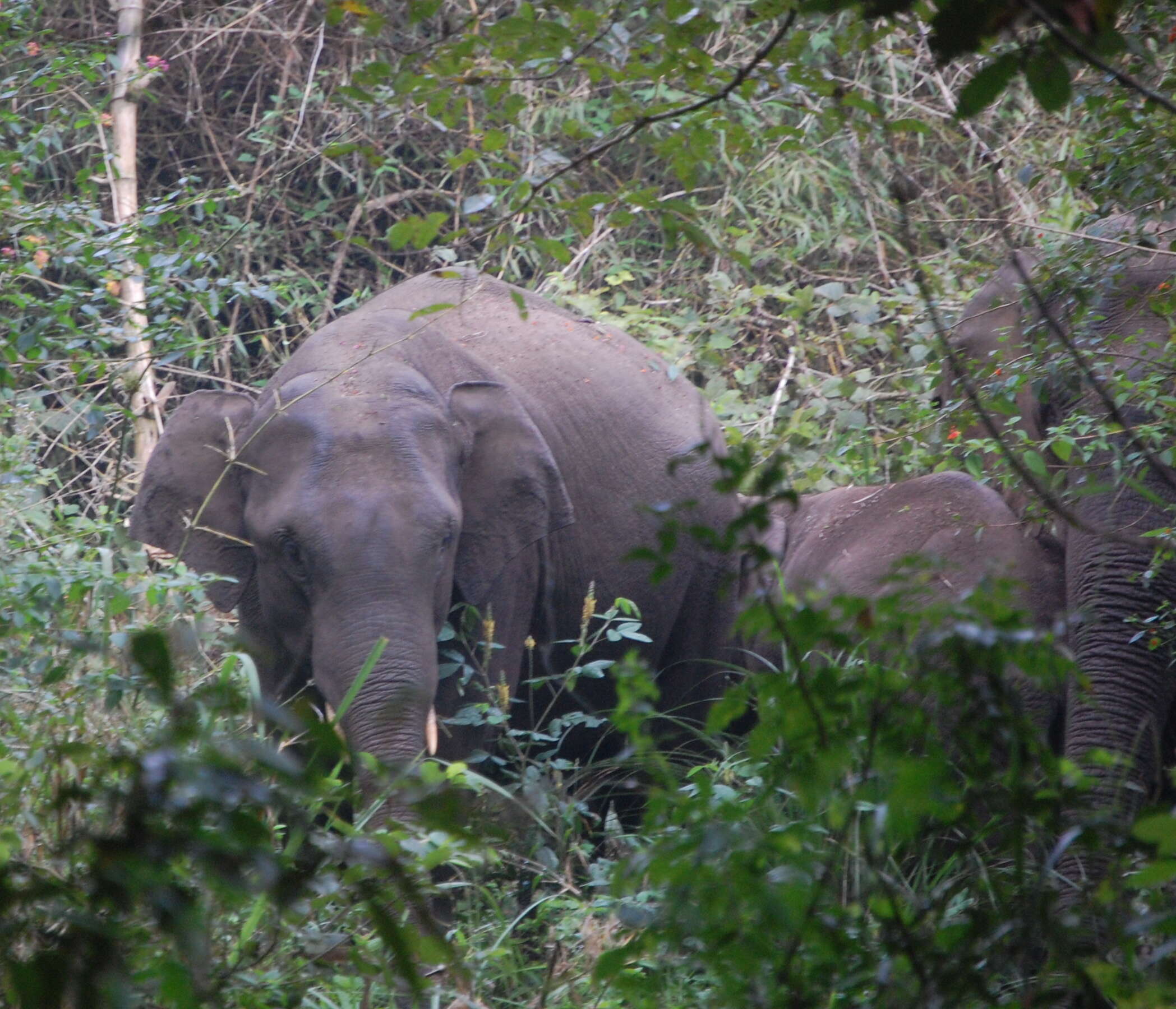
Asian elephants are smaller than their African savannah relatives (Loxodonta africana) and have many other physical features that distinguish them. The ears are smaller and the back is more rounded so that the crown of the head is the highest point of the body (2). One of the characteristic features of an elephant are the modified incisor teeth which are known as tusks, however, only some male Asian elephants have tusks, whilst females (cows) have 'tushes' instead, that are seldom visible (3). Elephants support their stocky body on stout, pillar-like legs, and the nose and upper lip are joined and elongated into a trunk (3). The trunk provides a wide variety of functions from feeding, vocalisation, bathing and fighting; those of the Asian elephant have only a single finger-like process on the base, whilst the African elephant has two (4). The thick, wrinkly skin covering the body is a greyish-brown colour and very dry (5).
Creative Commons Attribution Non Commercial Share Alike 3.0 (CC BY-NC-SA 3.0)

© Wildscreen

Source: ARKive

Trusted

Article rating from 1 person

Average rating: 4.0 of 5

Biology

Elephant reproduction is slow a female gives birth only every four or five years.
  • usually to one calf at a time
  • twinning occurs in roughly one in 100 births
  • Birth weight is around 120 kg
Growth to adulthood is also a long process. In consequence, a tremendous amount of time and energy is expended in the rearing of the young, a task that falls entirely to the females.Elephant cows become sexually mature at the age of 12-14, and begin to reproduce soon after that date. Bulls start producing sperm around the same time, but in practice rarely father any calves until they are approaching 30.Female elephants come into oestrus about every 16 weeks and are sexually receptive for only a day or so during this period, so male and female behaviour must be tightly attuned. A male, especially when in musth, will visit female groups, searching for oestrus females by touching their vulvas with the tip of his trunk. He then touches his trunk tip on a specialised taste gland, the Jacobson’s organ, on the roof of his mouth. It has recently been discovered that the females’ urine contains a pheromone indicating that she is in oestrus. She will also signal her readiness by behavioural cues. Copulation begins as the male reaches over the female’s shoulder with his trunk from behind. The female exerts some choice in the matter and may run off even at this stage. Otherwise, the bull mounts her, placing most of his weight on his back legs. The penis is S-shaped, up to 1m long, and highly muscular, finding and entering the vulva without pelvic movement. The testes are internal (unusual in mammals) and situated near the kidneys; up to a litre of ejaculate is produced. The bull may remain with the female for anything from a few hours to a few days, mating with her occasionally and guarding her from the advances of rival males.Pregnancy lasts about 22 months, and birth, accomplished with the mother squatting or lying, is assisted by other females of the group. The two mammary glands are situated between the front legs (unusual for quadrupedal mammals). Calves suckle until the second or third year or even longer, depending on when the next calf is born. Male calves suckle more frequently than females and, after the first few years, the difference in size between them becomes apparent. Female calves will remain in their family unit for life, eventually taking over its leadership, while males leave at sexual maturity, often aided by increasing impatience of the mother.In drought years, cows are unlikely to come into oestrus, naturally regulating their reproduction. Otherwise, they can conceive at any time of year, but in seasonal environments, a definite peak has been observed some weeks after the onset of the rains. With a 22-month gestation, this ensures that the calf will be born when rainy-season greening has begun two years later, providing the mother with a rich food supply for lactation.
Creative Commons Attribution Non Commercial Share Alike 3.0 (CC BY-NC-SA 3.0)

© Natural History Museum, London

Supplier: Natural History Museum

Trusted

Article rating from 0 people

Average rating: 2.5 of 5

Introduction

Elephas maximus, the asian elephant are under threat due to
  • the destruction of their habitat
  • poachers hunting elephant for their ivory tusks
Current estimates indicate that there are only 30,000 to 40,000 Asian elephants left in the wild – a tenth the number of the African species - with a further 15,000 or so held in captivity.
Creative Commons Attribution Non Commercial Share Alike 3.0 (CC BY-NC-SA 3.0)

© Natural History Museum, London

Supplier: Natural History Museum

Trusted

Article rating from 0 people

Average rating: 2.5 of 5

Distribution

Range Description

Asian elephants formerly ranged from West Asia along the Iranian coast into the Indian subcontinent, eastwards into South-east Asia including Sumatra, Java, and Borneo, and into China at least as far as the Yangtze-Kiang. This former range covered over 9 million km² (Sukumar 2003). Asian elephants are now extinct in West Asia, Java, and most of China The western populations (Elephas maximus asurus) were probably extinct by 100 BC, and the main Chinese populations (sometimes referred to as E. m. rubridens) disappeared sometime after the 14th century BC. Even within its surviving range in South and South-east Asia, the species has been in retreat for hundreds if not thousands of years, and generally survives only in highly fragmented populations (Olivier 1978; Sukumar 2003; Blake and Hedges 2004).

Asian elephants still occur in isolated populations in 13 states, with a very approximate total range area of 486,800 km² (Sukumar 2003; but see Blake and Hedges 2004). The species occurs in Bangladesh, Bhutan, India, Nepal, and Sri Lanka in South Asia and Cambodia, China, Indonesia (Kalimantan and Sumatra) Lao PDR, Malaysia (Peninsular Malaysia and Sabah), Myanmar, Thailand, and Viet Nam in South-east Asia. Feral populations occur on some of the Andaman Islands (India).

The elephants of Borneo were believed to be feral descendants of elephants introduced in the 14th–19th centuries (Shoshani and Eisenberg, 1982; Cranbrook et al., 2008); however, recent genetic evidence suggests they are indigenous to the island (Fernando et al., 2003; but see Cranbrook et al., 2008).

The species was once found throughout Sri Lanka, but today elephants are restricted mostly to the lowlands in the dry zone where they are still fairly widespread in north, south, east, north-western, north-central and south-eastern Sri Lanka; but with the exceptions of small remnant populations in the Peak Wilderness Area and Sinharaja Area, elephants are absent from the wet zone of the country. The species continues to lose range to development activities throughout the island.

Once widespread in India, the species is now restricted to four general areas: northeastern India, central India, northwestern India, and southern India. In northeastern India, the elephant range extends from the eastern border of Nepal in northern West Bengal through western Assam along the Himalaya foothills as far as the Mishmi Hills. From here it extends into eastern Arunachal Pradesh, the plains of upper Assam, and the foothills of Nagaland. Further west, it extends to the Garo Hills of Meghalaya through the Khasi Hills, to parts of the lower Brahmaputra plains and Karbi Plateau. Elsewhere in the south in Tripura, Mizoram, Manipur, and the Barak valley districts of Assam, isolated herds occur (Choudhury, 1999). In central India, highly fragmented elephant populations are found in the States of Orissa, Jharkhand, and the southern part of West Bengal, with some animals wandering into Chattisgarh. In north-western India, the species occurs in six fragmented populations at the foot of the Himalayas in Uttaranchal and Uttar Pradesh, ranging from Katerniaghat Wildlife Sanctuary in Bahraich Forest Division in the east, to the Yamuna River in the west. In southern India, elephants occur in the hilly terrain of the Western Ghats and in parts of the Eastern Ghats in the states of Karnataka, Kerala, Tamil Nadu, and, relatively recently, Andhra Pradesh. There are eight main populations in southern India, each fragmented from the others: northern Karnataka; the crestline of Karnataka–Western Ghats; Bhadra–Malnad; Brahmagiri–Nilgiris–Eastern Ghats; Nilambur–Silent Valley–Coimbatore; Anamalais–Parambikulam; Periyar–Srivilliputhur; and Agasthyamalais.

In Nepal, elephants were once widespread in the lowland Terai, but are now restricted to a few protected areas along the border with India: Royal Chitwan National Park, Parsa Wildlife Reserve, Royal Bardia National Park, and Royal Suklaphanta Wildlife Reserve, and their environs. There is some movement of animals between these protected areas and between Bardia National Park and the adjacent parts of India.

In Bhutan, all the existing elephant populations are found along the border with India. They are reported from Royal Manas National Park, Namgyal Wangchuk Wildlife Sanctuary, Phipsoo Wildlife Sanctuary, and the Reserve Forests such as Khaling Wildlife Sanctuary, Dungsum, and Mochu. In the past, elephants made seasonal migrations from Bhutan to the grasslands of India during the wetter summer months of May to October, returning to their winter range in Bhutan from November. Now these movements are restricted as a result of loss of habitat on the Indian side and fragmentation of habitat on the Bhutan side.

In Bangladesh, the species was once widespread, but today it is largely restricted to areas that are relatively less accessible to humans, mainly Chittagong and the Chittagong Hill Tracts in the southeast. In addition, some animals periodically visit the New Samanbag area of Maulvi Bazar District under the Sylhet Forest Division in the north-east of the country, coming from the neighbouring Indian states of Tripura, Meghalaya, and Assam.

The Asian elephant has a wide, but highly fragmented, distribution in Myanmar. The five main areas of elephant abundance are: the Northern Hill Ranges, the Western Hill Ranges, Pegu Yoma (central Myanmar), Tenasserim Yoma (in the south, bordering Thailand), and Shan State or eastern Yoma.

In Thailand, the species occurs mainly in the mountains along the border with Myanmar, with smaller fragmented populations occurring in the peninsula in the south (in several forest complexes, south to the border with Malaysia); in the northeast (in the Dong Phaya Yen-Khao Yai forest complex, including Khao Yai National Park, and the Phu Khieo-Nam Nao forest complex); and in the east (in a forest complex composing the Khao Ang Runai Wildlife Sanctuary, Khao Soi Dao Wildlife Sanctuary, Khao Khitchakut National Park, and Khao Cha Mao National Park).

In Cambodia, elephants are primarily found in the mountains of the south-west and in Mondulkiri and Ratanakiri Provinces. Recent surveys in Keo Sema District (Mondulkiri Province) suggest that important numbers may remain in that area (WCS unpubl. data). Elsewhere, Asian elephants persist in Cambodia in only small, scattered populations (Duckworth and Hedges, 1998).

In the Lao People’s Democratic Republic, elephants remain widely but very patchily distributed in forested areas, both in the highlands and lowlands. Two important and likely viable populations are known, one in Xaignaboli Province west of the Mekong and one on the Nakai Plateau. Other potentially important elephant populations occur in Phou Phanang and Phou Khao Khoay in Vientiane Province; Phou Xang He in Savannakhet Province; Dong Ampham and Dong Khanthung, including Xe Pian, close to Cambodian border; and Nam Et, Nam Xam, Phou Dendin, and Nam Ha in the north, close to the Viet Namese and Chinese borders.

In Viet Nam, only a small population persists now. In the northern part of the country there are no elephants left, barring occasional wanderers into Son La from Lao PDR. In the central and southern parts of the country, very small isolated populations remain in Dak Lak, Nghe An, Quang Nam, Dong Nai, and Ha Tinh Provinces.

In China, Asian elephants once ranged widely over much of southern China, including the Fujiang, Guangdong, and Guangxi Provinces (Smith and MacKinnon, in press). The species was extirpated in southern Fujiang and northern Guangdong during the 12th century, but evidence indicates persistence in Guanxi into the 17th century (Smith and MacKinnon, in press). All that now remains of this once widespread elephant population in China is the remnant in Yunnan where the species survives in three prefectures: Xishuangbanna, Simao, and Lincang.

In Peninsular Malaysia, the species is still widely distributed in the interior of the country in the following States: Pahang (which probably has the largest population), Perak, Johor, Kelantan, Terengganu, Kedah, and Negeri Sembilan (where very few animals remain).

On Borneo, elephants only occur in the lowlands of the northeastern part of the island in the Malaysian State of Sabah and adjacent parts of Kalimantan (Indonesia). In Sabah, they occur in forested areas in the south, centre, and east of the State in the following Districts: Kinabatangan, Sandakan, Beluran, Lahad Datu, Tawau, and Pensiangan. In Kalimantan, elephants occur only in the Upper Sembakung River in Tindung District. The origin of the elephants of Borneo remains unclear and the subject of debate. Due to the limited distribution of the island’s elephant population it is argued by some that the species was not indigenous, but descended from imported captive elephants (Medway 1977; Cranbrook et al., 2008). However, others argues that while captive elephants have undoubtedly been brought to Borneo, genetic analyses have shown that the elephants found on Borneo are genetically distinct, with molecular divergence indicating a Pleistocene colonization and subsequent isolation (Fernando et al., 2003)

On Sumatra (in Indonesia), the elephant was once widespread, but now survives only in highly fragmented populations. In the mid-1980s, 44 discrete elephant populations were known to exist in Sumatra’s eight provinces, 12 of these were in Lampung Province (Blouch and Haryanto, 1984; Blouch and Simbolon, 1985). However, by 2003, only three of Lampung’s 12 populations were extant (Hedges et al., 2005). An unknown number of Sumatra’s other elephant populations remain (Blake and Hedges, 2004), and those that do are threatened by habitat loss, poaching, and as a result of conflict with humans (Santiapillai and Jackson, 1990; Hedges et al., 2005). Nevertheless, the island is thought to hold some of the most significant populations outside of India. For example, recent surveys in Lampung Province’s two national parks, Bukit Barisan Selatan and Way Kambas, produced population estimates of 498 (95% CI=[373, 666]) and 180 (95% CI=[144, 225]) elephants, respectively (Hedges et al., 2005). Bukit Barisan Selatan NP is therefore a critically important area for Asian elephant conservation. The challenge now is to protect these populations from further habitat loss and poaching.
Creative Commons Attribution Non Commercial Share Alike 3.0 (CC BY-NC-SA 3.0)

© International Union for Conservation of Nature and Natural Resources

Source: IUCN

Trusted

Article rating from 0 people

Average rating: 2.5 of 5

Geographic Range

Parts of India and Southeast Asia, including Sumatra and Borneo. Asian elephants were formerly widely distributed south of the Himalayas, throughout Southeast Asia, and in China as far north as the Yangtze River.

Biogeographic Regions: oriental (Native )

Creative Commons Attribution Non Commercial Share Alike 3.0 (CC BY-NC-SA 3.0)

© The Regents of the University of Michigan and its licensors

Source: Animal Diversity Web

Trusted

Article rating from 0 people

Average rating: 2.5 of 5

Distribution

Distribution
The current distribution of the Asian elephant lies in the Indian subcontinent and southeast Asia. The principal populations are in:
  • Burma
  • Cambodia
  • India
  • Indonesia (Sumatra)
  • Laos
  • Malaysia
  • Sri Lanka
  • Thailand
  • Vietnam
  • Small populations (fewer than 500 individuals) in Bangladesh, Bhutan, southwest China, Indonesia (Kalimantan) and Nepal.
About half the total world population is in India, and half of that in the southwest of the country. In former times, the range extended almost continuously from the Near East to the Pacific coast of China, but in the past two hundred years this has become greatly reduced and fragmented.
Creative Commons Attribution Non Commercial Share Alike 3.0 (CC BY-NC-SA 3.0)

© Natural History Museum, London

Supplier: Natural History Museum

Trusted

Article rating from 0 people

Average rating: 2.5 of 5

Historic Range:
South-central and southeastern Asia

Trusted

Article rating from 0 people

Average rating: 2.5 of 5

Range

This species once roamed through much of the Asian Continent south of the Himalayas, extending into China and south to the islands of Sumatra and Borneo (3). Three subspecies are currently recognised; in Sri Lanka (Elephas maximus maximus), Sumatra (E. m. sumatranus) and on the mainland of Asia (E. m. indicus) (2). Some scientists also place the Bornean elephant as a separate subspecies (E. m. borneensis) (3).
Creative Commons Attribution Non Commercial Share Alike 3.0 (CC BY-NC-SA 3.0)

© Wildscreen

Source: ARKive

Trusted

Article rating from 0 people

Average rating: 2.5 of 5

Physical Description

Morphology

Physical Description

Head and body length is 550 to 640 cm and shoulder height is 250 to 300 cm. The skin is thick and dry, and the few hairs are stiff. Skin color varies from grey to brown. In contrast to African elephants, Asian elephants have ears that are much smaller, the back is not as sloping, the head rather than the shoulders is the highest part of the body, the trunk has a single finger-like projection rather than two, and the hind foot has 4 nails rather than 3. The cylindrical feet consist of reduced phalanges resting on a pad of elastic tissue. The cerebral hemisphere is quite convoluted, resembling that of humans and dolphins. The elephant's teeth are unique. They have a limited number of very large teeth that move forward in the mouth as the animal ages; as the front teeth are worn away with use they are replaced from behind. If an elephant lives long enough to have used up all of its teeth it then starves to death. In males, a pair of incisors is elongated (growing 17 cm per year throughout the animal's life) into tusks. Unlike African elephant females, Asian females do not bear tusks.

Range mass: 3000 to 5000 kg.

Range length: 550 to 640 cm.

Other Physical Features: endothermic ; homoiothermic; bilateral symmetry

Sexual Dimorphism: male larger; ornamentation

Average basal metabolic rate: 2336.5 W.

Creative Commons Attribution Non Commercial Share Alike 3.0 (CC BY-NC-SA 3.0)

© The Regents of the University of Michigan and its licensors

Source: Animal Diversity Web

Trusted

Article rating from 0 people

Average rating: 2.5 of 5

Ecology

Habitat

Habitat and Ecology

Habitat and Ecology
Asian elephants are generalists and they occur in grassland, tropical evergreen forest, semi-evergreen forest, moist deciduous forest, dry deciduous forested and dry thorn forest, in addition to cultivated and secondary forests and scrublands. Over this range of habitat types elephants are seen from sea level to over 3,000 m asl. In the Eastern Himalaya in northeast India, they regularly move up above 3,000 m asl in summer at a few sites (Choudhury, 1999). The Asian elephant is one of the last few mega-herbivores (i.e. plant-eating mammals that reach an adult body weight in excess of 1,000 kg) still extant on earth (Owen-Smith, 1988). Given their physiology and energy requirements, elephants need to consume large quantities of food per day. They are generalists and browse and graze on a variety of plants. The proportions of the different plant types in their diet vary depending upon the habitat and season. During dry season in southern India, Sukumar (1992) observed that 70% of the elephant's diet was browse, while in wet season, grasses make up about 55%. However, in an adjoining area, Baskaran (2002) observed that browse formed only 15% of the diet in dry deciduous forest and 47% of the diet in the thorn forest in the dry season, while the annual diet was dominated by grass (84%). In Sri Lanka, elephants may feed on more than 60 species of plants belonging to 30 families (McKay, 1973). In southern India, Baskaran (2002) recorded that elephants fed on 82 species of plants (59 woody plant species and 23 grass species). Elephants may spend up to 14–19 hrs a day feeding, during which they may consume up to 150 kg of wet weight (Vancuylenberg, 1977). They defecate about 16–18 times a day, producing about 100 kg of dung. Dung also helps disperse germinating seeds.

Elephants range over large areas and home ranges in excess of 600 km² have been recorded for females in south India (Baskaran et al., 1995). In north India, female home ranges of 184–326 km² and male home ranges of 188–407 km² have been recorded (Williams, 2002). Smaller home range sizes, 30–160 km² for females and 53–345 km² for males, have been recorded in Sri Lanka (Fernando et al., 2005). Given their requirements for large areas, elephants are regarded as an “umbrella species” because their conservation will also protect a large number of other species occupying the same area. They are also a premier “flagship species” and are sometimes regarded as a “keystone species” because of their important ecological role and impact on the environment.

The life span of Asian elephants is 60 to 70 years, and males reach sexual maturity at between 10–15 years of age; females usually first give birth in years 15 or 16 (Shoshani and Eisenberg, 1982).

Systems
  • Terrestrial
Creative Commons Attribution Non Commercial Share Alike 3.0 (CC BY-NC-SA 3.0)

© International Union for Conservation of Nature and Natural Resources

Source: IUCN

Trusted

Article rating from 0 people

Average rating: 2.5 of 5

Habitat

Asian elephants mainly use scrub forest, although their habitat can vary. They can be found in the jungle, but generally on the edge where open, grassy areas are accessible. They prefer areas that combine grass, low woody plants, and forest. Elephants rarely forage in one area for more than a few days in a row.

Habitat Regions: tropical ; terrestrial

Terrestrial Biomes: savanna or grassland ; forest ; scrub forest

Other Habitat Features: agricultural

Creative Commons Attribution Non Commercial Share Alike 3.0 (CC BY-NC-SA 3.0)

© The Regents of the University of Michigan and its licensors

Source: Animal Diversity Web

Trusted

Article rating from 0 people

Average rating: 2.5 of 5

Habitat

Habitat
Although occupying exclusively tropical and subtropical zones, Asian elephants live in a wide range of habitats, including:
  • Wet evergreen forest
  • Montane evergreen forest and grassland
  • Semi-evergreen forest
  • Moist deciduous forest
  • Dry deciduous forest
  • Savanna (mixed woodland and grassland mosaic)
  • Bamboo forest
  • Dry scrub
  • Swampy floodplain grassland
They are essentially mixed feeders, so accessibility to a wide range of plants, and to water within one day’s walk, are essential prerequisites.Estimates of natural animal density are hard to make. The carrying capacity will also vary with the environment. In general, an area of about 2mi2 (5km2) per animal is probably typical in the wild, although the figure may be as high as 7.7mi2 (20km2) in rainforest habitats.

Role in ecosystems
Elephants play a significant role in ecosystems. Their massive dung production recycles nutrients back into the soil. They can disperse seeds and fruits over wide distances.Their massive food consumption and habit of destroying trees has led to debate about their role in changing their own environment. It is likely that such phenomena originally formed part of a natural cycle, with long-term balance between different habitats. If a high number of elephants in one area caused a reduction in the tree density, either the elephant population would limit its own reproduction, or the animals would migrate to another area, allowing regeneration of woodland. For many areas of Asia even today, this process still operates and vegetation regeneration seems to keep pace with elephant feeding. The problem is less severe than for African savannah elephants, especially those constrained within the boundaries of reserves.
Creative Commons Attribution Non Commercial Share Alike 3.0 (CC BY-NC-SA 3.0)

© Natural History Museum, London

Supplier: Natural History Museum

Trusted

Article rating from 0 people

Average rating: 2.5 of 5

Habitat

Asian elephants inhabit scrub forest, preferring areas that combine grass with low woody plants and trees (5).
Creative Commons Attribution Non Commercial Share Alike 3.0 (CC BY-NC-SA 3.0)

© Wildscreen

Source: ARKive

Trusted

Article rating from 0 people

Average rating: 2.5 of 5

Trophic Strategy

Food Habits

These elephants eat a wide variety of species of vegetation. They prefer grasses, but they also consume bark, roots, leaves, and stems of trees, vines, and shrubs. Most of an adult's activities involve moving toward and eating food. They eat in the morning, evening, and night but rest during the hottest part of the day. An average day's intake is 150 kg of vegetation, of which only about 44% is actually digested (with the aid of symbiotic gut bacteria). Elephants eat long grasses by plucking a "handful" with their trunk and putting the bundle in their mouth. To eat short grasses, they kick up a pile of dirt with their feet and sweep the grass into their mouth, again with the end of their trunk. Shrubs are eaten by breaking off twigs with the trunk and inserting them into the mouth. To eat the bark off larger branches, they hold the branch with their trunk and rotate it while scraping off the bark with their teeth - similar to the way people eat corn on the cob. Elephants also drink at least once a day (140 liters of water may be consumed in just one day) and so are never very far from a water supply.

Plant Foods: leaves; roots and tubers; wood, bark, or stems

Primary Diet: herbivore (Folivore , Lignivore)

Creative Commons Attribution Non Commercial Share Alike 3.0 (CC BY-NC-SA 3.0)

© The Regents of the University of Michigan and its licensors

Source: Animal Diversity Web

Trusted

Article rating from 0 people

Average rating: 2.5 of 5

Associations

Predation

When a potential predator such as a lion or tiger threatens a calf, the adults form a defensive circle with the calf in the middle. Adult elephants are probably not susceptible to predation by any species other than humans.

Known Predators:

Creative Commons Attribution Non Commercial Share Alike 3.0 (CC BY-NC-SA 3.0)

© The Regents of the University of Michigan and its licensors

Source: Animal Diversity Web

Trusted

Article rating from 0 people

Average rating: 2.5 of 5

Life History and Behavior

Behavior

Communication and Perception

Elephants use their tusks for a variety of purposes: to dig for water, remove bark from trees, maneuver fallen trees and branches, mark trees, rest their trunk on, fight with, and, in domestic animals, for various kinds of work. Elephants are left or right tusked, just as humans are left or right handed. Their trunks, which are formed by the combination of the elongated nose and upper lip, are also very useful. At the tip is a single, finger-like extension that is very sensitive and can be used for precise manipulation of objects. Trunks are used in eating, drinking, smelling and breathing, touching, vocalizing, washing, dusting (throwing dirt onto the back, possibly as a way of deterring insects), and fighting. The senses of touch and hearing are acute, but eyesight is somewhat poor. Young elephants follow their mothers or older sisters by holding on to their tails. When in danger, elephants run with their tails held up, which may signal the danger to the other members of the herd.

Communication Channels: tactile ; acoustic ; chemical

Other Communication Modes: pheromones ; vibrations

Perception Channels: visual ; acoustic ; vibrations

Creative Commons Attribution Non Commercial Share Alike 3.0 (CC BY-NC-SA 3.0)

© The Regents of the University of Michigan and its licensors

Source: Animal Diversity Web

Trusted

Article rating from 0 people

Average rating: 2.5 of 5

Behaviour

Elephant society
  • Elephant society has a structure that has been termed matriarchal.
  • The core element is the family unit, a group of 2-25 individuals, comprising related adult females and their young.
  • Females within the family unit are closely bonded for life.


Male behaviour
By contrast, adult males tend to be solitary, or may form temporary associations of two or three unrelated bulls. They leave the family of their birth at 12-15 years of age and after that time, although they may frequently associate with female groups for feeding or mating, they have no long term bonds with them, or with each other.

Female behaviour
Within the female groups, a few older individuals, and in particular the lead individual, termed the matriarch, are instrumental in deciding the group’s pattern of movement, in defending the group against danger, and in monitoring and responding to other approaching elephants. Calves, especially when very young, stay close to their mother, but all females in the group will aid with in their upbringing. At the approach of a predator, adult females wheel round to face the source of danger, protecting the calves that stay close behind. The members of the family unit may separate for short intervals during the day, but will soon regroup. Family units also form looser associations, or “bond groups”, with more distantly related families. These come together particularly during migration, but even then, individual family groups maintain their integrity within the larger mass of animals.

Social interaction
Elephants are highly intelligent animals with a complex repertoire of social interactions. Within the family group, individuals of all ages greet, and maintain bonding, by touching their trunk tips to each other’s bodies, rubbing together, and with sound communication and scent. In calves, play is a dominant behaviour. They mock charge, chase each other or wrestle with their trunks. Males, from an early age, engage in mock sparring matches. They are also more independent of their mothers than females, a trend that increases as they get older.

Heirarchy
There is a dominance hierarchy among bulls, generally related to their age, size, and power. If two bulls of roughly equal size meet, they assess each other through intertwining trunks, pushing and pulling, or lightly engaging their tusks. Rarely, sparring may lead to a full-scale fight, sometimes (but not always) for access to an oestrus female. The combatants will charge each other with ears outstretched, or cross tusks and attempt to twist each other off-balance, all accompanied by loud vocalisations. Each tries ultimately to gore the other with his tusks, sometimes resulting in fatal wounds by deep penetration of the head or chest. Broken tusks may result from twisting with the full body weight. The fight will end either by withdrawal of the weaker animal, or with death.

Attraction
Male elephants enter a periodic state called ‘musth’. The temporal gland, located on the side of the head between the ear and the eye, produces a dark fluid (temporin) with a strong musky odour. Musth males also intermittently dribble urine. A male elephant generally enters musth once a year, for a period of anything up to a month, the time of year varying with the animal. Musth bulls have heightened levels of testosterone and are very aggressive, especially toward other bulls. Musth is associated with heightened sexual activity, although non-musth bulls also mate. Females also have a temporal gland, which can occasionally be seen to ooze secretion, and elephants have been observed rubbing their cheeks against trees, so temporin may have broader communication functions.

Senses
Elephants have relatively poor vision, but highly developed senses of taste and smell. They obtain chemical cues by using their trunks to touch each other’s genitals, mouths, temporal glands, and urine. They also often lift their trunks and rotate the open tips, testing the air for the scent of other animals in the vicinity. It is very likely that they can identify different individual elephants from these cues.

Communication
Elephants also have acute hearing and communicate through a wide variety of vocalisations. Research has focussed on African elephants, although the situation in Asian elephants is probably similar. At least 25 different calls, audible to the human ear, have been identified, 15 of them in a low-frequency group termed rumbles. Some of them are known to be associated with different events such as musth in a bull and oestrus or copulation in a female. In addition, a range of infrasound vocalisations extends down to 5 Hz, well below the frequency of human hearing. Low-frequency sound is less subject to environmental attenuation, and elephant rumbles and infrasound are audible to other elephants over a range of up to 5 km. It has also been suggested that elephants may communicate over even longer distances as they stamp their feet on the ground, but this theory remains to be tested.

Death, injury, disease
An elephant can live to around 60 years; many die before this age, from disease, injury, starvation, drought, or predation (though the latter is rare for healthy adult animals). A remarkable aspect of elephant behaviour is their response to injured, sick and dead members of their species. Many accounts have been recorded: adult females circling around a wounded animal to prevent further attack; lifting a wounded animal to its feet and shouldering it to safety; jumping into water where a wounded animal has fallen, and heaving it out again; pulling and pushing a calf out of mud where it had become stuck; standing guard over a stricken but living animal lying on the ground; covering the body of a relative with grass and leaves as soon as it had died; returning to the carcass or even skeleton of a dead relative; and tasting, picking up, and moving the remains with their trunks.The idea of an elephant graveyard, a place where elephants go to die, is a myth. Sick and dying elephants often go to a lakeside or river, where there is a ready supply of food and water within easy reach, and several might die in one area for that reason. In times of drought, animals congregate around water holes and many may die there.

Territory
Elephants are not territorial. Although individuals or family units have home ranges, those of different animals overlap and are not defended as such. There are daily and seasonal activity patterns within the home range. They sleep lying down, usually for two to four hours in the early morning. They may also, in the hottest part of the day, stand motionless in the shade, but even when the eyes are closed, they are most likely dozing rather than sleeping.

Movement
Elephants walk or amble, but cannot canter or gallop. A charging animal can attain 5m per second (20 kph), while walking speed ranges from 0.5 – 2.5 m per second (2 – 10 kph). Elephants walk cautiously, appearing to place each foot with care to avoid ground that is too soft or cobbled, for example. Even so, they can manoeuvre very dense terrain and can climb up and down remarkably steep, slippery slopes. In seasonal movements, matriarchs lead their families along the same paths that have been used for generations; these elephant trails, trampled, barren ground 1-2 m wide, can extend for tens of kilometres. They are also adept swimmers, paddling with all four feet and using the trunk as a snorkel.
Creative Commons Attribution Non Commercial Share Alike 3.0 (CC BY-NC-SA 3.0)

© Natural History Museum, London

Supplier: Natural History Museum

Trusted

Article rating from 0 people

Average rating: 2.5 of 5

Life Expectancy

Lifespan/Longevity

The lifespan of Asian elephants is about 70 years.

Average lifespan

Status: wild:
70 years.

Average lifespan

Status: wild:
78.0 years.

Average lifespan

Status: wild:
70.0 years.

Average lifespan

Status: wild:
40.0 years.

Average lifespan

Status: captivity:
69.0 years.

Average lifespan

Status: wild:
60.0 years.

Average lifespan

Status: captivity:
80.0 years.

Average lifespan

Status: captivity:
77.0 years.

Creative Commons Attribution Non Commercial Share Alike 3.0 (CC BY-NC-SA 3.0)

© The Regents of the University of Michigan and its licensors

Source: Animal Diversity Web

Trusted

Article rating from 0 people

Average rating: 2.5 of 5

Lifespan, longevity, and ageing

Maximum longevity: 65.5 years (captivity) Observations: Elephants are long-lived mammals but suffer from teeth erosion as a type of mechanical senescence despite having as much as six sets of molars in a lifetime. Although both sexes may become sexually mature at about 9 years of age, males do not normally reproduce until they are about 15 years old. Full size is attained at about 17 years of age (Ronald Nowak 1999). There is much speculation and anecdotes about the longevity of elephants with reports of animals living more than 80 years. In particular, it has been reported that a male elephant called "Lin Wang" died at the age of 86 in Taipei Zoo (Wiese and Willis 2004). This record is unconfirmed, however, because the animal was estimated to be 26 when it was obtained, which is impossible to verify. Other reports of animals living over 70 years are plausible but have not yet been verified. Therefore, the oldest elephant on record was probably a wild born female that was about 65-66 years when she died in captivity (Richard Weigl 2005).
Creative Commons Attribution 3.0 (CC BY 3.0)

© Joao Pedro de Magalhaes

Source: AnAge

Trusted

Article rating from 0 people

Average rating: 2.5 of 5

Reproduction

Reproduction

Mating System: polygynous

Female Asian elephants bear a single calf (usually) after a gestation of more than a year and a half (18 to 22 months). Their estrus cycle is about 22 days, out of which they are receptive to copulation on only one day, the first day of estrus. There is no seasonality in their reproduction. Females on good quality habitats give birth every three to four years, while the interbirth interval can be much longer among females inhabiting poor quality areas. Newborns weigh about 100 kg and can stand soon after birth. The infant may nurse from its mother or from other lactating females. After a few days it can follow its mother as she goes about her normal activities. Young begin to eat some grass after several months but may continue nursing for 18 months. They also eat their mother's dung, which contains nutrients as well as the symbiotic bacteria that aid in the digestion of cellulose. Mothers continue to supervise their young for several years after weaning. Both sexes become sexually mature at about 14 years of age, but males cannot mate until they can dominate other adult males. Males leave their natal herd at this age, but females remain with their female relatives throughout their lives.

Breeding interval: Under the best of circumstances Asian elephants give birth every three to four years.

Breeding season: Births may occur throughout the year.

Average number of offspring: 1.

Range gestation period: 18 to 22 months.

Average weaning age: 48 months.

Average time to independence: 48 months.

Average age at sexual or reproductive maturity (female): 14 years.

Average age at sexual or reproductive maturity (male): 14 years.

Key Reproductive Features: iteroparous ; year-round breeding ; gonochoric/gonochoristic/dioecious (sexes separate); viviparous

Average birth mass: 107000 g.

Average number of offspring: 1.

Average age at sexual or reproductive maturity (male)

Sex: male:
3287 days.

Average age at sexual or reproductive maturity (female)

Sex: female:
3287 days.

Parental Investment: pre-fertilization (Provisioning, Protecting: Female); pre-hatching/birth (Provisioning: Female, Protecting: Female); pre-weaning/fledging (Provisioning: Female, Protecting: Female); pre-independence (Provisioning: Female, Protecting: Female); post-independence association with parents; extended period of juvenile learning

Creative Commons Attribution Non Commercial Share Alike 3.0 (CC BY-NC-SA 3.0)

© The Regents of the University of Michigan and its licensors

Source: Animal Diversity Web

Trusted

Article rating from 0 people

Average rating: 2.5 of 5

Evolution and Systematics

Evolution

Evolution systematics

The living elephant species are contained within a single family, the Elephantidae, and are the sole remaining representatives of the mammalian order Proboscidea. Names
  • Proboscidea derives from the proboscis, or trunk.
  • elephant derives from the Greek words for a large arch, referring to the elephant’s arched back supported by pillar-like legs.
Closest living relativesBoth DNA and anatomical data indicate that closest living relatives of elephants are the Sirenia
  • dugongs
  • manatees
AfrotheriaElephants and sirenians fall within a larger grouping, a diverse assemblage of mammals named “Afrotheria”, since all are believed to have arisen in Africa from a common ancestor, 70 million or more years ago.including hyraxes, tenrecs, golden moles, elephant shrews (whose long nose is, however, independently acquired from that of the elephant), and the aardvark. Three great branches of the elephant family can be recognized in the fossil record of the last 4 million years or so. These are
  • Elephas and its relatives - including the living Asian elephant,
  • Loxodonta - including the living African elephants
  • Mammuthus - including the woolly mammoth
    • (not to be confused with the very distantly related but similarly named proboscidean Mammut, the American mastodont).
The genus Elephas
  • leading ultimately to Elephas maximus, the Asian elephant,
  • first appears as a fossil in Ethiopia, 5.2 million years ago (mya).
  • lineage produced a diversity of species in Africa, Europe and Asia.
    • African Elephas ekorensis, from around 4.5-4 mya, appears to be close to the common ancestor of this radiation.
  • Elephants entered Asia about 3 mya.
One species, Elephas hysudricus,
  • inhabited northern India and Myanmar between about 2 and 1 mya, and is
  • believed to be close to the ancestry of Elephas maximus.
  • was of large size,
  • massive tusks
  • a well-developed double head-dome like Elephas maximus,
  • remains of the hysudricus-maximus lineage
    • half a million years old in the Middle East
    • 120,000 years ago Elephas maximus is recorded on Java.
Elephas hysudrindicus
  • An earlier form on Java
  • lived from about 1 to 0.5 mya
  • skull and dental anatomy appear too specialised to have given rise to the living species
A recent study of DNA sequences has identified two main genetic groups among Asian elephants. Although now widely dispersed and co-occurring in many areas, these may have originated in separate populations, one in Indonesia and one on the mainland of Asia, which subsequently intermingled. Since the difference between the two genotypes is sufficient to suggest separation a million or more years ago, researchers speculate that these two populations may be those identified in the fossil record as E. hysudricus (continental) and E. hysudrindicus (island Indonesia). This interesting theory must, however, be weighed against the anatomical differences between E. hysudrindicus and E. maximus as well as the observation that maximus replaced hysudrindicus on Java as part of a wave of colonisation from the mainland.There are three currently recognised subspecies of Elephas maximus: E. m. maximus of Sri Lanka and southern India, E. m. sumatrensis of Sumatra, and E. m. indicus throughout the rest of the range. The differences are a matter of degree and are expressed as gradual changes across the range. Elephants from Sri Lanka are the largest, have the darkest skin colour, the largest ears, and are most prone to pink depigmentation of the skin on the face, trunk and ears. Animals from Sumatra are the smallest, lightest in colour, and least prone to depigmentation. Those in between generally show intermediate characters. However, there are exceptions: for example, elephants from western Nepal are perhaps the biggest living anywhere today. And there are other particularities of the populations: most male elephants in Sri Lanka today are tuskless, while the Sumatran subspecies is said to possess an extra pair of ribs (20 instead of the usual 19).The elephants of north-east Borneo present an interesting case: genetically distinct from all other living populations, they may have been isolated there for hundreds of thousands of years, but there is circumstantial evidence that they were instead imported from Java by people in historical times. Reports that the Borneo elephants are ‘pygmies’ are exaggerated: their body size is no different from that of other south-east Asian populations.
Creative Commons Attribution Non Commercial Share Alike 3.0 (CC BY-NC-SA 3.0)

© Natural History Museum, London

Supplier: Natural History Museum

Trusted

Article rating from 0 people

Average rating: 2.5 of 5

Functional Adaptations

Functional adaptation

Trunk emits infrasonic calls: Asian elephant
 

Nasal passages of elephants communicate by emitting vibrations that cause infrasonic sounds.

         
  "The elephant was the first land animal shown to communicate infrasonically--a landmark discovery that came from two independent observations. In 1981, Kansas University scientists Dr. Rickye Heffner and Dr. Henry Heffner were surprised to discover that elephants could detect sound frequencies as low as 17 Hz, which were within the infrasonic range. But why should they be able to do this? What purpose does it serve?"

This sound was described by Dr. Katherine Payne from Cornell's Laboratory of Ornithology as, "I repeatedly noticed a palpable throbbing in the air like distant thunder, yet all around me was silent." (National Geographic article, August 1989). The sound reminded her of standing next to the largest organ pipe in her church when the organ blasted out the bass line in a Bach chorale.

Dr. Payne and others recorded elephants and found that "[W]ithin one month 400 separate calls had been recorded--three times the number of calls heard by the researchers in the sonic range. Analyses showed that the elephants emitted short calls at a frequence range of 14-24 Hz, which lasted for 5-10 minutes, over a period of 10 minutes.

"The tam also uncovered an important visual clue to the production of these secret sounds by elephants. When an elephant is volcalizing infrasonically, the skin on its brown flutters, vibrating gently as air passes through to its nasal passages...Since infrasound travels over long distances, it is useful in this regard. Subsequent studies have shown that elephants in Africa can hear calls from as far away as 2.5 miles (4 km) during the day, whereas in the evening this range can extend to up to 6 miles (10 km) as a result of temperature inversions in the atmosphere that make sound travel farther." (Shuker 2001:25-27)

Other infrasound communicators: okapis, giraffes, African and Asian elephants, rhinoceroses, hippopotamuses, alligators, crocodiles, capercaillies, and baleen whales.

  Learn more about this functional adaptation.
  • Shuker, KPN. 2001. The Hidden Powers of Animals: Uncovering the Secrets of Nature. London: Marshall Editions Ltd. 240 p.
  • Payne K. 1998. Silent Thunder: The Hidden Voice of Elephants. London: Weidenfeld & Nicolson.
Creative Commons Attribution Non Commercial 3.0 (CC BY-NC 3.0)

© The Biomimicry Institute

Source: AskNature

Trusted

Article rating from 0 people

Average rating: 2.5 of 5

Physiology and Cell Biology

Physiology

Physical characteristics

Size
Asian elephants weigh 200–265 lb (90–120 kg) at birth. Unlike other mammals, they continue to grow well into adult life. Females cease growth at 25–30 years, males at 35–45. Fully-grown Asian elephants animals typically weigh 2-3 tonnes in females and 4-5 tonnes in males, and are 2–3 m high at the shoulder.

Features
  • In contrast to African elephants (Loxodonta africana) they have
    • a convex, ‘arch-shaped’ back
    • the head is higher and double-domed
    • ears are smaller and fold forward at the top, there is
    • more body hair
    • one ‘finger’ at the end of the trunk
  • The elephant’s head is proportionately very large, weighing up to half a tonne; the neck is short. The body is supported on four extremely strong pillar-like legs.
  • The elephant has five splayed toes buried within its foot, and stands on tip-toe; the first visible joint, some distance above the ground, is not the elbow or the knee, but the wrist or ankle.
  • The foot contains a pad of springy tissue that causes the elephant’s foot to swell sideways when it bears the animal’s weight.
  • The tail is long, extending to below the knee, and ends in a tuft of very coarse hairs. Otherwise, the body is sparsely covered by short hair, more pronounced in very young animals. As far as is known, there are no sweat glands.
  • The ears are very large and thin, except for a thicker supporting ridge along the top. They are richly supplied with blood vessels for heat loss, and are flapped mainly for this purpose.
  • The skin is a uniform gray. Elephants may take on brown or other hues after wallowing in mud.


Trunk
The elephant’s trunk is, anatomically, a fusion between its nose and upper lip. The trunk is remarkably sensitive, flexible and manoeuvrable, as well as being immensely strong. It contains no bone or cartilage, but is principally composed of muscle, in eight main sets (four on each side) comprising a total of about 150,000 separately moveable muscle units. Two nostrils run the entire length of the trunk for breathing.

Tusks
Only males possess tusks, although females frequently possess tiny tusks called ‘tushes’, which can just be seen protruding from the lip, especially when the trunk is raised. A percentage (currently increasing) of males congenitally lack tusks: known as ‘mukhnas’, these animals are thought to compensate by being especially strongly-built, particularly in the upper trunk region.The tusks are, anatomically, greatly expanded lateral incisor teeth. They are comprised almost entirely of dentine. About a third of their length is buried within a socket in the animal’s skull. The tusks are solid, except the upper part within the socket, where there is a pulp cavity. The tusks grow by addition of dentine there, pushing them out by up to 6 in (15 cm) a year. The tusks of a large bull can extend 79 in (200 cm) in total length and weigh 110 lb (50 kg) each, although such figures are rare nowadays.
Creative Commons Attribution Non Commercial Share Alike 3.0 (CC BY-NC-SA 3.0)

© Natural History Museum, London

Supplier: Natural History Museum

Trusted

Article rating from 0 people

Average rating: 2.5 of 5

Molecular Biology and Genetics

Molecular Biology

Barcode data: Elephas maximus

The following is a representative barcode sequence, the centroid of all available sequences for this species. 

 
There are 4 barcode sequences available from BOLD and GenBank.  Below is a sequence of the barcode region Cytochrome oxidase subunit 1 (COI or COX1) from a member of the species.  See the BOLD taxonomy browser for more complete information about this specimen and other sequences.
 
GBMA0458-06|DQ316068|Elephas maximus| AACCGCTGACTATATTCAACAAACCACAAAGATATTGGAACACTGTATCTACTATTTGGTGCTTGAGCTGGTATAGTAGGGACTGCTTTT---AGTATTCTAATTCGGGCAGAATTAGGTCAACCAGGCTCTCTTCTTGGAGAC---GACCAAATCTATAATGTCATTGTCACAGCACACGCCTTTGTAATAATCTTCTTTATAGTTATGCCAATCATAATTGGAGGCTTTGGAAACTGGTTAATTCCACTTATA---ATTGGAGCACCTGATATAGCTTTTCCTCGAATAAACAATATAAGTTTCTGACTACTGCCTCCGTCTTTCCTACTACTTTTGGCATCCTCCATAGTAGAAGCTGGAACAGGCACTGGTTGGACCGTATATCCTCCTCTGGCAGGAAACTTAGCCCATGCAGGAGCTTCTGTAGATTTA---ACTATTTTTTCACTTCACCTTGCAGGAGTATCCTCTATTCTAAGTGCAATTAATTTTATCACTACCATCATCAACATAAAACCCCCAGCCATGTCTCAATATCATATACCCTTATTTGTATGATCCATTTTAGTTACAGCCGTTCTTCTTCTTCTATCTCTCCCAGTTCTAGCAGCA---GGTATTACAATACTATTAACGGATCGCAATCTCAATACTACTTTCTTTGACCCTGCAGGAGGAGGAGACCCAGTTCTATACCAACACCTATTCTGGTTTTTTGGACACCCTGAAGTCTATATTCTAATTCTCCCAGGATTTGGAATAGTTTCTCATATCGTTACGTACTACTCAGGGAAAAAA---GAACCCTTTGGCTATATAGGGATAGTGTGGGCTATAATATCAATTGGTTTCCTAGGGTTCATTGTATGAGCCCACCATATATTCACCGTAGGTATAG 
-- end --

Download FASTA File
Creative Commons Attribution 3.0 (CC BY 3.0)

© Barcode of Life Data Systems

Source: Barcode of Life Data Systems (BOLD)

Trusted

Article rating from 0 people

Average rating: 2.5 of 5

Statistics of barcoding coverage: Elephas maximus

Barcode of Life Data Systems (BOLDS) Stats
Public Records: 4
Species: 6
Species With Barcodes: 1

Creative Commons Attribution 3.0 (CC BY 3.0)

© Barcode of Life Data Systems

Source: Barcode of Life Data Systems (BOLD)

Trusted

Article rating from 0 people

Average rating: 2.5 of 5

Conservation

Conservation Status

IUCN Red List Assessment


Red List Category
EN
Endangered

Red List Criteria
A2c

Version
3.1

Year Assessed
2008

Assessor/s
Choudhury, A., Lahiri Choudhury, D.K., Desai, A., Duckworth, J.W., Easa, P.S., Johnsingh, A.J.T., Fernando, P., Hedges, S., Gunawardena, M., Kurt, F., Karanth, U., Lister, A., Menon, V., Riddle, H., Rübel, A. & Wikramanayake, E. (IUCN SSC Asian Elephant Specialist Group)

Reviewer/s
Hedges, S. & Desai, A. (Asian Elephant Red List Authority)

Contributor/s

Justification
Listed as Endangered (EN) because of a population size reduction inferred to be at least 50% over the last three generations, based on a reduction in its area of occupancy and the quality of its habitat. Although there are few accurate data on historical population size, from what is known about trends in habitat loss/degradation and other threats including poaching, an overall population decline of at least 50% over the last three generations (estimated to be 60–75 years, based on a generation time estimated to be 20–25 years) seems realistic.

History
  • 1996
    Endangered
    (Baillie and Groombridge 1996)
  • 1994
    Endangered
    (Groombridge 1994)
  • 1990
    Endangered
    (IUCN 1990)
  • 1988
    Endangered
    (IUCN Conservation Monitoring Centre 1988)
  • 1986
    Endangered
    (IUCN Conservation Monitoring Centre 1986)
Creative Commons Attribution Non Commercial Share Alike 3.0 (CC BY-NC-SA 3.0)

© International Union for Conservation of Nature and Natural Resources

Source: IUCN

Trusted

Article rating from 0 people

Average rating: 2.5 of 5

Conservation Status

Asian elephants have a long history of being hunted by people, originally for food, later for domestic stock and ivory. Poaching for ivory continues to devastate wild populations. They also suffer due to habitat loss caused by agriculture and deforestation. Centuries ago they disappeared from southwestern Asia and most of China. Currently there are only an estimated 28,000 to 42,000 wild Asian elephants remaining. Asian elephants are kept as domestic animals and can be successfully bred in captivity to a limited extent.

Asian elephants are on Appendix I of the Convention on International Trade in Endangered Species and are considered endangered by the International Union for the Conservation of Nature.

US Federal List: endangered

CITES: appendix i

IUCN Red List of Threatened Species: endangered

Creative Commons Attribution Non Commercial Share Alike 3.0 (CC BY-NC-SA 3.0)

© The Regents of the University of Michigan and its licensors

Source: Animal Diversity Web

Trusted

Article rating from 0 people

Average rating: 2.5 of 5

Current Listing Status Summary

Status: Endangered
Date Listed: 06/14/1976
Lead Region: Foreign (Region 10) 
Where Listed:


Population detail:

Population location: entire
Listing status: E

For most current information and documents related to the conservation status and management of Elephas maximus , see its USFWS Species Profile

Trusted

Article rating from 0 people

Average rating: 2.5 of 5

Conservation

Current estimates indicate that there are only 30,000 to 40,000 Asian elephants left in the wild – a tenth the number of the African species - with a further 15,000 or so held in captivity.

Threats
Elephants face a dual threat to their survival
  • the destruction of their habitat
  • poachers hunting elephant for their ivory tusks


Hunting
The hunting of elephants for meat has been practised since prehistoric times, but only with the use of firearms has the thirst for ivory posed a threat to the very survival of the species. The effect of ivory hunting on the Asian elephant is somewhat different from that on its African cousin, since in the African elephant both males and females carry tusks and are hunted, while in the Asian species only the males have ivory. This has led to a situation in some parts of Asia where the natural female-to-male ratio of 2:1 has risen to anything from 5:1 in the best-protected areas, to 100:1 in the worst; in the latter cases, the survival of even sizeable populations is threatened because of lowered reproductive rate.From its foundation in the 1970s, CITES (The Convention on International Trade in Endangered Species) placed Asian elephants on its Appendix I, effectively banning all trade in their ivory. However, poaching and trading in ivory continues. Combating the ivory trade is a complex issue that requires the enforcement not only of bans against hunting, but international action to trace the organizers of poaching, the middle men, and the ultimate consumers.

Habitat destruction
In addition, habitat destruction has both reduced the total range of elephants, and has greatly fragmented it. The principal cause is human settlement and agriculture due to population growth, but activities such as logging for financial gain also contribute. Over much of the range, the remaining areas of habitat correspond to national parks, nature reserves and the like. Many of these fragments retain less than 100 individuals, and prospects for their long-term survival are not good. If there is no exchange of individuals with other populations, inbreeding reduces the genetic health of the population. If climatic fluctuations produce a series of stressful years, the population will suffer increased mortality and reduced birth rate, and may not recover.

Elephant-human conflict
is a serious issue in some areas. Elephants enter agricultural areas and can destroy the entire crop of a small holding in a single night. They also damage buildings and annually kill dozens of villagers in Asia. Traditional countermeasures include lighting flares, throwing rocks, employing domestic elephants to chase away the marauders, or digging trenches around fields. The latter are of some use but elephants learn how to fill them with earth or logs. Electric fences are employed by rich landowners, but are too expensive to bound large national parks or small private holdings. Other measures include not planting crops favoured by elephants in the area around their habitat, and relocating farms and villages (with compensation paid to the farmers). The latter may also be necessary when extending reserves or creating habitat corridors.

Conservation
The management and protection of elephant habitats is thus a major goal. International support enabling poor countries to maintain existing wildlife reserves, or to create new ones, is crucial. Properly managed eco-tourism can be beneficial, as it provides an income underscoring the value of the reserve. Yet small reserves, even when protected, may not support enough animals to give a viable population. Raman Sukumar has suggested that 50 breeding individuals, translating into 125-150 animals, is a minimum goal, with 10 times that number an ideal. One solution to this problem is to create corridors of habitat, allowing animals to migrate between parks, so that populations are effectively merged into one, viable unit.
Creative Commons Attribution Non Commercial Share Alike 3.0 (CC BY-NC-SA 3.0)

© Natural History Museum, London

Supplier: Natural History Museum

Trusted

Article rating from 0 people

Average rating: 2.5 of 5

Status

Classified as Endangered (EN) on the IUCN Red List 2007 (1), and listed on Appendix I of CITES (8).
Creative Commons Attribution Non Commercial Share Alike 3.0 (CC BY-NC-SA 3.0)

© Wildscreen

Source: ARKive

Trusted

Article rating from 0 people

Average rating: 2.5 of 5

Population

Population
A recent estimate for the global population size of the Asian elephant was 41,410–52,345 animals Sukumar (2003) The estimated population size for each country was: Bangladesh 150–250; Bhutan 250–500; Cambodia 250–600; China 200–250; India 26,390–30,770; Indonesia 2,400–3,400; Lao PDR 500–1,000; Malaysia 2,100–3,100; Myanmar 4,000–5,000; Nepal 100–125; Sri Lanka 2,500–4,000; Thailand 2,500–3,200; and Viet Nam 70–150 (Sukumar, 2003) . However, Blake and Hedges (2004) and Hedges (2006) argue that the oft-repeated global population ‘estimate’ of about 40,000 to 50,000 Asian elephants is no more than a crude guess, which has been accepted unchanged for a quarter of a century. They argue that with very few exceptions all we really know about the status of Asian elephants is the location of some (probably most) populations, with in some cases a crude idea of relative abundance; and for some large parts of the species range we do not even know where the populations are, or indeed if they are still extant. These difference of opinion are due in part to the difficulty in counting elephants in dense vegetation in difficult terrain, different survey techniques being used in different places, and a too-widely held belief that population monitoring is unimportant. Nevertheless, whatever the error margins, it appears almost certain that over 50% of the remaining wild Asian elephants occur in India.

The overall population trend of the Asian elephant has been downwards, probably for centuries. This remains the case in most parts of its range, but especially in most of the countries of South-east Asia. Within India, there is evidence that the large population in the Western Ghats in south of the country has been increasing in recent years due to improved conservation effectiveness.

Population Trend
Decreasing
Creative Commons Attribution Non Commercial Share Alike 3.0 (CC BY-NC-SA 3.0)

© International Union for Conservation of Nature and Natural Resources

Source: IUCN

Trusted

Article rating from 0 people

Average rating: 2.5 of 5

Threats

Threats

Major Threats
The pre-eminent threats to the Asian elephant today are habitat loss, degradation, and fragmentation (Leimgruber et al., 2003; Sukumar, 2003; Hedges, 2006), which are driven by an expanding human population, and lead in turn to increasing conflicts between humans and elephants when elephants eat or trample crops. Hundreds of people and elephants are killed annually as a result of such conflicts. The long-term future of elephants outside protected areas, as well as in some protected areas, is therefore inextricably linked to mitigating such human–elephant conflicts, and this is one of the largest conservation challenges in Asia today (Sukumar, 1992, 2003; Hedges 2006).

Asian elephants live in the region of the world with the densest human population, growing at a rate of between 1–3% per year. Because elephants require much larger areas of natural habitat than most other terrestrial mammals in Asia, they are one of the first species to suffer the consequences of habitat fragmentation and destruction and because of its great size and large food requirements, the elephant cannot co-exist with people in areas where agriculture is the dominant form of land-use. In extreme cases, elephants have been confined as so called ‘pocketed herds’ in small patches of forest in landscapes dominated by man. Such ‘pocketed herds’ represent an extreme stage in the human–elephant conflict (Olivier, 1978). In other cases elephants have been caught and taken to so-called Elephant Training Centres where they languish, lost to the wild population (Hedges et al., 2005, 2006).

Poaching is a major threat to elephants in Asia too, although reliable estimates of the number of elephants killed and the quantities of ivory and other body parts collected and traded are scarce (Sukumar et al., 1998; Milliken, 2005). It has been argued that poaching is a relatively minor threat to Asian elephant because some males and all females lack tusks (Dawson and Blackburn, 1991). However, the reality is that elephants are poached for a variety of other products (including meat and leather) in addition to ivory, and poaching is now acknowledged as a threat to the long-term survival of some Asian elephant populations (e.g. Kemf and Santiapillai, 2000; Menon, 2002). Moreover, poaching of elephants for ivory is a serious problem in some parts of Asia (Sukumar, 1992; Menon et al., 1997). In Periyar Tiger Reserve in southern India, for example, ivory poaching has dramatically skewed adult sex ratios: over the 20-year period from 1969 to 1989 the adult male:female sex ratio changed from 1:6 to 1:122 (Chandran, 1990). Selective removal of tusked males has several implications for the affected populations: sex ratios obviously become highly female biased, genetic variation is reduced, and fecundity and recruitment may decline (Sukumar et al., 1998; Sukumar, 2003). Poaching of elephants is also a major problem in other parts of Asia. Large-scale hunting of elephants for ivory, bushmeat, hides, and other products has reduced their populations significantly over a wide area from Myanmar to Indonesia (Menon et al., 1997; Duckworth and Hedges, 1998; Kemf and Santiapillai, 2000; Martin and Stiles, 2002; Menon, 2002; World Wide Fund for Nature, 2002a; Hedges et al., 2005).
Creative Commons Attribution Non Commercial Share Alike 3.0 (CC BY-NC-SA 3.0)

© International Union for Conservation of Nature and Natural Resources

Source: IUCN

Trusted

Article rating from 0 people

Average rating: 2.5 of 5

Threats

Numbers of Asian elephants were decimated by habitat loss and hunting throughout their historical range. Vast tracts of land have been logged or simply cleared to accommodate the growing human population in the region (2). Elephant populations have become increasingly isolated in the fragmented habitat that remains, often coming into conflict with local farmers (6). Crops are damaged and lives lost; up to 300 people a year are killed by elephants in India (3), leading to retaliation on local elephants (7). Poaching for ivory is also a threat and because only males have tusks, populations can become extremely skewed towards females, thus affecting breeding rates (2).
Creative Commons Attribution Non Commercial Share Alike 3.0 (CC BY-NC-SA 3.0)

© Wildscreen

Source: ARKive

Trusted

Article rating from 0 people

Average rating: 2.5 of 5

Management

Conservation Actions

Conservation Actions
This species is listed on CITES Appendix I. The most important conservation priorities for the Asian elephant are: 1) conservation of the elephant's habitat and maintaining habitat connectivity by securing corridors; 2) the management of human–elephant conflicts as part of an integrated land-use policy that recognizes elephants as economic assets from which local people need to benefit or at least no suffer; 3) better protection to the species through improved legislation and law enforcement, improved and enhanced field patrolling, and regulating/curbing trade in ivory and other elephant products. Monitoring of conservation interventions is also needed to assess the success or failure of the interventions so that adjustments can be made as necessary (i.e. adaptive management). Reliable estimation of population size and trends will be needed as part of this monitoring and adaptive management approach.
Creative Commons Attribution Non Commercial Share Alike 3.0 (CC BY-NC-SA 3.0)

© International Union for Conservation of Nature and Natural Resources

Source: IUCN

Trusted

Article rating from 0 people

Average rating: 2.5 of 5

Conservation

The Asian elephant is protected from international trade by its listing on Appendix I of the Convention on International Trade in Endangered Species (CITES), although illegal poaching remains a problem (3). Many elephants occur within protected reserves but these are often too small to accommodate them, leading to human-elephant conflict (3). The creation of wildlife corridors to extend reserve lands, together with the cessation of poaching are just some of the conservation steps needed to secure the future of the Asian elephant (7). The World Wildlife Fund (WWF) launched the Asian Rhino and Elephant Action Strategy (AREAS) in 1998 to address these issues, and this multifaceted conservation programme is also working with local people to reduce conflict with these magnificent animals (7).
Creative Commons Attribution Non Commercial Share Alike 3.0 (CC BY-NC-SA 3.0)

© Wildscreen

Source: ARKive

Trusted

Article rating from 0 people

Average rating: 2.5 of 5

Relevance to Humans and Ecosystems

Benefits

Economic Importance for Humans: Negative

Elephants enjoy cultivated foods such as bananas and sugar cane, and so can become crop pests in some areas. Wild elephants are can be aggressive to humans and dangerous.

Negative Impacts: crop pest

Creative Commons Attribution Non Commercial Share Alike 3.0 (CC BY-NC-SA 3.0)

© The Regents of the University of Michigan and its licensors

Source: Animal Diversity Web

Trusted

Article rating from 0 people

Average rating: 2.5 of 5

Economic Importance for Humans: Positive

Asian elephants have been domesticated for centuries. Individuals can be trained to reliably perform a wide variety of tasks. They are used as draft animals, for hunting, and for transportation. Ivory from their tusks is used in the manufacture of a number of items, including jewelry.

Positive Impacts: body parts are source of valuable material; ecotourism

Creative Commons Attribution Non Commercial Share Alike 3.0 (CC BY-NC-SA 3.0)

© The Regents of the University of Michigan and its licensors

Source: Animal Diversity Web

Trusted

Article rating from 0 people

Average rating: 2.5 of 5

Significance to humans

Elephants have a long history of interaction with people, and an important place in many cultures.

Ivory carving
has been practised since at least 30,000 years ago, when Palaeolithic people in Europe made tools and ornaments out of mammoth tusk. Ivory is hard, fine-grained, and has an elasticity that makes it excellent for carving: skilled craftspeople can produce objects of great beauty. Countless functional objects have been made throughout history: piano keys and billiard balls were one of the main uses in the West, and in recent decades, the ornamental ‘signature seal’ of Japan has become a major end-product.

Domestication
The earliest evidence of elephant domestication is in the third millennium BC in the Indus Valley of India. The initial domestication was probably for purposes of traction, tree-felling and porterage; this usage continues today in parts of southeast Asia, although it is declining. Elephants were formerly captured from the wild, either singly in pits or as family units in stockades; now they are bred and trained from calves. An elephant can recognise and respond to 30 or more commands issued by its mahout, or driver.

Military service
Soon after their domestication, elephants were pressed into military service. In 326 BC, the Indian king Porus, with 200 elephants in his army, was famously defeated by Alexander. A typical battle formation of the Vedas included 45 elephants, which were the first to charge, throwing the enemy into disorder and knocking down stockades. Kings and princes hunted from elephant-back, a practice taken over with enthusiasm by European colonizers. In general, elephants came to embody royalty, largely because of the high price of their capture and maintenance.

Hinduism
The elephant also plays a prominent part in the Hindu pantheon. Airavata was the elephant mount of Lord Brahma, creator of the universe. Two elephants were the massive pillars of the world and bore the earth on their enormous heads. Ganesh, the elephant god, is one of the best-loved of all Hindu deities: as the Remover of Obstacles and Lord of Beginnings, he is invoked at the start of any undertaking. The worship of Lord Ganesh originated in the third or fourth century AD, and created a strong ethos against the killing of elephants. In Buddhist countries, especially in Indochina, the very rare white elephant was revered as an incarnation of the Buddha; when captured, it was ministered to with the utmost care.
Creative Commons Attribution Non Commercial Share Alike 3.0 (CC BY-NC-SA 3.0)

© Natural History Museum, London

Supplier: Natural History Museum

Trusted

Article rating from 0 people

Average rating: 2.5 of 5

Other than general utilities in transportation and animal labor, elephants have been integrated into the Asian cultures as useful animals for war animals. Due to their size and strength, elephants were often used as part of cavalry unit to intimidate enemies and drive back infantry.
Public Domain


Supplier: guntapon prommoon

Trusted

Article rating from 0 people

Average rating: 2.5 of 5

พบมากในมหาสมุทรแปซิฟิก กินสาหร่ายเป็นอาหาร
Public Domain


Supplier: Piyapun Tawee

Unreviewed

Article rating from 0 people

Average rating: 2.5 of 5

Wikipedia

Asian elephant

The Asian or Asiatic elephant (Elephas maximus) is the only living species of the genus Elephas and is distributed in Southeast Asia from India in the west to Borneo in the east. Three subspecies are recognized — Elephas maximus maximus from Sri Lanka, the Indian elephant or E. m. indicus from mainland Asia, and E. m. sumatranus from the island of Sumatra.[1] Asian elephants are the largest living land animals in Asia.[4]

Since 1986, Elephas maximus has been listed as endangered by IUCN as the population has declined by at least 50% over the last three generations, estimated to be 60–75 years. The species is pre-eminently threatened by habitat loss, degradation and fragmentation.[3] In 2003, the wild population was estimated at between 41,410 and 52,345 individuals.[5]

Asian elephants are rather long-lived, with a maximum recorded life span of 86 years.

Contrary to popular belief, the Asian elephant has never been domesticated, in the sense that it has never been bred over multiple generations with selected traits specifically to serve human needs. This term is often conflated with taming or training, a process by which a wild-caught animal may be induced to accept human commands. Trained captive elephants have nevertheless been used in forestry in South and Southeast Asia for centuries and also for ceremonial purposes. Historical sources indicate that they were used during harvest seasons primarily for milling. Wild elephants attract tourist money to the areas where they can most readily be seen, but damage crops, and may enter villages to raid gardens.

Contents

Characteristics

Illustration of an elephant skeleton[6]
Asian elephant skeleton
The Borneo elephant is smaller than other Asian elephant subspecies, and has relatively large ears, a longer tail, and straighter tusks.

In general, Asian elephants are smaller than African elephants and have the highest body point on the head. Their back is convex or level. Their ears are small with dorsal borders folded laterally. They have up to 20 pairs of ribs and 34 caudal vertebrae. Their feet have more nail-like structures than the ones of African elephants — five on each forefoot, and four on each hind foot.[4]

Size

Large bull elephants weigh up to 5,400 kg (12,000 lb) and are 3.2 m (10 ft) high at the shoulder. Females weigh up to 4,160 kg (9,200 lb) and reach 2.54 m (8.3 ft) at the shoulder. The skeleton constitutes about 15% of their body weight.[4] One extraordinarily large bull elephant living in captivity at the Oregon Zoo, Packy, weighed 6,590 kilograms (14,530 lb) in 2008.[7]

The sizes of wild Asian elephants have been exaggerated in the past. Record elephants may have measured as high as 3.7 m (12 ft) at the shoulder. Shoulder height is estimated using the rule of thumb of twice the forefoot circumference.[6]

Richard Lydekker documents sizes observed in the 19th century:

The height of the adult male usually does not exceed nine feet [2.7 m], and that of the female eight feet [2.4 m]; but these dimensions are occasionally considerably exceeded. George P. Sanderson measured a male standing nine feet seven inches [2.9 m] at the shoulder, and measuring twenty-six feet two and one-half inches [8 m] from the tip of the trunk to the extremity of the tail; and he records others respectively reaching nine feet eight inches [2.9 m] and nine feet ten inches [3 m] at the shoulder. An elephant shot by General Kinloch stood upward of ten feet one inch [3.1 m]; and another measured by Sanderson ten feet seven and one-half inches [3.2 m]. These dimensions are, however, exceeded by a specimen killed by the late Sir Victor Brooke, which is reported to have reached a height of eleven feet [3.4 m]: and there is a rumor of a Ceylon elephant of twelve feet [3.7 m]. That such giants may occasionally exist is indicated by a skeleton in the Museum at Calcutta, which is believed to have belonged to an individual living between 1856 and 1860 in the neighborhood of the Rajamahal hills, in Bengal. As now mounted this enormous skeleton stands eleven feet three inches [3.4 m] at the shoulders, but Mr. O. S. Fraser, in a letter to the Asian newspaper, states that it is made to stand too low, and that its true height was several inches more. If this be so, there can be no doubt that, when alive, this elephant must have stood fully twelve feet.[6]

The heaviest bull elephant recorded was shot by the Maharajah of Susang in the Garo Hills of Assam, India in 1924, and was 8 tonnes (8.8 short tons), 3.35 m (11.0 ft) tall and 8.06 m (26.4 ft) long.[8]

Trunk

The distinctive trunk is an elongation of nose and upper lip combined; the nostrils are at its tip, which has a one finger-like process. The trunk contains as many as 60,000 muscles, which consist of longitudinal and radiating sets. The longitudinals are mostly superficial and subdivided into anterior, lateral and posterior. The deeper muscles are best seen as numerous distinct fasciculi in a cross section of the trunk. The trunk is a multi-purpose prehensile organ and highly sensitive, innervated by the maxillary division of the trigeminal nerve and by the facial nerve. The acute sense of smell uses both the trunk and Jacobson's organ. Elephants use their trunks for breathing, watering, feeding, touching, dusting, sound production and communication, washing, pinching, grasping, defense and offense.[4]

The proboscis or trunk consists wholly of muscular and membranous tissue, and is a tapering muscular structure of nearly circular cross-section extending proximally from attachment at the anterior nasal orifice, and ending distally in a tip or finger. The length may vary from 1.5 to 2 m (59 to 79 in) or longer depending on the species and age. Four basic muscle masses – the radial, the longitudinal and two oblique layers – and the size and attachments points of the tendon masses allow the shortening, extension, bending, and twisting movements accounting for the ability to hold, and manipulate loads of up to 300 kg (660 lb). Muscular and tendinous ability combined with nervous control allows extraordinary strength and agility movements of the trunk, such as sucking and spraying of water or dust and directed air flow blowing.[9]

The trunk can hold about four litres of water. Elephants will playfully wrestle with each other using their trunks, but generally use their trunks only for gesturing when fighting.[10]

Tusks

From National Museum, Kolkatta

Tusks serve to dig for water, salt, and rocks, to debark trees, as levers for maneuvering fallen trees and branches, for work, for display, for marking trees, as weapon for offense and defense, as trunk-rests, as protection for the trunk. They are known to be right or left tusked.[4]

Female Asian elephants usually lack tusks; if tusks — in that case called "tushes" — are present, they are barely visible, and only seen when they open the mouth. The enamel plates of the molars are greater in number and closer together in Asian elephants. Some males may also lack tusks; these individuals are called "filsy makhnas", and are especially common among the Sri Lankan elephant population. Furthermore, the forehead has two hemispherical bulges, unlike the flat front of the African elephant. Unlike African elephants which rarely use their forefeet for anything other than digging or scraping soil, Asian elephants are more agile at using their feet in conjunction with the trunk for manipulating objects. They can sometimes be known for their violent behavior.[11]

A record tusk described by George P. Sanderson measured 5 ft (1.5 m) along the curve, with a girth of 16 in (41 cm) at the point of emergence from the jaw, the weight being 104+12 lb (47 kg). This was from an elephant killed by Sir V. Brooke and measured 8 ft (2.4 m) in length, and nearly 17 in (43 cm) in circumference, and weighed 90 lb (41 kg). The tusk's weight was, however, exceeded by the weight of a shorter tusk of about 6 ft (1.8 m) in length which weighed 100 lb (45 kg).[6]

Skin

Asian-elephant-ueno2009-video.ogg
An Asian Elephant fans itself with dust at Ueno Zoo in Tokyo, Japan.

Skin color is usually gray, and may be masked by dirt because of dusting and wallowing. Their wrinkled skin is movable and contains many nerve centers. It is smoother than of African elephants, and may be depigmented on the trunk, ears, or neck. The epidermis and dermis of the body average 18 mm (0.71 in) thick; skin on the dorsum is 30 mm (1.2 in) thick providing protection against bites, bumps, and adverse weather. Its folds increase surface area for heat dissipation. They can tolerate cold better than excessive heat. Skin temperature varies from 24 to 32.9 °C (75 to 91 °F). Body temperature averages 35.9 °C (96.6 °F).[4]

Intelligence

Asian elephants are highly intelligent and self-aware.[12] They have a very large and highly convoluted neocortex, a trait also shared by humans, apes and certain dolphin species. Asian elephants have the greatest volume of cerebral cortex available for cognitive processing of all existing land animals. Elephants have a volume of cerebral cortex available for cognitive processing that exceeds that of any primate species, and extensive studies place elephants in the category of great apes in terms of cognitive abilities for tool use and tool making.[13] Elephants are reported to go to safer ground during natural disasters like tsunamis and earthquakes, although there have been no scientific records of this.

Distribution and habitat

Asian elephants inhabit grasslands, tropical evergreen forests, semi-evergreen forests, moist deciduous forests, dry deciduous forests and dry thorn forests, in addition to cultivated and secondary forests and scrublands. Over this range of habitat types elephants are seen from sea level to over 3,000 m (9,800 ft). In the Eastern Himalaya in northeast India, they regularly move up above 3,000 m (9,800 ft) in summer at a few sites.[14]

Three subspecies are recognized:[3][4]

In China, Asian elephants survive only in the prefectures of Xishuangbanna, Simao, and Lincang of southern Yunnan. In Bangladesh only isolated populations survive in the Chittagong Hills.[15]

Ecology and behavior

Indian elephants at Mudumalai Tiger Reserve
A herd of Indian elephants in the Jim Corbett National Park, India

Adult females and calves may move about together as groups but adult males disperse from their mothers upon reaching adolescence. Bull elephants may be solitary or form temporary 'bachelor groups'.[16]

Cow-calf unit sizes generally tend to be small, typically consisting of 3 adult females who are most likely related,[17] and their offspring; however, larger groups containing as many as 15 adult females may occur.[18] There can also be seasonal aggregations containing over 100 individuals at a time, including calves and sub-adults. Until recently it was thought that Asian elephants, like African elephants, typically follow the leadership of older adult females, or matriarchs. But recently it has been shown that females can form extensive and very fluid social networks, with a lot of individual variation in the degree of gregariousness.[19] Social ties generally tend to be weaker than in African elephants.[18]

Elephants are crepuscular.[4] They are megaherbivores and consume up to 150 kg (330 lb) of plant matter per day.[20] They are generalist feeders, and both grazers and browsers, and were recorded to feed on 112 different plant species, most commonly of the order Malvales, and the legume, palm, sedge and true grass families.[21] They browse more in the dry season with bark constituting a major part of their diet in the cool part of that season.[22]

They drink at least once a day and are never far from a permanent source of fresh water.[4] They need 80–200 litres of water a day and use even more for bathing. At times they scrape the soil for clay or minerals.

Elephants are able to distinguish low amplitude sounds.[23] They use infrasound to communicate; this was first noted by the Indian naturalist M. Krishnan and later studied by Katharine Payne.[24]

A healthy adult Asian elephant is not known to have natural predators, but there have been rare instances of tigers preying on young or weak elephants.[25]

Reproduction

Baby elephant Gabi and his mother Tamar at the Jerusalem Biblical Zoo, 2007

Bulls will fight one another to get access to estrous females. Strong fights over access to females are extremely rare. Bulls reach sexual maturity around the age of 12–15. Between the age of 10 to 20 years, bulls undergo an annual phenomenon known as "musth". This is a period where the testosterone level is up to 100 times greater than non-musth periods, and they become extremely aggressive. Secretions containing pheromones occur during this period, from the paired temporal glands located on the head between the lateral edge of the eye and the base of the ear.[26]

The gestation period is 18–22 months, and the female gives birth to one calf, or occasionally twins. The calf is fully developed by the 19th month but stays in the womb to grow so that it can reach its mother to feed. At birth, the calf weighs about 100 kg (220 lb), and is suckled for up to 2–3 years. Once a female gives birth, she usually does not breed again until the first calf is weaned, resulting in a 4–5-year birth interval. Females stay on with the herd, but mature males are chased away.[citation needed]

Elephants' life expectancy have been exaggerated in the past; they live on average for 60 years in the wild and 80 in captivity.[4]

Females produce sex pheromones; a principal component thereof, (Z)-7-dodecen-1-yl acetate, has also been found to be a sex pheromone in numerous species of insects.[27][28]

Interaction with humans

Mahouts washing an elephant, Thrissur, Kerala.

At most seasons of the year Asian elephants are timid and much more ready to flee from a foe than to make an attack. However, solitary rogues are frequently an exception to this rule, and sometimes make unprovoked attacks on passers-by. Rogue elephants sometimes take up a position near a road making it impassable to travellers. Females with calves are at all times dangerous to approach. When an Asian elephant makes a charge, it tightly curls up its trunk and attacks by trampling its victim with feet or knees, or, if a male, by pinning it to the ground with its tusks. During musth bulls are highly dangerous, not only to human beings but also to its fellow animals. At the first indications, trained elephants are secured tightly to prevent any mishaps. A grander animated object than a wild elephant in full charge can hardly be imagined. The cocked ears and broad forehead present an immense frontage; the head is held high, with the trunk curled between the tusks, to be uncoiled in the moment of attack; the massive fore-legs come down with the force and regularity of ponderous machinery; and the whole figure is rapidly foreshortened, and appears to double in size with each advancing stride. The trunk being curled and unable to emit any sound, the attack is made in silence, after the usual premonitory shriek, which adds to its impressiveness. The usual pictorial representations of the Indian elephant charging with upraised trunk are accordingly quite incorrect.[6]

In captivity

Used for tourism throughout Asia
At this elephant training camp, captive elephants are taught to handle logs.
The elephant namely Soman at the elephant training centre, Konni, Pathanamthitta
Sri Lankan elephants at Esala Perahera

The first historical record of the taming of Asian elephants was in Harappan times.[29] Ultimately the elephant went on to become a siege engine, a mount in war, a status symbol, a work animal, and an elevated platform for hunting during historical times in South Asia.[30]

Elephants have been captured from the wild and tamed for use by humans. Their ability to work under instruction makes them particularly useful for carrying heavy objects. They have been used particularly for timber-carrying in jungle areas. Other than their work use, they have been used in war, in ceremonies, and for carriage. They have been used for their ability to travel over difficult terrain by hunters, for whom they served as mobile hunting platforms. The same purpose is met in safaris in modern times.[citation needed]

Threats

The major threat facing the Asian elephant today is habitat loss resulting from deforestation.[31][32] Other causes include poaching for ivory, isolation of elephant populations and human-elephant conflict.[33]

Development such as border fencing along the India-Bangladesh border has become a major impediment to the free movement of elephants.[34]

Human-elephant conflict

Human-elephant conflicts arise due to competition between humans and elephants for space and resources.[31] A range of drivers influence human-elephant conflict, which can be categorized into:[32]

  • ultimate causes such as population growth and development projects;
  • proximate causes such as illegal encroachment into elephant habitat, deforestation, and poor environmental governance.

In India alone, over 400 people are killed by elephants every year, affecting nearly 500,000 families across the country.[35] Moreover, elephants are known to destroy crops worth up to US$ 2-3 million annually.[36]

This has major impacts both for the welfare and livelihoods of local communities, but also for the future conservation of this species.[32][33][35] In an extreme scenario in Assam, northeast India more than 1,150 humans and 370 elephants died as a result of human-elephant conflict between 1980 and 2003.[37]

Conservation

Elephas maximus is listed on CITES Appendix I.[3]

Asian elephants are quintessential flagship species, deployed to catalyze a range of conservation goals including:

  • habitat conservation at landscape scales;[33][38]
  • generating public awareness of conservation issues;[32]
  • mobilization as a popular cultural icon both in India and the West.[33][38]

Taxonomy

Carl Linnaeus first described the genus Elephas and an elephant from Ceylon under the binomial Elephas maximus in 1758.[39] In 1798, Georges Cuvier first described the Indian elephant under the binomial Elephas indicus.[40] In 1847, Coenraad Jacob Temminck first described the Sumatran elephant under the binomial Elephas sumatranus.[41] Frederick Nutter Chasen classified all three as subspecies of the Asian elephant in 1940.[42]

In 1950, Paules Edward Pieris Deraniyagala described the Borneo elephant under the trinomial Elephas maximus borneensis, taking as his type an illustration in the National Geographical Magazine, but not a living elephant in accordance with the rules of the International Code of Zoological Nomenclature.[43] E. m. borneensis lives in northern Borneo and is smaller than all the other subspecies, but with larger ears, a longer tail, and straight tusks. Results of genetic analysis indicate that its ancestors separated from the mainland population about 300,000 years ago.[44]

The population in Vietnam and Laos is tested to determine if it is a subspecies as well. This research is considered vital as there are less than 1300 wild Asian elephants remaining in Laos.[45] In addition, two extinct subspecies are considered to have existed:

In culture

A folio from the Hastividyarnava manuscript

The elephant plays an important part in the culture of the subcontinent and beyond, featuring prominently in Jataka tales and the Panchatantra. It plays a major role in Hinduism: the god Ganesha's head is that of an elephant, and the "blessings" of a temple elephant are highly valued. Elephants have been used in processions in Kerala where the animals are adorned with festive outfits.[citation needed]

The elephant is depicted in several Indian manuscripts and treatises. Notable amongst these is the Matanga Lila of Rameswara Pandita and the Hastividyarnava of Sukumar Barkaith. The latter manuscript is from Assam in northeast India.

See also

References

  1. ^ a b Shoshani, Jeheskel (16 November 2005). "Order Proboscidea (pp. 90-91)". In Wilson, Don E., and Reeder, DeeAnn M., eds. Mammal Species of the World: A Taxonomic and Geographic Reference (3rd ed.). Baltimore: Johns Hopkins University Press, 2 vols. (2142 pp.). p. 90. ISBN 978-0-8018-8221-0. OCLC 62265494. http://www.bucknell.edu/msw3/browse.asp?id=11500004. 
  2. ^ Haynes, G. 1993. Mammoths, mastodonts, and elephants: biology, behavior, and the fossil record. Cambridge University Press, Cambridge
  3. ^ a b c d Choudhury, A., Lahiri Choudhury, D.K., Desai, A., Duckworth, J.W., Easa, P.S., Johnsingh, A.J.T., Fernando, P., Hedges, S., Gunawardena, M., Kurt, F., Karanth, U., Lister, A., Menon, V., Riddle, H., Rübel, A., Wikramanayake, E. (2008). "Elephas maximus". IUCN Red List of Threatened Species. Version 2010.4. International Union for Conservation of Nature. http://www.iucnredlist.org/apps/redlist/details/7140. 
  4. ^ a b c d e f g h i j Shoshani, J, Eisenberg, J. F. (1982). "Elephas maximus". Mammalian Species 182: 1–8. doi:10.2307/3504045. JSTOR 3504045. 
  5. ^ Sukumar, R. (2003). The Living Elephants: Evolutionary Ecology, Behavior, and Conservation. Oxford University Press, Oxford, UK. 
  6. ^ a b c d e Lydekker, R. (1894). The Royal Natural History. Volume 2. Frederick Warne and Co., London. http://www.archive.org/stream/royalnaturalhist02lydeuoft#page/542/mode/2up. 
  7. ^ Rollins, Michael (August 25, 2008). "Packy's birth in 1962 captivated the United States". The Oregonian (Portland, Oregon). http://blog.oregonlive.com/oregonianextra/2008/08/packys_birth_in_1962_captivate.html. Retrieved April 22, 2012. 
  8. ^ Wood, G.L. (1982) The Guinness book of animal facts and feats. Guinness Superlatives. ISBN 0-85112-235-3
  9. ^ Rasmussen, L. E. L. (2006) Chapter 32. Chemical, Tactile, and Taste Sensory Systems. In: Fowler, M. E., Mikota, S. K. Biology, medicine, and surgery of elephants. Wiley-Blackwell, Oxford, UK. ISBN 978-0-8138-0676-1. Page 409 ff.
  10. ^ Spinage, C. A. (1994) Elephants. T & A D Poyser, London.
  11. ^ Clutton-Brock, J. (1987). A Natural History of Domesticated Mammals. London: British Museum (Natural History). pp. 208. ISBN 0-521-34697-5. 
  12. ^ Aldous, P. (2006-10-30). "Elephants see themselves in the mirror". New Scientist. http://www.newscientist.com/article/dn10402-elephants-see-themselves-in-the-mirror.html. 
  13. ^ Hart, B.L., Hart, L.A., McCoy, M., Sarath, C.R. (November 2001). "Cognitive behaviour in Asian elephants: use and modification of branches for fly switching". Animal Behaviour (Academic Press) 62 (5): 839–847. doi:10.1006/anbe.2001.1815. http://www.ingentaconnect.com/content/ap/ar/2001/00000062/00000005/art01815. 
  14. ^ Choudhury, A. U. (1999) Status and Conservation of the Asian elephant Elephas maximus in north-eastern India. Mammal Review 29: 141–173.
  15. ^ Sukumar, R. (1993) The Asian Elephant: Ecology and Management Second edition. Cambridge University Press. ISBN 0-521-43758-X
  16. ^ McKay, G. M. (1973) Behavior and ecology of the Asiatic elephant in southeastern Ceylon. Smithsonian Contributions to Zoology 125: 1–113.
  17. ^ Fernando P, Lande R: Molecular genetic and behavioral analysis of social organization in the Asian elephant (Elephas maximus). Behav Ecol Sociobiol 2000, 48:84-91.
  18. ^ a b de Silva, S., Wittemyer, G. (2012). “A Comparison of Social Organization in Asian Elephants and African Savannah Elephants.” International Journal of Primatology.DOI: 10.1007/s10764-011-9564-1
  19. ^ de Silva, S., Ranjeewa, A.D.G., Kryazhimskiy, S. (2011). “The dynamics of social networks among female Asian elephants”. BMC Ecology 11: 17. DOI:10.1186/1472-6785-11-17.
  20. ^ Samansiri, K. A. P., Weerakoon, D. K. (2007) Feeding Behaviour of Asian Elephants in the Northwestern Region of Sri Lanka. Gajah: Journal of the IUCN/SSC Asian Elephant Specialist Group. Number 2: 27–34
  21. ^ Sukumar, R. (1990) Ecology of the Asian Elephant in southern India. II. Feeding habits and crop raiding patterns. Journal of Tropical Ecology 6: 33–53.
  22. ^ Pradhan, N.M.B., Wegge, P., Moe, S.R., Shrestha, A.K. (2008) Feeding ecology of two endangered sympatric megaherbivores: Asian elephant Elephas maximus and greater one-horned rhinoceros Rhinoceros unicornis in lowland Nepal. Wildlife Biology 14: 147–154
  23. ^ Heffner, R., Heffner, H. (1980) Hearing in the elephant (Elephas maximus). Science 208: 518–520.
  24. ^ Payne, K. (1998). Silent Thunder. Simon & Schuster. ISBN 0-684-80108-6. 
  25. ^ [1]
  26. ^ Jainudeen, M. R., McKay, G. M., Eisenberg, J. F. (1972) Observation on musth in the domesticated Asiatic elephant (Elephas maximus) Mammalia 36 (2): 247–261. DOI: 10.1515/mamm.1972.36.2.247
  27. ^ Rasmussen, L. E. L., Lee, T. D., Zhang, A. J., Roelofs, W. L., Daves, G. D. (1997) Purification, identification, concentration and bioactivity of (Z)-7-dodecen-1-yl acetate: sex pheromone of the female Asian elephant, Elephas maximus. Chemical Senses (22): 417–437.
  28. ^ Rasmussen, L. E. L., Lee, T. D., Roelofs, W. L., Zhang, A. J., Daves, G. D. (1996) Insect pheromone in elephants. Nature (379): 684.
  29. ^ McIntosh, J. (2008) The ancient Indus Valley: new perspectives. ABC-CLIO.
  30. ^ Rangarajan, M. (2001) The Forest and the Field in Ancient India. In: India's Wildlife History. Permanent Black, Delhi
  31. ^ a b Sukumar, R. (2006). A brief review of the status, distribution and biology of wild Asian elephants Elephas maximus. International Zoo Yearbook 40: 1–8.
  32. ^ a b c d Barua, M. (2010). Whose issue? Representations of human-elephant conflict in Indian and international media. Science Communication 32(1): 55–75. https://docs.google.com/viewer?a=v&pid=sites&srcid=ZGVmYXVsdGRvbWFpbnxtYWFuYmFydWF8Z3g6MzA5MTlkMjU2YjllMWVhMw. 
  33. ^ a b c d Barua, M., Tamuly, J., Ahmed, R.A. (2010). Mutiny or Clear Sailing? Examining the Role of the Asian Elephant as a Flagship Species. Human Dimensions of Wildlife 15(2): 145–160.
  34. ^ Choudhury, A. U. (2007). Impact of border fence along India – Bangladesh border on elephant movement. Gajah 26: 27–30.
  35. ^ a b Rangarajan, M., Desai, A., Sukumar, R., Easa, P. S., Menon, V., Vincent, S., Ganguly, S., Talukdar, B. K., Singh, B., Mudappa, D., Chowdhary, S., Prasad, A. N. (2010). Gajah: Securing the future for elephants in India. Ministry of Environment and Forests, Government of India., New Delhi.
  36. ^ Bist, S.S. (2006). Elephant conservation in India - an overview. Gajah 25: 27-35.
  37. ^ Choudhury, A.U. (2003). Human-Elephant conflicts in Northeast India. Human Dimensions of Wildlife 9 (4): 261–270.
  38. ^ a b Bowen-Jones, E., Entwistle, A. (2002). Identifying appropriate flagship species: The importance of culture and local contexts. Oryx 36: 189–195.
  39. ^ Linnaei, C. (1760) Elephas maximus In: Caroli Linnæi Systema naturæ per regna tria naturæ, secundum classes, ordines, genera, species, cum characteribus, differentiis, synonymis, locis. Tomus I. Halae Magdeburgicae. Page 33
  40. ^ Cuvier, G. (1798) Tableau elementaire de l’histoire naturelle des animaux. Baudouin, Paris
  41. ^ Temminck, C. J. (1847) Coup-d'oeil général sur les possessions néerlandaises dans l'Inde archipélagique. Tome second. A. Arnz and Comp., Leide
  42. ^ Chasen, F.H. (1940) A handlist of Malaysian mammals. Bulletin of the Raffles Museum 15: iii–209.
  43. ^ Cranbrook, E., Payne, J., Leh, C.M.U. (2008) Origin of the elephants Elephas maximus L. of Borneo. Sarawak Museum Journal.
  44. ^ Fernando, P., Vidya, T. N. C., Payne, J., Stuewe, M., Davison, G., Alfred, R. J., Andau, P., Bosi, E., Kilbourn, A., Melnick, D. J. (2003) DNA Analysis Indicates That Asian Elephants Are Native to Borneo and Are Therefore a High Priority for Conservation. PLoS Biol 1 (1): e6
  45. ^ Elefantasia 2008, Assist Us, 1 January 2008


Further reading

Creative Commons Attribution Share Alike 3.0 (CC BY-SA 3.0)


Source: Wikipedia

Unreviewed

Article rating from 0 people

Average rating: 2.5 of 5

Disclaimer

EOL content is automatically assembled from many different content providers. As a result, from time to time you may find pages on EOL that are confusing.

To request an improvement, please leave a comment on the page. Thank you!