Molecular Biology and Genetics
Molecular Biology
Statistics of barcoding coverage
| Specimen Records: | 6 | Public Records: | 6 |
| Specimens with Sequences: | 6 | Public Species: | 5 |
| Specimens with Barcodes: | 6 | Public BINs: | 0 |
| Species: | 5 | ||
| Species With Barcodes: | 5 | ||
Trusted
Barcode data
Trusted
Wikipedia
Aichryson
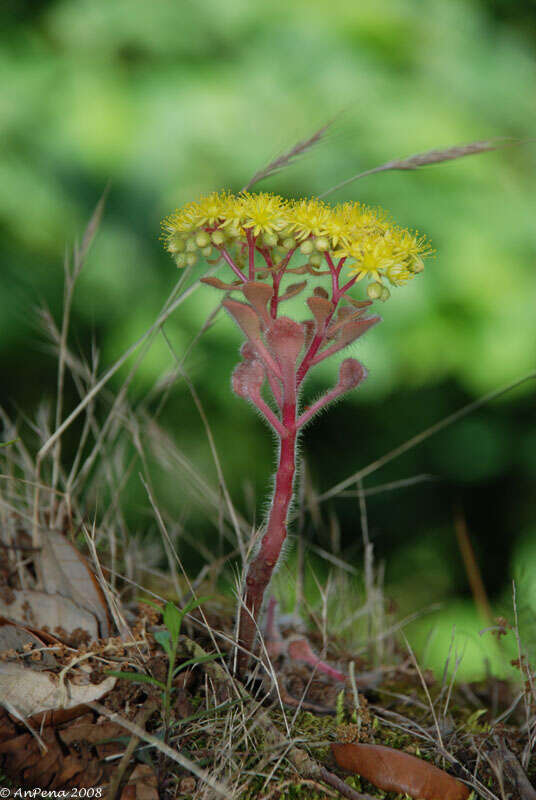
Aichryson is a genus of about 15 species of succulent, subtropical plants, mostly native to the Canary Islands, with a few in the Azores, Madeira and Morocco, and one in Portugal.
The species of Aichryson are not frost-resistant. They are related to Sempervivum, Jovibarba, Greenovia, Aeonium and Monanthes, readily seen in their similar flowers.
Relationships
Recent phylogenentic studies of Crassulaceae indicate that Aichryson is closely related to Monanthes and Aeonium (both genera are also largely endemic to the Canary Islands). Two other genera of Crassulaceae that have many-parted (polymerous) flowers (Sempervivum and Jovibarba) are not closely related to the three Canary Island genera.[1][2][3][4]
On the Canary Islands, the center of species diversity seems to be the island of La Palma Relationships within Aichryson were investigated by Fairfield et al. (2004) [Plant Systematics and Evolution248: 71-83]. They found that the five subspeies of A. pachycaulon were not each others closest relatives (monophyletic) and additional species may need to be erected after additional study.
Species
- Aichryson bethencourtianum
- Aichryson bollei
- Aichryson divaricatum
- Aichryson laxum
- Aichryson palmense
- Aichryson porphyrogennetos
- Aichryson tortuosum (Gouty Houseleek)
- Aichryson villosum
Other species recognized by Nyffeler in Eggli 2004 are:
- Aichryson brevipetalum
- Aichryson dumosum
- Aichryson pachycaulon (five subspecies have been recognized)
- Aichryson parlatorei
- Aichryson punctatum
A recently named species is:
References
| This Crassulaceae-related article is a stub. You can help Wikipedia by expanding it. |
Unreviewed
Disclaimer
EOL content is automatically assembled from many different content providers. As a result, from time to time you may find pages on EOL that are confusing.
To request an improvement, please leave a comment on the page. Thank you!