IUCN threat status:

Not evaluated

Comprehensive Description

Read full entry

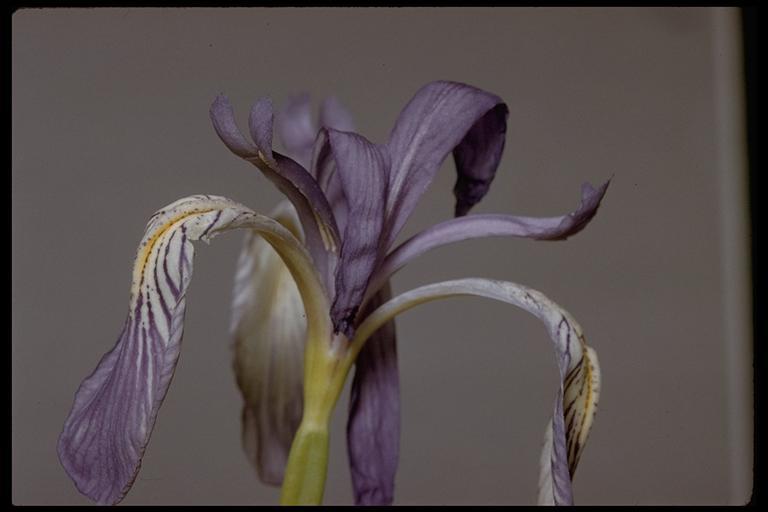
The ecological range of Iris missouriensis is probably more varied than that of any other North American species of the genus, extending from almost sea level in southern California to 3000 m in Montana and Wyoming. There is correspondingly wide variation in a number of characters, which has caused much confusion as to taxonomic circumscription. Homer Metcalf (pers. comm.) made a detailed study of this species. The basic requirement for its success seems to be an extremely wet area before flowering and then almost desertlike conditions for the rest of the summer. In large populations, sometimes covering hundreds of acres, Iris missouriensis may be found with either simple or branched stems, leaves from 4 mm to more than 1 cm wide, shorter than the stem or longer, only one flower to as many as three on a stem, and colors from deep blue to almost pure white. A single plant found on the Pariah Plateau in Kane County, Utah, with leaves only 3–4 mm wide and a single flower stem only 4 cm long, which meant that the flower was at almost ground level, was named Iris pariensis. No other such specimen has been located, and this entity must be considered as just an aberrant form that was due to the desertlike conditions in which it was growing.

Iris missouriensis is known to hybridize with I. longipetala.

Trusted

Creative Commons Attribution Non Commercial Share Alike 3.0 (CC BY-NC-SA 3.0)

© Missouri Botanical Garden, 4344 Shaw Boulevard, St. Louis, MO, 63110 USA

Supplier: Missouri Botanical Garden

Belongs to 0 communities

This taxon hasn't been featured in any communities yet.

Learn more about Communities

Disclaimer

EOL content is automatically assembled from many different content providers. As a result, from time to time you may find pages on EOL that are confusing.

To request an improvement, please leave a comment on the page. Thank you!