IUCN threat status:

Not evaluated

Comprehensive Description

Read full entry

Comments

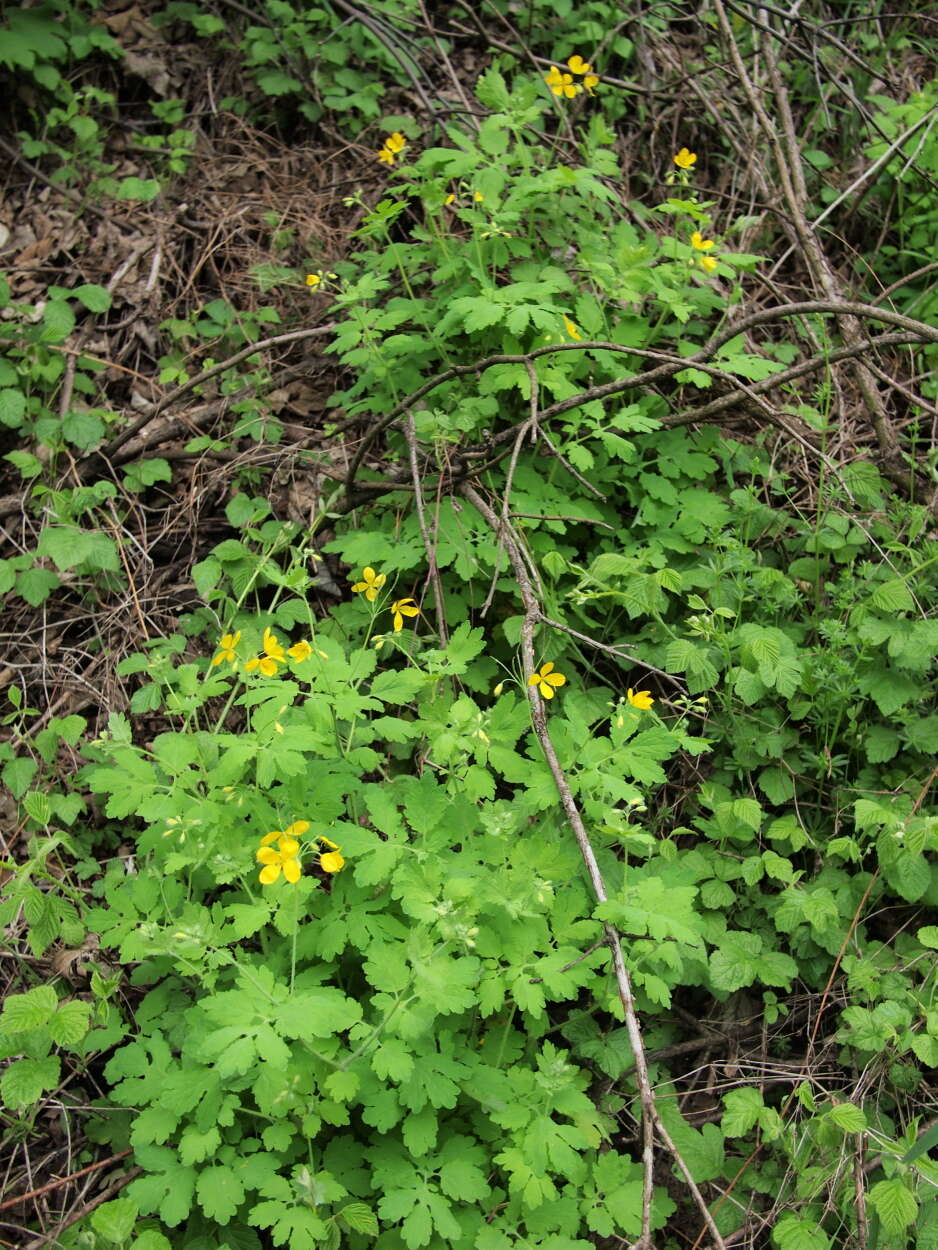
In the past, the sap of Greater Celandine was used to remove warts and it had other medicinal applications. However, such practices are not recommended because the sap is toxic and extremely irritating to the skin and eyes. Greater Celandine has smaller flowers than other members of the Poppy family in Illinois and its seedpods are more narrow and cylindrical as well. Because its flowers have four petals and its seedpods resemble siliques, this species could be confused with a member of the Mustard family. However, the flowers of Greater Celandine are larger in size than most members of the Mustard family and it has a distinctive yellow-orange sap. Lesser Celandine refers to another European species, Ranunculus ficaria (syn. Ficaria verna), which is a member of the Buttercup family (Ranunculaceae). This latter species has yellow flowers with 8-12 petals and its leaves are orbicular-cordate with crenate margins. Therefore, it is easily distinguished from Greater Celandine.

Trusted

Creative Commons Attribution Non Commercial 3.0 (CC BY-NC 3.0)

© John Hilty

Source: Illinois Wildflowers

Belongs to 1 community

Disclaimer

EOL content is automatically assembled from many different content providers. As a result, from time to time you may find pages on EOL that are confusing.

To request an improvement, please leave a comment on the page. Thank you!