Overview
Comprehensive Description
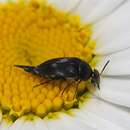
Tumbling Flower Beetles are often found on flowers. With even slight disturbance, they are likely to jump or tumble to the ground, thereby making their escape. They range in size from small to medium. The wing-covers are oval-shaped, broader in front than behind, with a pointed abdomen protruding from the posterior. These beetles are usually black. The hind legs are rather long, which probably facilitates the capacity to jump and escape. Adults feed on pollen, if not the flowers themselves, while the larvae feed on rotting wood, fungi, or the pith of stems.
-
Hilty, J. Editor. 2013. Insect Visitors of Illinois Wildflowers. World Wide Web electronic publication. illinoiswildflowers.info, version (05/2013)
See: Abbreviations for Insect Activities, Abbreviations for Scientific Observers, References for behavioral observations
Trusted
Molecular Biology and Genetics
Molecular Biology
Statistics of barcoding coverage
| Specimen Records: | 871 | Public Records: | 5 |
| Specimens with Sequences: | 240 | Public Species: | 1 |
| Specimens with Barcodes: | 205 | Public BINs: | 0 |
| Species: | 77 | ||
| Species With Barcodes: | 33 | ||
Trusted
Barcode data
Trusted
Locations of barcode samples
Trusted
Wikipedia
Mordellidae
Mordellidae is a family of beetles commonly known as tumbling flower beetles for the typical irregular movements they make when escaping predators, or as pintail beetles due to their abdominal tip which aids them in performing these tumbling movements. Worldwide, there are about 1500 species.[1]
The apparently tumbling movements are composed of a series of very rapid separate jumps (each jump of a duration of approximately 80 ms). They result from the beetle's efforts to get itself back into take-off position for flight when it has been in either lateral or dorsal position. Each individual jump should be considered as an extended rotation, performed by one leg of the third leg pair (Metapodium ). Depending on whether the left or the right metapodium is used as the leg that provides the leverage for take-off, change occurs in the direction of the jump. The energy for propulsion varies with the beetle's immediate muscle work, so that jump lengths and heights vary, with rotation frequencies recorded up to 48 rotation per second (Mordellochroa abdominalis) around the gravitation centre of the body's longitudinal axis. Additional revolving round the transverse axis (at lower frequency) effects spiralling summersaults that are perceived as tumbling. The pintail (pygidium) is of no significance for the jump. Technically similar jumps, though less powerful, can be observed in family Melandryidae (=Serropalpidae) (genus: Orchesia) and family Scrabtiidae (genus: Anaspis). As both these groups of beetles are closely related to family Mordellidae, it may be assumed that it is due to their common phylogenetic roots that they have the same capacity of this tumbling form of locomotion. It can, therefore, not be ascribed specifically to Mordellidae.[2]
Systematics [edit]
This family has two living subfamilies – Mordellinae and Ctenidiinae – and a prehistoric one known only from fossils (Praemordellinae).[3] Another fossil genus, Liaoximordella, was previously treated as distinct monotypic family Liaoximordellidae, but is now regarded as very primitive and probably basal member of the Mordellidae.
FAMILY Mordellidae Latreille, 1802
- Subfamily Ctenidiinae Franciscolo, 1951
- CtenidiaLaporte de Castelnau in Brullé, 1840
- Subfamily MordellinaeLatreille, 1802
- Tribe Conaliini Ermisch, 1956
- ConaliaMulsant & Rey, 1858
- ConaliamorphaErmisch, 1968
- GlipodesLeConte, 1862
- IsotrilophusLiljeblad, 1945
- OphthalmoconaliaErmisch, 1968
- ParaconaliaErmisch, 1968
- PseudoconaliaErmisch, 1950
- StenoconaliaErmisch, 1967
- XanthoconaliaFranciscolo, 1942
- Tribe Mordellini Siedlitz, 1875
- AdelptesFranciscolo, 1965
- AsiamordellaHong, 2002
- AustromordellaErmisch, 1950
- BinaghiaFranciscolo, 1943
- BoatiaFranciscolo, 1985
- CaffromordaFranciscolo, 1952
- CalycinaBlair, 1922
- CephaloglipaFranciscolo, 1952
- CongomordaErmisch, 1955
- CothurusChampion, 1891
- CretanaspisHuang & Yang, 1999
- CurtimordaMéquignon, 1946
- GlipaLeConte, 1859
- GlipidiomorphaFranciscolo, 1952
- HoshihananomiaKônô, 1935
- IberomordaMéquignon, 1946
- IdeorhipistenaFranciscolo, 2000
- KlapperichimordaErmisch, 1968
- LarinomordaErmisch, 1968
- LiaoximordellaWang, 1993
- MachairophoraFranciscolo, 1943
- MacrotomoxiaPíc, 1922
- MirimordellaLiu, Lu & Ren, 2007
- MordellaLinnaeus, 1758
- Mordellina Schilsky, 1908[4]
- MordellapygiumRay, 1930
- MordellariaErmisch, 1950
- MordelloidesRay, 1939
- MordellopalpusFranciscolo, 1955
- NeocurtimordaFranciscolo, 1950
- NeotomoxiaErmisch, 1950
- OphthalmoglipaFranciscolo, 1952
- ParamordellaPíc, 1936
- ParamordellanaErmisch, 1968
- ParamordellariaErmisch, 1968
- ParaphungiaErmisch, 1969
- ParastenomordellaErmisch, 1950
- ParatomoxiaErmisch, 1950
- ParatomoxiodaErmisch, 1954
- PhungiaPíc, 1922
- PlesitomoxiaErmisch, 1955
- PraemordellaShchegoleva-Barovskaya, 1929
- PseudomordellariaErmisch, 1950
- PseudotomoxiaErmisch, 1950
- SphaeromordaFranciscolo, 1950
- StenaliamordaErmisch & Chûjô, 1968
- StenomordaErmisch, 1950
- StenomordellaErmisch, 1941
- StenomordellariaErmisch, 1950
- StenomordellariodesErmisch, 1954
- SuccimordaKubisz, 2001
- TolidomordellaErmisch, 1950
- TolidomoxiaErmisch, 1950
- TomoxiaCosta, 1854
- TomoxiodaErmisch, 1950
- TrichotomoxiaFranciscolo, 1950
- VariimordaMéquignon, 1946
- WittmerimordaFranciscolo, 1952
- YakuhananomiaKônô, 1935
- ZeamordellaBroun, 1886
- Tribe Mordellistenini Ermisch, 1941
- AsiatolidaShiyake, 2000
- CalyceChampion, 1891
- CalycemordaErmisch, 1969
- CalyceoideaErmisch, 1969
- DellamoraNormand, 1916
- DiversimordaErmisch, 1969
- ErmischiellaFranciscolo, 1950
- FahraeusiellaErmisch, 1953
- FalsomordellinaNomura, 1966
- FalsomordellistenaErmisch, 1941
- FalsopseudomoxiaFranciscolo, 1965
- GlipostenaErmisch, 1941
- GlipostenodaErmisch, 1950
- GymnostenaFranciscolo, 1950
- MordellinaSchilsky, 1908
- MordellistenaCosta, 1854
- MordellistenaliaErmisch, 1958
- MordellistenochroaHorák, 1982
- MordellistenodaErmisch, 1941
- MordellistenulaStchegoleva-Barowskaja, 1930
- MordellochroaEmery, 1876
- MordellochroideaErmisch, 1969
- MordelloxenaFranciscolo, 1950
- MorphomordellochroaErmisch, 1969
- NeomordellistenaErmisch, 1950
- PalmordaErmisch, 1969
- Palpomorda Ermisch, 1969
- ParamordellistenaErmisch, 1950
- PhunginusPíc, 1922
- PselaphokentronFranciscolo, 1955
- PseudodellamoraErmisch, 1942
- PseudotolidaErmisch, 1950
- RaymordellaFranciscolo, 1956
- TolidaMulsant, 1856
- TolidopalpusErmisch, 1951
- TolidostenaErmisch, 1942
- UhligiaHorák, 1990
- XanthomordaErmisch, 1968
- Tribe Reynoldsiellini Franciscolo, 1957
- ReynoldsiellaRay, 1930
- Tribe Stenaliini Franciscolo, 1956
- BrodskyellaHorák, 1989
- PselaphostenaFranciscolo, 1950
- StenaliaMulsant, 1856
- StenaliodesFranciscolo, 1956
- Tribe Conaliini Ermisch, 1956
References [edit]
- ^ Michael A. Ivie (2002). "Mordellidae". In Ross H. Arnett & Michael Charles Thomas. Polyphaga: Scarabaeoidea through Curculionoidea. American Beetles 2. CRC Press. ISBN 978-0-8493-0954-0.
- ^ Michael Reuter (1995). "Studies on the functional morphology of the jump in tumbling-flower beetles (Coleoptera, Mordellidae)". Acta Biologica Benrodis 7: 99–133(1995).
- ^ Mordellidae Species List at Joel Hallan’s Biology Catalog. Texas A&M University. Retrieved on 17 May 2012.
- ^ Horák, Jan; Farkac, Jan; Nakládal, Oto (2012). "Mordellidae (Coleoptera) from Socotra Island". Acta Entomologica Musei Nationalis Pragae (Musei Nationalis Pragae) 52 ((supplementum 2)): 253–268. ISSN 0374-1036. Retrieved 5 February 2013.
Unreviewed
Disclaimer
EOL content is automatically assembled from many different content providers. As a result, from time to time you may find pages on EOL that are confusing.
To request an improvement, please leave a comment on the page. Thank you!