Articles on this page are available in 1 other language: Spanish (1) (learn more)
Overview
Brief Summary
Biology
Trusted
Comprehensive Description
Description
Trusted
Distribution
Range Description
Trusted
Geographic Range
Iberian lynx are one of two carnivore species endemic to Europe (the other being European mink, Mustela lutreola). Their historical range is restricted to the Iberian Peninsula, primarily the southwestern region of Spain and much of Portugal. Although they were once widespread throughout the region, their geographic range has contracted at an alarming rate over the last century and a half. A century ago, the species was still present in northern Iberia and maintained relatively high densities in the south. Within fifty years, they had become nearly extinct in the north and were rapidly declining in the south. The most significant period of decline was between 1960 and 1990, during which their range contracted by nearly 80%. Currently, they occupy about 2% of their original range.
In 1988, a survey estimated that there were about 880 to 1150 adult Iberian lynx living in nine populations across a very fragmented range. A more recent survey, published in 2008, shows that lynx numbers are much lower than previously estimated. The presence of Iberian lynx could only be confirmed in the southwestern quarter of the Iberian Peninsula, and population estimates suggest that there are between 475 and 680 adults living in five different populations throughout the region. Currently, the largest concentration of lynx live in Donana National Park (1500 km^2), where they are heavily protected. Though Iberian lynx were once common in Portugal, they are now thought to be completely extirpated from the country. Their presence in Portugal has not been confirmed since January, 1992.
Biogeographic Regions: palearctic (Native )
- Delibes, M., A. Rodriguez, F. Pablo. 2000. Action Plan for the Conservation of the Iberian Lynx (Lynx pardinus) in Europe. Nature and Environment, No. 111: 7-42.
- Deliebs, M. 2009. The Worlds Most Endangered Felid. Pp. 652 in D Macdonald, ed. The Princeton Encyclopedia of Mammals, Vol. 1, 1 Edition. Princeton, New Jersey: Princeton University Press.
- Ferreras, P., M. Delibes, . Palomares, . Fedriani, J. Calzada, E. Revilla. 2004. Proximate and Ultimate Causes of dispersal in the Iberian Lynx Lynx Pardinus. Behavioral Ecology, Volume 15/ Issue 1: 31-40. Accessed August 05, 2010 at http://beheco.oxfordjournals.org.
- Pedro Sarmento, , Joana Cruz, Pedro Monterroso, Pedro Tarroso, Catarina Ferreira, Nuno Negrões, Catarina Eira. 2008. Status survey of the critically endangered Iberian lynx (Lynx pardinus) in Portugal. European Journal of Wildlife Resources, Original Paper: 1-7.
Trusted
Range
Trusted
Physical Description
Morphology
Physical Description
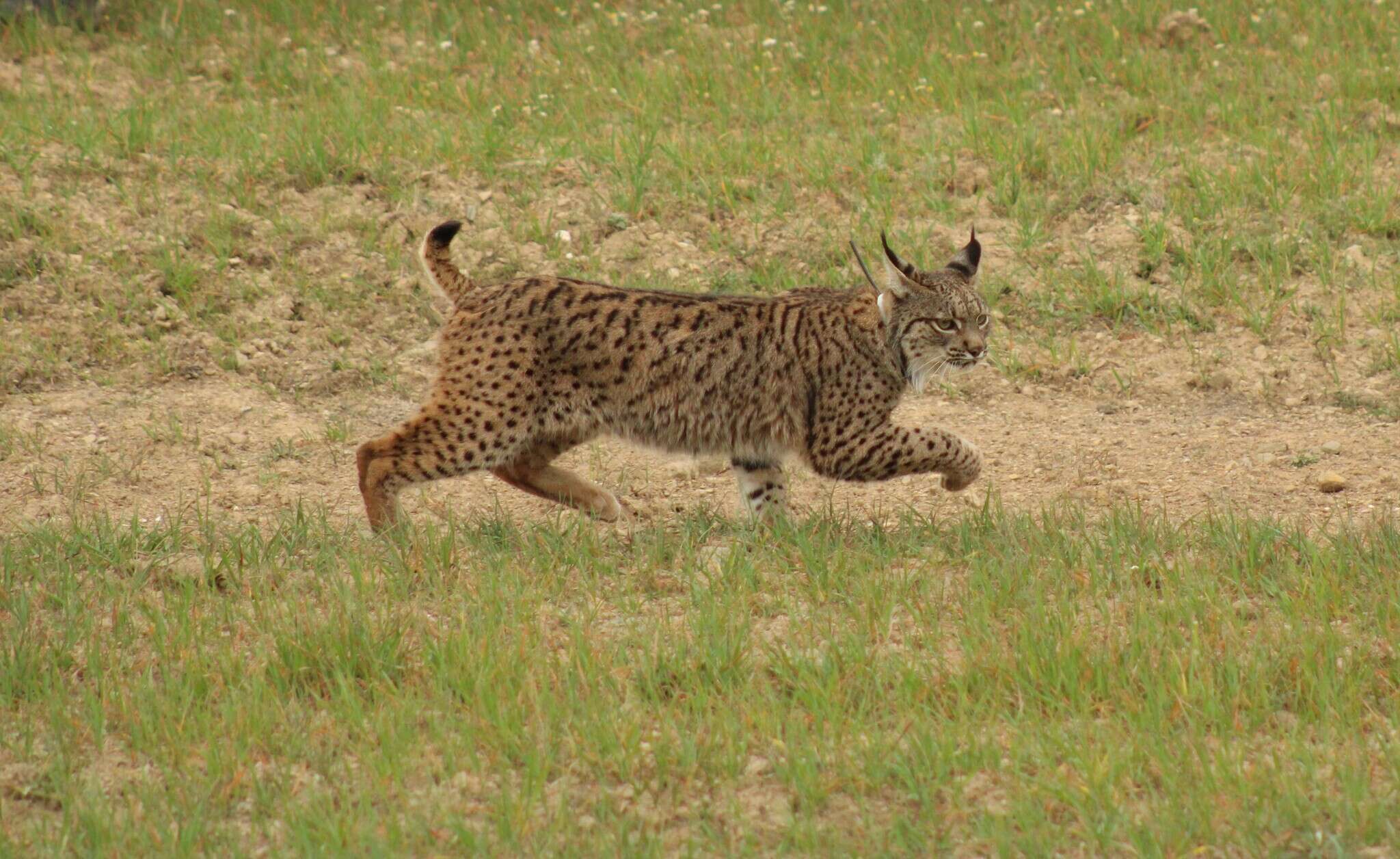
Iberian lynx are similar in appearance to their close relative, Eurasian lynx, but are about half the size. They are similar in size to Canada lynx (Lynx canadensis) and Bobcat (Lynx rufus), and males are larger than females. They have relatively small heads, long legs, and very short, black-tipped tails, which is a common characteristic of Lynx species. They have short, flat faces, and black tufts on the ears and jowls that give them a bearded appearance, which is especially evident in adults. They have tawny pelage, which is mottled with dark spots that vary greatly in size, shape, and color intensity. Recent efforts have been made to characterize the configuration, size, and intensity of these spots, which may prove useful in determining the degree of genetic diversity within the species.
As small prey specialists, Iberian lynx have a foreshortened skull that maximizes the bite force of the canines. In addition, they have more narrow muzzles, longer jaws, and smaller canines than felines that specialize on larger prey. These adaptations provide an advantage when catching small, fast prey and allow Iberian lynx to deliver a single kill bite that punctures the back of the neck, thus severing the spinal cord (as opposed to suffocating bites, common in larger cats). Small-prey felids have smaller canines that result in a smaller contact area. When compared to the large, rounded canines found in large-prey cats, a smaller contact area results in increased bite force per unit contact area. As a result, small-prey cats punctures the skin of prey more easily than their large-prey counterparts.
Range mass: 11 to 15 kg.
Average mass: 12.8 kg.
Range length: 80 to 130 cm.
Sexual Dimorphism: male larger
- Beltrán, J., M. Delibes. 1993. Physical Characteristics of Iberian Lynxes (Lynx pardinus) from Doñana, Southwestern Spain. Journal of Mammology, Vol. 74 No.4: 852-862. Accessed May 08, 2010 at http://www.jstor.org/stable/1382423.
- Cope, E. 1879. On the Genera of Felidae and Canidae. Proceedings of the Academy of Natural Sciences of Philadelphia, Vol. 31 No. 2: 168-194. Accessed May 08, 2010 at http://www.jstor.org/stable/4060308.
- Meachen-Samuels, J., B. Van Valkenburgh. 2009. Craniodental Indicators of Prey Size Preference in the Felidae. Biological Journal of the Linnean Society, 96: 784-789.
Trusted
Ecology
Habitat
Habitat and Ecology
The Iberian lynx is a specialised feeder, with rabbits (Oryctolagus cuniculus) accounting for 80-100 per cent of its diet. Other species occasionally taken include rodents, hares, partridges, ducks, geese, juvenile deer, and fallow deer, but these do not form an important part of the lynx's diet. Lynx often kill other carnivore species, including those regarded as pests by humans, such as feral cats and foxes, but do not eat them. The lynx's highly specialised diet makes it a naturally vulnerable species and the rapid decline in rabbit populations since the 1950s has had a direct impact on lynx numbers (IUCN 2007).
Systems
- Terrestrial
Trusted
Habitat
Iberian lynx require variable terrain below 1300 m, containing a mosaic of closed Mediterranean scrubland interspersed with open patches of grassland, often with marsh ecotones. This natural mosaic landscape creates the optimal balance of shrub cover and open space. Lynx use areas of scrubland as shelter as well as for bedding and breeding. Areas with minimal cover provide habitat for their primary prey, European rabbits (Oryctolagus cuniculus), which occur in higher densities in these locations. Unfortunately, Iberian lynx have disappeared from many areas containing suitable habitat, presumably due to low rabbit densities.
Iberian lynx habitat in Donana National Park is relatively flat (0 to 50 m above sea level) and has a Mediterranean sub-humid climate. This particular ecoregion is influenced by the Atlantic Ocean and has marked seasonality.
Like most felids, Iberian lynx are solitary animals that exhibit a metapopulation demographic structure. They depend on dispersal between populations to avoid inbreeding and thus, require movement corridors between areas of suitable habitat. Corridors allow individuals to search for habitats outside of their of natal territory.
Range elevation: 0 to 1300 m.
Habitat Regions: temperate ; terrestrial
Terrestrial Biomes: savanna or grassland ; forest ; scrub forest ; mountains
Wetlands: marsh
Other Habitat Features: agricultural
Trusted
Habitat
Trusted
Trophic Strategy
Food Habits
Like most felids, Iberian lynx frequently hunt alone and kill prey with a single bite to the neck. Their small size and well-camouflaged coat make them well adapted for hunting small mammals. Their primary prey is European rabbit (Oryctolagus cuniculus), which makes up between 80 and 100% of their daily biomass consumption. A single adult lynx requires between 600 and 1000 kcal per day, which is approximately the amount of energy contained within a single rabbit. An adult female with young requires up to three rabbits per day. Iberian lynx are considered specialist predators, and prey preference exhibits little geographic or seasonal variation. When European rabbits are scarce, alternative prey items consist of small vertebrates including rodents (Rodentia) and European hare (Lepus granatensis). They also consume birds, including red-legged partridge (Alectoris rufa), ducks, and geese and are known to occasionally prey on juvenile ungulates such as red deer (Cervus elaphus), fallow deer (Dama dama) and mouflon (Ovis musimon).
Animal Foods: birds; mammals
Primary Diet: carnivore (Eats terrestrial vertebrates)
Trusted
Associations
Ecosystem Roles
In addition to their dependence on European rabbits as prey, Iberian lynx have very specific habitat requirements. As a result, they may serve as reliable bioindicators of ecosystem health. In addition, moderate population densities of Iberian lynx may have a positive effect on overall prey fitness, as predation may act as a disease control mechanism. Finally, adult lynx often kill competitor species (i.e., small carnivores), resulting in an increase in prey abundance, thereby decreasing the per-capita territory requirements of individual lynx.
Trusted
Predation
As an apex carvinore, Iberian lynx have no natural predators.
Trusted
Known prey organisms
Aves
Mammalia
This list may not be complete but is based on published studies.
Trusted
Life History and Behavior
Behavior
Communication and Perception
Like all felids, Iberian lynx have vertical pupils and excellent vision, especially during times of low visibility. They have excellent reflexes, their whiskers provide highly detailed haptic data, and their large ears result in excellent hearing. Most solitary cats are silent unless threatened or with young, which emit calls when distressed.
Communication Channels: visual ; acoustic
Perception Channels: visual ; acoustic
Trusted
Life Expectancy
Lifespan/Longevity
The oldest wild Iberian lynx was 13 years old at time of death. Longevity of captive individuals is unknown. Mortality rates are highest among dispersing lynx (48% annually), most of which have not reproduced by the time they die. Mortality is often human induced and includes traffic collisions, illegal hunting (5% annually), bycatch in traps (6% annually), dogs, falling into wells, and forest fires.
Range lifespan
Status: wild: 13 (high) years.
Trusted
Lifespan, longevity, and ageing
Trusted
Reproduction
Reproduction
Under typical population densities (0.08 adults/km^2), Iberian lynx are polygynous. In the most prey rich habitats of northern Donana National Park, the population density is much higher ( 0.8 adults/km^2). This population is close to its carrying capacity, and the total number of suitable territories is low, thus increasing intrasexual competition. As a result, males are forced to have smaller territories that are more easily defended against rival males. Under these unique circumstances, males focus their efforts on defending exclusive access to a single female, resulting in monogamy.
Mating System: monogamous ; polygynous
Iberian lynx reach sexual maturity at around 1 year of age, though females only breed once they've secured a territory of their own. Estrus peaks in January, however females may re-enter estrus if gestation is interrupted or they lose a litter prematurely. Females give birth to a maximum of one litter per year, but only breed if their habitat is of sufficient quality. Average reproductive rate for an individual female is 0.8 litters per year. Gestation lasts for 63 to 73 days and most births occur between March and April. Litters range in size from 2 to 4 kittens, with an average of 3. Kittens are semi-altricial at birth, and in most cases only 2 offspring survive weaning, which occurs 10 weeks after birth. Iberian lynx are independent by 7 to 8 months old.
Breeding season in Iberian lynx occurs from January to July and is the only time males and females interact. Breeding territories of adult males typically overlap with those of several females. Males defend their territories against rival males and may potentially breed with any female who shares part of his territory. Aggressive interactions over mating rights are rare; however, high-density populations usually experience higher rates of aggressive intrasexual interactions than low-density populations, and may occasionally result in death.
Breeding interval: Iberian Lynx breed once per year
Breeding season: January to July
Range number of offspring: 2 to 4.
Range gestation period: 63 to 73 days.
Average weaning age: 10 weeks.
Range time to independence: 7 to 8 months.
Average age at sexual or reproductive maturity (female): 1 years.
Average age at sexual or reproductive maturity (male): 1 years.
Key Reproductive Features: iteroparous ; seasonal breeding ; gonochoric/gonochoristic/dioecious (sexes separate); viviparous
Average number of offspring: 2.5.
Prior to giving birth, female Iberian lynx locate a secluded natural structure which serves as the natal den for her offspring. Often, females establish den sites in large tree hollows; however, rock caves, boulder piles, ground dens, or rabbit warrens that have been expanded by another animal, such as a badger, are also potential den sites.
Iberian lynx kittens are born semi-altricial. As a result, they have poor thermoregulatory control and are vulnerable to predation. By giving birth in a small space (e.g., tree hollow), adult females keep their kittens grouped tightly together, which protects from heat loss and predators. Kittens remain in their natal dens for nearly twenty days until they become too large and too mobile for the confined space. Female lynx move their young between a series of auxiliary dens, typically under bushes or in dense scrubland, and occupy each for a decreasing period of time until kittens can accompany their mother on hunts. Frequent den relocation is a common behavioral adaption among felids that decreases ectoparasite loads and reduces predation risk. Den selection is influenced by prey abundance, and females have been known to utilize as many as six auxiliary dens.
Iberian lynx kittens nurse until they are 10 weeks old; however, they begin to consume prey captured by their mother after 1 month. During the denning period, mothers spend most of the day in or around the den, resting during the hottest hours and hunting during the cooler dusk period. Like many felids, Iberian lynx kittens begin to show fine motor skills around two months old. Around this same time, they occasionally leave their dens to accompany their mother on outings and begin developing hunting skills. At seven months old, juvenile lynx spend around 60% of their time with their mother and will live independently within their natal territory until reaching reproductive maturity and dispersing.
Parental Investment: altricial ; female parental care ; pre-hatching/birth (Provisioning: Female); pre-weaning/fledging (Provisioning: Female, Protecting: Female); pre-independence (Provisioning: Female, Protecting: Female); inherits maternal/paternal territory
- Fernández, N., M. Delibes, F. Palomares, D. Mladenoff. 2003. Identifying Breeding Habitat for the Iberian Lynx: Inferences from a Fine-Scale Spatial Analysis. Ecological Applications, Vol. 13 No. 5: 1310-1324. Accessed May 08, 2010 at http://www.jstor.org/stable/4134715.
- Ferreras, P., M. Delibes, . Palomares, . Fedriani, J. Calzada, E. Revilla. 2004. Proximate and Ultimate Causes of dispersal in the Iberian Lynx Lynx Pardinus. Behavioral Ecology, Volume 15/ Issue 1: 31-40. Accessed August 05, 2010 at http://beheco.oxfordjournals.org.
- Palomares, F., M. Delibes, N. Fernandez. 2002. The use of breeding dens and kitten development in the Iberian Lynx (Lynx pardinus). Journal of Zoology, London, No. 258: 1-5.
Trusted
Conservation
Conservation Status
IUCN Red List Assessment
Red List Category
Red List Criteria
Version
Year Assessed
Assessor/s
Reviewer/s
Contributor/s
Justification
With a total population of 84-143 adults, the Iberian Lynx qualifies as Critically Endangered under C2a(i). There has been a continuing decline due to severe depletion of its primary prey, the European rabbit, by disease and over-hunting, with additional threats of high rates of non-natural lynx mortality and habitat destruction and fragmentation. The effective population size of the largest subpopulation (Sierra Morena) is likely less than 50 mature breeding individuals, based on the general measure for felids (the proportion of the adult population contributing to the gene pool through successful raising and recruitment of offspring is 50%: Nowell et al. 2007).
History
- 2006Critically Endangered(IUCN 2010.2)
- 2002Critically Endangered
- 1996Endangered
- 1994Endangered(Groombridge 1994)
- 1990Endangered(IUCN 1990)
- 1988Endangered(IUCN Conservation Monitoring Centre 1988)
- 1986Endangered(IUCN Conservation Monitoring Centre 1986)
Trusted
Conservation Status
Iberian lynx are the most endangered felids in the world and the most threatened carnivore in Europe. With fewer than 250 breeding individuals in the wild in 1996, Iberian lynx are considered critically endangered by the IUCN. They have undergone significant population decline and range contraction for the last century and a half, primarily due to anthropogenic causes and disease outbreaks in European rabbits, resulting in significant decreases in their primary prey. Their preservation requires immediate action, and their successful restoration likely requires a coordinated effort by Spanish and Portuguese conservation authorities. To date, captive breeding programs for Iberian lynx have not been thoroughly investigated, but could prove to be a viable method of recovery.
Habitat fragmentation throughout the Iberian Peninsula has lead to the isolation of lynx populations, thus impeding their ability to disperse. The inability to disperse can lead to an increased risk of inbreeding and reduced genetic diversity, making small populations more vulnerable to extirpation. Causes of habitat fragmentation include agriculture, urban development, road construction, flooding, pollution, and forest fires. Habitat fragmentation exacerbates the challenge of interpopulation dispersal by eliminating habitat corridors. Dispersal plays an important role in the life cycle of Iberian lynx, and although it is inherently high risk, the greatest causes of mortality during dispersal are human induced. In addition to protecting current corridors, restoring interpopulation connectivity is critical to the recovery of Iberian lynx.
Iberian lynx have long been exploited by humans, and despite being protected in Spain since 1973 and in Portugal since 1974, poaching still occurs. The impacts of poaching are hard to determine, however, because such activities are kept secret. One report estimated that 5% of annual mortality is caused by poaching. In Portugal, the leading cause of human induced mortality is poaching during hunting events. Kill traps, which accounted for 44% of deaths in the 1980’s and 6% in more recent years, are the primary cause of human induced mortality in Spain.
US Federal List: endangered
CITES: appendix i
State of Michigan List: no special status
IUCN Red List of Threatened Species: critically endangered
Trusted
Status: Endangered
Date Listed: 06/02/1970
Lead Region: Foreign (Region 10)
Where Listed:
Population detail:
Population location: entire
Listing status: E
For most current information and documents related to the conservation status and management of Lynx pardinus, see its USFWS Species Profile
Trusted
Status
Trusted
Trends
Population
In Portugal a sign search, camera trapping and box trapping survey conducted in 2002 by the Instituto da Conservacao da Natureza failed to detect a single lynx (Sarmento et al. 2004). The most recent evidence of the presence of lynx in Portugal comes from the discovery of a scat in the Guadiana area in 2001, which was identified by molecular analysis (Pires and Fernandes 2003). During the 1990s, a national survey based on personal interviews and dead animal records suggested a population of about 40 lynxes fragmented in small subpopulations in five different areas: Algarve mountains, Sado Valley, Guadiana, S. Mamede and Malcata. However, further local field surveys indicated the absence of resident animals, pointing to a pre-extinction scenario (Pinto 2000, Fernandes et al. 2001, Sarmento et al. 2004)
Population Trend
Trusted
Threats
Threats
Habitat destruction, deterioration and alteration have impacted negatively on the lynx for centuries. Notable examples since the middle of the 20th century include the planting of Mediterranean scrublands with pines and eucalyptus and more recently the over stocking of deer and livestock on private estates and the opening up of roads and forest tracks in previously remote areas. The lynx's preferred habitat mosaic has also suffered at the hands of afforestation and scrub clearance schemes, road building, dam construction, and the building of holiday homes. New infrastructure projects continued to fragment lynx populations and created new barriers in corridor areas between the remaining populations in the 1960s. More than forty separate lynx populations in Spain and Portugal appear to have collapsed since the early 1980s. WWF Spain/Adena has identified 53 different public works that will affect important areas for the Iberian lynx. Heavier and faster traffic is also taking an unacceptably high toll on lynx each year as juveniles venture away from their areas of birth in search of new habitats. This high mortality has been an important factor in the decline of the species, particularly in the areas surrounding Doñana National Park.
The Iberian Lynx received protection against hunting in the early 1970s and since then hunting has dropped off. However, some lynxes are still shot and killed in traps and snares set for smaller predators, particularly on commercial hunting and shooting estates (IUCN 2007).
Trusted
Threats
Trusted
Management
Conservation Actions
In the short term, in situ conservation efforts must concentrate on preserving the last two breeding populations in Coto Doñana and Andújar-Cardeña. Priority must also be given to maintaining several large areas (of at least 500 km²) of suitable habitat to harbour new lynx populations. The central and western regions of Sierra Morena and the Toledo Mountains, as well as other areas in Spain and Portugal naturally rich in rabbits, will be vital for this purpose. All lynx habitat must be strictly protected from further destructive infrastructure projects. Captive breeding is of critical importance for lynx recovery. In addition to providing a vital gene bank for the survival of the species, captive lynxes will be needed to recolonise the many areas where populations have collapsed. Efforts to stimulate rabbit recovery must also be intensified. Without sufficient prey density, lynx populations will continue to decline and reintroductions will not be feasible (in spite of recent rabbit conservation measures in Doñana National Park, such as restocking, protection of burrows and vegetation management, rabbit numbers remain low). An adaptive conservation process based on careful monitoring of the last populations and the results of the measures implemented is necessary to facilitate the survival of the Iberian lynx. Recovery plans in all regions where the lynx has occurred over the past decade also need to be rapidly implemented (IUCN 2007).
Trusted
Conservation
Trusted
Relevance to Humans and Ecosystems
Benefits
Economic Importance for Humans: Negative
Due to the surplus of agricultural goods produced by the European Union, there has been a shift in land management practices. Large portions of potential Iberian lynx habitat, previously deemed unproductive, have been converted to timber stands by reforestation projects or have been set aside for use by the lumber industry. If Iberian lynx recovery efforts require that forestry lands be converted to habitat reserves, the timber industry will likely experience significant economic losses. Iberian lynx pose little threat to agriculture or the small game industry. Attacks against livestock are very rare, and no violent attacks against humans have been recorded.
Trusted
Economic Importance for Humans: Positive
Iberian lynx were once considered pests and were believed to have a significant negative impact on the small game industry. As a result, the Spanish government awarded bounties for their carcasses, and when they were more abundant they were hunted for their fur. However, decreased lynx abundance likely hurt the small game industry by increasing the prevalence of myxomatosis and rabbit haemorrhagic disease, two diseases that negatively affect European rabbits (Oryctolagus cuniculus).
Positive Impacts: body parts are source of valuable material; controls pest population
Trusted
Wikipedia
Iberian lynx
The Iberian lynx, Lynx pardinus, is a critically endangered species of felid native to the Iberian Peninsula in Southern Europe. It is one of the most endangered cat species in the world.[2] According to the conservation group SOS Lynx, if this species died out, it would be one of the few feline extinctions since the Smilodon 10,000 years ago.[3] The species used to be classified as a subspecies of the Eurasian lynx (Lynx lynx), but is now considered a separate species. Both species occurred together in central Europe in the Pleistocene epoch, being separated by habitat choice.[4] The Iberian lynx is believed to have evolved from Lynx issiodorensis.[5]
Contents |
Description
In most respects, the Iberian lynx resembles other species of lynx, with a short tail, tufted ears and a ruff of fur beneath the chin. While the Eurasian lynx bears rather pallid markings, the Iberian lynx has distinctive, leopard-like spots with a coat that is often light grey or various shades of light brownish-yellow. The coat is also noticeably shorter than in other lynxes, which are typically adapted to colder environments.[6] Some western populations were spotless, although these have recently become extinct.
The head and body length is 85 to 110 centimetres (33 to 43 in), with the short tail an additional 12 to 30 centimetres (4.7 to 12 in); the shoulder height is 60 to 70 centimetres (24 to 28 in). The male is larger than the female, with the average weight of males 12.9 kilograms (28 lb) and a maximum of 26.8 kilograms (59 lb), compared to an average of 9.4 kilograms (21 lb) for females; this is about half the size of the Eurasian lynx.[4][7][8]
Ecology
The Iberian lynx is smaller than its northern relatives, and typically hunts smaller animals, usually no larger than hares. It also differs in habitat choice, with Iberian lynx inhabiting open scrub and Eurasian lynx inhabiting forests.[4]
It hunts mammals (including rodents and insectivores), birds, reptiles and amphibians at dusk. The European rabbit (Oryctolagus cuniculus) is its main prey (79.5-86.7%), with (5.9%) hares (Lepus granatensis) and rodents (3.2%) less common.[4] A male requires one rabbit per day; a female bringing up cubs will eat three rabbits per day.[9]
As the population of rabbits in Spain and Portugal has declined due to myxomatosis, the Iberian lynx is often forced to attack young fallow deer, roe deer, mouflon, and ducks. The Iberian lynx competes for prey with the red fox, the meloncillo (Herpestes ichneumon) and the wildcat. It is solitary and hunts alone; it will stalk its prey or lie in wait for hours behind a bush or rock until the prey is sufficiently close to pounce in a few strides.
A lynx, especially with younger animals, will roam widely, with ranges reaching more than 100 kilometres (62 mi). Its territory (~ 10 to 20 square kilometres (3.9 to 7.7 sq mi)) is also dependent on how much food is available.[9] Nonetheless, once established, ranges tend to be stable in size over many years, the boundaries often being along man-made roads and trails. The Iberian lynx marks its territory with its urine, droppings left in existing tracks through the vegetation, and scratch marks on the barks of trees.[6]
Reproduction
During the mating season the female leaves her territory in search of a male. The typical gestation period is about two months; the cubs are born between March and September, with a peak of births in March and April. A litter consists of two or three (rarely one, four or five) kittens weighing between 200 and 250 grams (7.1 and 8.8 oz).
The kittens become independent at seven to 10 months old, but remain with the mother until around 20 months old. Survival of the young depends heavily on the availability of prey species. In the wild, both males and females reach sexual maturity at one year old, though in practice they rarely breed until a territory becomes vacant; one female was known not to breed until five years old when its mother died. The maximum longevity in the wild is 13 years.[4][8]
Siblings become violent towards one another between 30 and 60 days, peaking at 45 days. A cub will frequently kill its littermate in a brutal fight. It is unknown why these episodes of aggression occur, though many scientists believe it is related to a change in hormones when a cub switches from its mother's milk to meat. Others believe it is related to hierarchy, and "survival of the fittest." No matter the reason, conservationists must separate the kittens until the 60 day period is reached.[citation needed]
Habitat
This lynx was distributed over the entire Iberian Peninsula as recently as the mid-19th century. It is now restricted to very limited areas of southern Spain,[10] with breeding only confirmed in two areas of Andalucía. The Iberian lynx prefers heterogeneous environments of open grassland mixed with dense shrubs such as strawberry tree, mastic, and juniper, and trees such as holm oak and cork oak. It is now largely restricted to mountainous areas, with only a few groups found in lowland forest or dense maquis shrubland.
Population
The Iberian lynx is a critically endangered species;[1] it is the world's most threatened species of cat, and the most threatened carnivore in Europe.[11]
Studies conducted in March 2005 have estimated the number of surviving Iberian lynx to be as few as 100, which is down from about 400 in 2000[12] and down from 4,000 in 1960.[13] If the Iberian lynx were to become extinct, it would be the first big cat species to do so since Smilodon populator 10,000 years ago.
The only breeding populations are in Spain, and were thought to be only living in the Doñana National Park and in the Sierra de Andújar, Jaén. However, in 2007, Spanish authorities announced that they had discovered a previously unknown population in Castilla - La Mancha (central Spain).[14] It was later announced that there were around 15 individuals there.[15]
The Iberian lynx and its habitat are fully protected, and they are no longer legally hunted. Its critical status is mainly due to habitat loss, poisoning, road casualties, feral dogs and poaching. Its habitat loss is due mainly to infrastructure improvement, urban and resort development and tree monocultivation, which serves to break the lynx's distribution area. In addition, the lynx prey population of rabbits is also declining due to diseases such as myxomatosis and hemorrhagic pneumonia.[16]
In 2008, the Doñana population was assessed at 24 to 33, with an estimated 60 to 110 adults in the Sierra Morena, which is the stronghold of the species. The total population is estimated to be 99 to 158 adults, including the newly discovered La Mancha population, and the Iberian lynx qualifies as Critically Endangered under C2a(i) on the IUCN Redlist.[1]
Conservation
Recent successful breeding programs have given renewed hope to survival of this species.
- On March 29, 2005, Saliega, the first Iberian lynx to breed in captivity, gave birth to three healthy kittens at the El Acebuche Breeding Center, in the Doñana Nature Park in Huelva, Spain.[17] On March 22, 2008, Saliega gave birth to three more kittens at the El Acebuche centre. These kits were born at 64 days gestation. One of the young was rejected by the mother, and the Junta de Andalucía’s Environment Department reported on March 24 that the rejected kitten had died.[18]
- In the Sierra Morena area just north of Andújar, Andalucía, there were 150 Iberian lynx individuals overall in 2008, up from 60 in 2002. As a result of this increase, the lynx area in Andújar-Cardeña has probably reached its carrying capacity, and thus could provide animals for future reintroductions elsewhere. In addition to these on-site conservation achievements in the Sierra Morena, the off-site conservation captive breeding program has also progressed well, totaling 52 individuals, 24 of which were bred in captivity. The off-site conservation population will provide 20 to 40 individuals per year for reintroductions beginning in 2010.
- In Doñana National Park, the lynx population seems to have remained steady in recent years, with around 50 individuals reported in total each year between 2002 and 2008. In March 2009, the birth of three more kittens was announced; they were born as part of the breeding program at Doñana National Park, in Huelva.[19] The Iberian Lynx is planned to be reintroduced into Guadalmellato beginning in 2009, and into Guarrizas sometime in 2010 - 11.[2]
- In March, 2012, seven Iberian Lynx cubs were born to two adult females at the Iberian Lynx reproduction centre in Silves, Portugal. The centre is Portugal's only dedicated lynx reproduction centre. On 5 March, the female lynx Biznaga gave birth to three cubs. "Two of the cubs were abandoned (by the mother) one hour after the birth, so their survival depends on incubators and artificial feeding," said a spokesman from the Institute of Nature Conservation and Biodiversity (ICNB). The third cub died after 48 hours, despite the mother having "demonstrated normal parenting care." This was the second time Biznaga has given birth to cubs. Last year, she gave birth to two for the first time, but abandoned them after a few hours, which is considered normal behaviour for first time mothers of this species. These first cubs also died.
- Aside from Biznaga, another female, called Castañuela, gave birth to four cubs on 6 March. The size of this litter was unusual, as litters of two or three are the norm for this species. "This female shows great dedication and is caring for all her kittens," said the ICNB spokesman.
- The Iberian Lynx breeding season begins in December and ends in April. At Silves, a total of nine pairs of lynx were chosen for breeding, with more cubs expected in the coming days. The Silves reproduction centre currently has 18 Iberian lynx, nine females and nine males, 13 of which arrived from neighbouring Spain when the centre opened in 2009. This is the second year of reproduction at the centre in Silves, although no cubs survived from the first year.[20]
SOS Lynx
SOS Lynx is a conservation charity based in Portugal, working to prevent the extinction of the Iberian lynx. Its aim is to stop the decline of the Iberian lynx and other lynx species.[21][22][13]
References
- ^ a b c von Arx, M. & Breitenmoser-Wursten, C (2008). Lynx pardinus. In: IUCN 2008. IUCN Red List of Threatened Species. Downloaded on 22 March 2009. (Database entry includes justification for why this species is critically endangered)
- ^ a b Ward, Dan (December 2008). "LynxBrief". http://www.iberianature.com/material/documents/LynxBrief12E.pdf. Retrieved July 2011.
- ^ Gonçalves, Eduardo (April 2002). "Captured cubs hold future of Europe's tiger". London: The Guardian. http://www.guardian.co.uk/world/2002/apr/21/highereducation.biologicalscience. Retrieved July 2011.
- ^ a b c d e IUCN Cat Specialist Group: Iberian lynx Lynx pardinus
- ^ Björn Kurtén (1968). Pleistocene Mammals of Europe.
- ^ a b Sunquist, Mel; Sunquist, Fiona (2002). Wild cats of the World. Chicago: University of Chicago Press. pp. 177–184. ISBN 0-226-77999-8.
- ^ United Nations Environment Programme World Conservation Monitoring Centre Species Data Sheets: Iberian lynx Lynx pardinus
- ^ a b Animal Diversity Web: Lynx pardinus
- ^ a b "The Iberian Lynx Emergency" (PDF). Dan Ward. 2004. http://www.lcie.org/Docs/Iberian%20lynx/Ward%20REP%20The%20Iberian%20lynx%20emergency.pdf. Retrieved 2007-05-13.
- ^ C.Michael Hogan. 2011. Alboran Sea. eds. P.Saundry & C.J.Cleveland. Encyclopedia of Earth. National Council for Science and the Environment. Washington DC
- ^ "EU 'put Portugal wildlife under threat'". BBC News. 8 April 2007. http://news.bbc.co.uk/2/hi/science/nature/6530743.stm. Retrieved 2007-04-10.
- ^ "Iberian lynx in 'gravest danger'". BBC News. 10 March 2005. http://news.bbc.co.uk/2/hi/science/nature/4336071.stm. Retrieved 2007-04-10.
- ^ a b "SOSLynx.org". http://www.soslynx.org/. Retrieved July 2011.
- ^ "New Population Of Iberian Lynx Raises Hope For Species' Survival". Science News. October 2007. http://www.sciencedaily.com/releases/2007/10/071023163901.htm. Retrieved July 2011.
- ^ http://www.deshok.com/soslynxfile/eng_file/LynxBrief10E.pdf
- ^ Mitchell-Jones, et al. (1999). The Atlas of European Mammals.
- ^ "Hopes raised by Spain lynx births". BBC News. 2005-03-30. http://news.bbc.co.uk/1/hi/sci/tech/4394005.stm. Retrieved 2010-04-02.
- ^ http://www.wildfelids.org/wild_cats_in_the_news[dead link]
- ^ "Endangered Iberian lynx cubs born in Spain". Associated Press. March 20 2009. http://www.highbeam.com/doc/1A1-D971QMF85.html. Retrieved July 2011.
- ^ http://www.theportugalnews.com/cgi-bin/article.pl?id=1158-33
- ^ Pettifer, Julian (May 25 2005). "Algarve United and the Iberian lynx". BBC News. http://news.bbc.co.uk/1/hi/programmes/from_our_own_correspondent/4579015.stm. Retrieved July 2011.
- ^ Lisbon, Eduardo Gonçalves (March 31 2002). "Last of the lynx facing oblivion in virus crisis". London: The Observer. http://www.guardian.co.uk/world/2002/mar/31/highereducation.biologicalscience. Retrieved July 2011.
Unreviewed
Disclaimer
EOL content is automatically assembled from many different content providers. As a result, from time to time you may find pages on EOL that are confusing.
To request an improvement, please leave a comment on the page. Thank you!