Articles on this page are available in 1 other language: Spanish (5) (learn more)

Overview

Distribution

Range Description

This species is found in Central and South America. This species occurs from Costa Rica south to Peru, the Guianas, and eastern Brazil; Trinidad (Simmons 2005).
Creative Commons Attribution Non Commercial Share Alike 3.0 (CC BY-NC-SA 3.0)

© International Union for Conservation of Nature and Natural Resources

Source: IUCN

Trusted

Article rating from 0 people

Average rating: 2.5 of 5

Geographic Range

Furipterus horrens occurs from Costa Rica to Peru and Brazil and onto Trinidad (UNEP-WCMC Online Database, 2001).

Biogeographic Regions: neotropical (Native )

Creative Commons Attribution Non Commercial Share Alike 3.0 (CC BY-NC-SA 3.0)

© The Regents of the University of Michigan and its licensors

Source: Animal Diversity Web

Trusted

Article rating from 0 people

Average rating: 2.5 of 5

Physical Description

Morphology

Physical Description

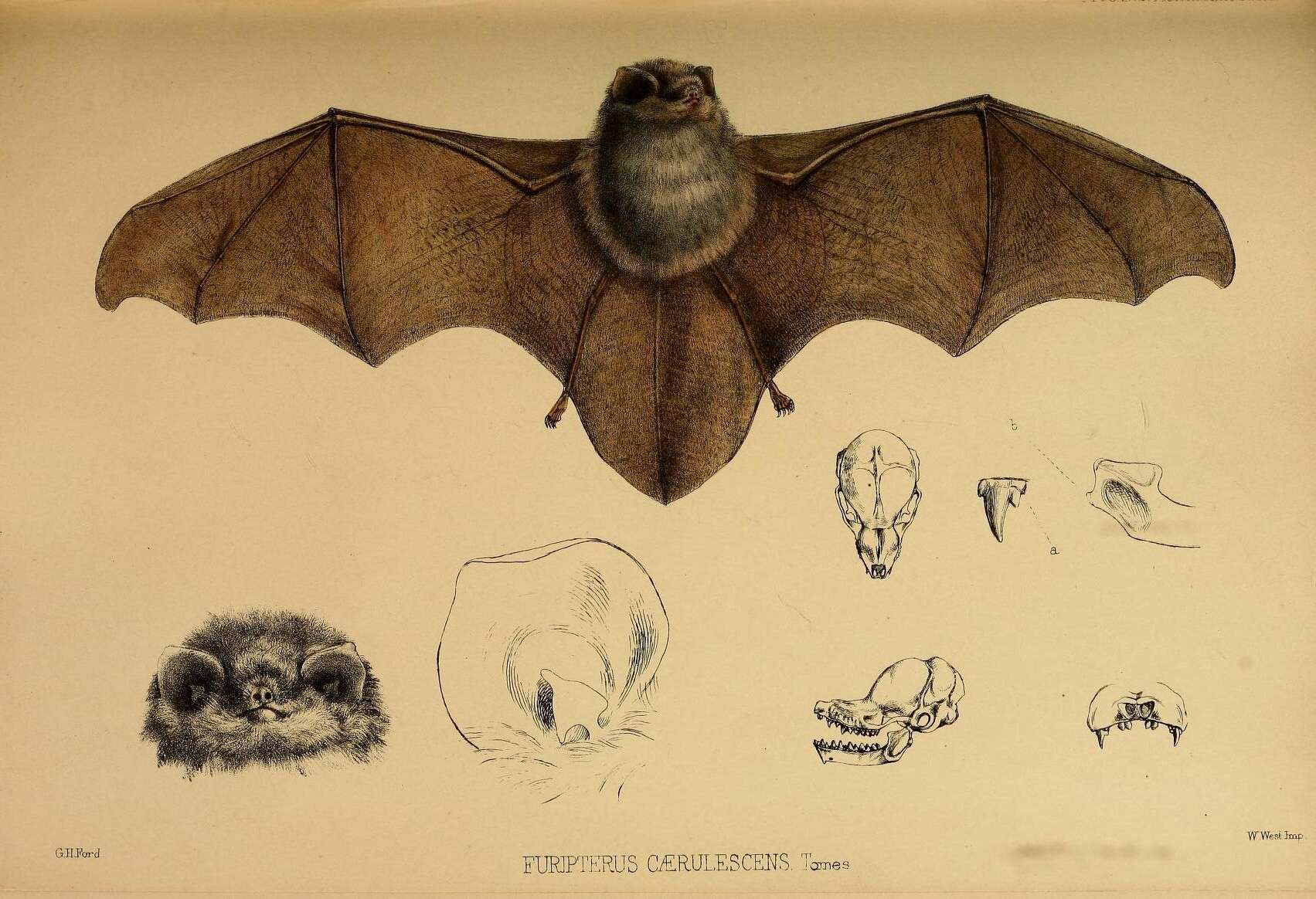
Length usually is from 33-40 mm, tail length around 24-36 mm, and forearm length from 30-40 mm (Nowak, 1994). Average specimens weigh about 3 grams (Nowak, 1994). The fur on the head is fairly long and thick, covering all the head as far as the mouth, almost concealing the mouth (Nowak, 1994). The tail is short, with both surfaces of the uropatagium haired (Nowak, 1994). The coloration is brownish gray, dark gray, or slaty blue above and usually somewhat lighter below (Nowak, 1994). Specimens of F. horrens (along with those of the related genus Amorphochilus) are easily distinguished by their reduced thumbs, which are included in the wing membrane that runs to the base of the small, funtionless claw (Nowak, 1994). The ears are seperate and funnel-shaped, while the snout is piglike (Nowak, 1994). Females are usually significantly larger than males. Their dental formula is 2/3, 1/1, 2/3, 3/3=36 (Nowak, 1994).

Average mass: 3 g.

Other Physical Features: endothermic ; bilateral symmetry

Creative Commons Attribution Non Commercial Share Alike 3.0 (CC BY-NC-SA 3.0)

© The Regents of the University of Michigan and its licensors

Source: Animal Diversity Web

Trusted

Article rating from 0 people

Average rating: 2.5 of 5

Ecology

Habitat

Habitat and Ecology

Habitat and Ecology
The species' natural history is very poorly known, and it is infrequently collected. This bat is strongly associated with moist habitats in Venezuela (Handley 1976), especially in lowland rainforest (Emmons and Feer 1997). Roosts in small clusters in colonies of up to at least 60 in caves, horizontal fallen logs, and deep cracks between rocks; one such roost was among large boulders in a riverbed, which were exposed during the dry season (LaVal 1977). A group of four found under a hollow log in Ecuador immediately vacated the roost when approached, then circled nearby and attempted to re-enter (Reid 1997). This small bat forages for insects, Lepidoptera in particular, flying close to the ground with a slow, fluttering, moth like flight (LaVal 1977). It is seldom caught in mist nets (Reid 1997). One pregnant female was captured in Colombia in September (Camargo and Tamsitt 1990). Five fossil specimens were recovered from Toca da Boa Vista, Bahia, Brazil (Czaplewski and Cartelle 1998).

Systems
  • Terrestrial
Creative Commons Attribution Non Commercial Share Alike 3.0 (CC BY-NC-SA 3.0)

© International Union for Conservation of Nature and Natural Resources

Source: IUCN

Trusted

Article rating from 0 people

Average rating: 2.5 of 5

Habitat

F. horrens is found in caves. They have also been known to live near or around streams and other moist areas deep in the forests. They have been found hanging in clusters in hollowed out logs (Nowak, 1994).

Habitat Regions: tropical

Terrestrial Biomes: rainforest

Creative Commons Attribution Non Commercial Share Alike 3.0 (CC BY-NC-SA 3.0)

© The Regents of the University of Michigan and its licensors

Source: Animal Diversity Web

Trusted

Article rating from 0 people

Average rating: 2.5 of 5

Trophic Strategy

Food Habits

F. horrens are insectivorous. Evidence from fecal samples suggests that they mainly prey on butterflys and moths (Lepidoptera) (Nowak, 1994). They usually look for prey at heights of 1-5 meters above the forest floor (Nowak, 1994).

Animal Foods: insects

Primary Diet: carnivore (Insectivore )

Creative Commons Attribution Non Commercial Share Alike 3.0 (CC BY-NC-SA 3.0)

© The Regents of the University of Michigan and its licensors

Source: Animal Diversity Web

Trusted

Article rating from 0 people

Average rating: 2.5 of 5

Associations

Known prey organisms

Furipterus horrens preys on:
Insecta

This list may not be complete but is based on published studies.
  • Myers, P., R. Espinosa, C. S. Parr, T. Jones, G. S. Hammond, and T. A. Dewey. 2006. The Animal Diversity Web (online). Accessed February 16, 2011 at http://animaldiversity.org. http://www.animaldiversity.org
Creative Commons Attribution 3.0 (CC BY 3.0)

© SPIRE project

Source: SPIRE

Trusted

Article rating from 0 people

Average rating: 2.5 of 5

Life History and Behavior

Reproduction

Reproduction

Average number of offspring: 1.

After being born the young position themselves head up on the mother's body (Nowak, 1994). This is in response to the unusual abdominal location of the mammae combined with the fact that the mothers hang in the usual head down position (Nowak, 1994).

Parental Investment: altricial

Creative Commons Attribution Non Commercial Share Alike 3.0 (CC BY-NC-SA 3.0)

© The Regents of the University of Michigan and its licensors

Source: Animal Diversity Web

Trusted

Article rating from 0 people

Average rating: 2.5 of 5

Molecular Biology and Genetics

Molecular Biology

Barcode data: Furipterus horrens

The following is a representative barcode sequence, the centroid of all available sequences for this species. 

 
There are 4 barcode sequences available from BOLD and GenBank.  Below is a sequence of the barcode region Cytochrome oxidase subunit 1 (COI or COX1) from a member of the species.  See the BOLD taxonomy browser for more complete information about this specimen and other sequences.
 
ABSMS421-06|ROM 117583|Furipterus horrens| ---------------------------------------ACTCTTTACATAATCTTCGGCGCTTGGGCGGGAATAATTGGCACCGCTCTG---AGCCTAATTATCCGTGCTGAGCTAGGCCAACCAGGAGCCCTTATAGGCGAC---GATCAAATTTACAATGTTGTCGTAACCGCTCACGCTTTCGTAATAATCTTCTTCATAGTTATGCCTATTATAATTGGTGGCTTTGGTAACTGACTCATTCCCCTTATA---ATTGGAGCCCCTGACATAGCTTTCCCACGAATAAACAATATAAGTTTTTGACTACTACCCCCCTCCTTCCTACTGCTACTAGCCTCCTCTATGGTAGAAGCCGGCGTGGGGACTGGTTGGACCGTCTACCCCCCTTTAGCAGGCAACCTCGCCCACGCAGGAGCTTCTGTAGACCTA---GCCATCTTTTCTTTACATTTGGCAGGAGTTTCATCGATCTTAGGGGCTATCAACTTTATTACCACCATTATTAACATAAAACCCCCCGCTCTAAACCAATACCAAACCCCCTTGTTTGTCTGATCAGTTGTAATCACAGCCGTTTTACTACTATTATCACTACCAGTACTAGCTGCT---GGCATTACCATACTATTAACAGACCGAAACTTAAACACCACCTTTTTCGACCCGGCTGGAGGAGGAGACCCAATTTTATATCAGCACTTG------------------------------------------------------------------------------------------------------------------------------------------------------------------------------------------------- 
-- end --

Download FASTA File
Creative Commons Attribution 3.0 (CC BY 3.0)

© Barcode of Life Data Systems

Source: Barcode of Life Data Systems (BOLD)

Trusted

Article rating from 0 people

Average rating: 2.5 of 5

Statistics of barcoding coverage: Furipterus horrens

Barcode of Life Data Systems (BOLDS) Stats
Public Records: 4
Species: 5
Species With Barcodes: 1

Creative Commons Attribution 3.0 (CC BY 3.0)

© Barcode of Life Data Systems

Source: Barcode of Life Data Systems (BOLD)

Trusted

Article rating from 0 people

Average rating: 2.5 of 5

Conservation

Conservation Status

IUCN Red List Assessment


Red List Category
LC
Least Concern

Red List Criteria

Version
3.1

Year Assessed
2008

Assessor/s
Miller, B., Reid, F., Arroyo-Cabrales, J., Cuarón, A.D. & de Grammont, P.C.

Reviewer/s
Medellín, R. (Chiroptera Red List Authority) & Schipper, J. (Global Mammal Assessment Team)

Justification
This species is listed as Least Concern because it has a wide distribution and although seldom recorded in surveys due to sampling difficulties .

History
  • 1996
    Lower Risk/least concern
Creative Commons Attribution Non Commercial Share Alike 3.0 (CC BY-NC-SA 3.0)

© International Union for Conservation of Nature and Natural Resources

Source: IUCN

Trusted

Article rating from 0 people

Average rating: 2.5 of 5

Conservation Status

F. horrens was listed as threatened, with a lower risk rating, in 1996. Currently it is not considered to be endangered or threatened (UNEP-WCMC Online Database, 2001).

US Federal List: no special status

CITES: no special status

IUCN Red List of Threatened Species: least concern

Creative Commons Attribution Non Commercial Share Alike 3.0 (CC BY-NC-SA 3.0)

© The Regents of the University of Michigan and its licensors

Source: Animal Diversity Web

Trusted

Article rating from 0 people

Average rating: 2.5 of 5

Population

Population
Apparently rare and local, but widespread (Emmons and Feer 1997; Reid 1997). Patchily distributed in Central America and northern South America. Sexes may roost separately during part of the year (Camargo and Tamsitt 1990). In Costa Rica were found more than 59 males occupying a hollow log in May (LaVal 1977).

Population Trend
Unknown
Creative Commons Attribution Non Commercial Share Alike 3.0 (CC BY-NC-SA 3.0)

© International Union for Conservation of Nature and Natural Resources

Source: IUCN

Trusted

Article rating from 0 people

Average rating: 2.5 of 5

Threats

Threats

Major Threats
Associated with caves and karstic environments and may be vulnerable to some habitat loss.
Creative Commons Attribution Non Commercial Share Alike 3.0 (CC BY-NC-SA 3.0)

© International Union for Conservation of Nature and Natural Resources

Source: IUCN

Trusted

Article rating from 0 people

Average rating: 2.5 of 5

Management

Conservation Actions

Conservation Actions
Caves in central Brazil are threatened and need conservation measures to assure persistence. Need data on population (census) to evaluate trends. Conservation of cerrado habitats.
Creative Commons Attribution Non Commercial Share Alike 3.0 (CC BY-NC-SA 3.0)

© International Union for Conservation of Nature and Natural Resources

Source: IUCN

Trusted

Article rating from 0 people

Average rating: 2.5 of 5

Wikipedia

Thumbless Bat

The Thumbless Bat (Furipterus horrens) is a species of bat in the Furipteridae family, in the monotypic genus Furipterus. It is found in Costa Rica, Brazil, Venezuela; Colombia; Ecuador; Suriname; French Guiana; Guyana; Panama; Trinidad, and Peru. They have a small thumb which is included in the membrane of the wing, causing the 'thumbless' appearance.

Sources

  • Miller, B., Reid, F., Arroyo-Cabrales, J., Cuarón, A.D. & de Grammont, P.C. (2008). Furipterus horrens. In: IUCN 2008. IUCN Red List of Threatened Species. Downloaded on 28 February 2009.
  • Nowak, Ronald (1991). Walker's Mammals of the World, Fifth Edition. The Johns Hopkins University Press. ISBN 0-8018-3970-X. 

References


Creative Commons Attribution Share Alike 3.0 (CC BY-SA 3.0)


Source: Wikipedia

Unreviewed

Article rating from 0 people

Average rating: 2.5 of 5

Disclaimer

EOL content is automatically assembled from many different content providers. As a result, from time to time you may find pages on EOL that are confusing.

To request an improvement, please leave a comment on the page. Thank you!