Overview
Brief Summary
Trusted
Ecology
Associations
Associations
Animal / parasite / ectoparasite
imago of Ornithomya chloropus ectoparasitises Turdidae
Animal / parasite / ectoparasite
imago of Ornithomya fringillina ectoparasitises Turdidae
Other: major host/prey
Trusted
Molecular Biology and Genetics
Barcode
Locations of barcode samples
Trusted
Statistics of barcoding coverage
| Specimen Records: | 1,185 |
| Specimens with Sequences: | 798 |
| Specimens with Barcodes: | 795 |
| Public Records: | 324 |
| Species: | 98 |
| Species With Barcodes: | 84 |
Trusted
Wikipedia
Thrush (bird)
- See also other birds with "thrush" in their name: Waterthrush, Shrike-thrush, Thrush Nightingale, Rosy Thrush-tanager
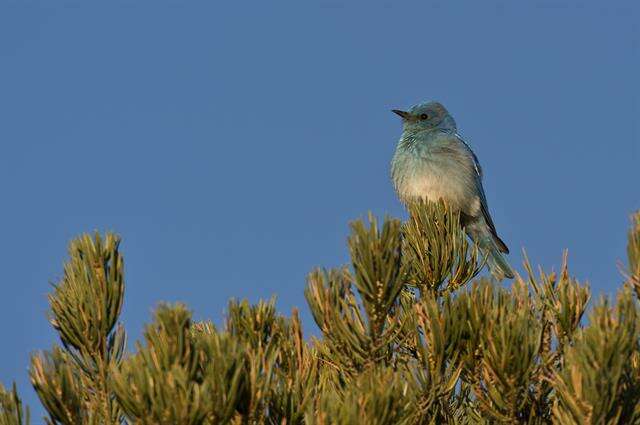
The thrushes, family Turdidae, are a group of passerine birds that occur worldwide.
Contents |
Characteristics
Thrushes are plump, soft-plumaged, small to medium-sized birds, inhabiting wooded areas, and often feed on the ground or eat small fruit. The smallest thrush may be the Forest Rock-thrush, at 21 g (0.74 oz) and 14.5 cm (5.7 in). However, the shortwings, which have ambiguous alliances with both thrushes and Old World flycatchers, can be even smaller. The Lesser Shortwing averages 12 cm (4.7 in). The largest thrush is Blue Whistling-thrush, at 178 g (6.3 oz) and 33 cm (13 in). The Great Thrush is similar in length but less heavily built.[1] Most species are grey or brown in colour, often with speckled underparts.
They are insectivorous, but most species also eat worms, land snails, and fruit. Many species are permanently resident in warm climes, while others migrate to higher latitudes during summer, often over considerable distances.[2]
Thrushes build cup-shaped nests, sometimes lining them with mud. They lay two to five speckled eggs, sometimes laying two or more clutches per year. Both parents help in raising the young.[2]
The songs of some species, including members of the genera Catharus, Myadestes, and Turdus, are considered to be among the most beautiful in the avian world.[3][4]
Ecology
Turdidae species spread the seeds of plant species, contributing to the spread of many species and the recovery of ecosystems. Plants have limited seed dispersal mobility away from the parent plant and consequently rely upon a variety of dispersal vectors to transport their propagules, including both abiotic and biotic vectors. Seeds can be dispersed away from the parent plant individually or collectively, as well as dispersed in both space and time. Many bats and birds rely heavily on fruit for their diet, some birds include members of the families Cotingidae, Columbidae, Trogonidae, Turdidae, and Rhamphastidae, they swallow seeds, then regurgitate them or pass them in their faeces. Such ornithochory has been a major mechanism of seed dispersal across ocean barriers. Other seeds may stick to the feet or feathers of birds, and in this way may travel long distances. Seeds of grasses, spores of algae, and the eggs of molluscs and other invertebrates commonly establish in remote areas after long journeys of such types. The Turdidae group have a great ecological importance because some populations migrate long distances and they disperse the seeds of many endangered species into the swallow berries at new sites helping to eliminate inbreeding and increasing the genetic diversity of plant species.
Taxonomy
The taxonomic treatment of this large family has varied significantly in recent years. Traditionally, the Turdidae included the small Old World species, like the Nightingale and European Robin in the subfamily Saxicolini, but most authorities now place this group in the Old World flycatcher family Muscicapidae.
This article follows the Handbook of the Birds of the World with edits from Clement and Hathaway, Thrushes (2000), and retains the large thrushes in Turdidae. Recent biochemical studies place certain traditional thrush genera (Monticola, Pseudocossyphus, Myiophonus, Brachypteryx, and Alethe) in the Muscicapidae. Conversely the Asian saxicoline genera Grandala and Cochoa belong here among the thrushes.
Genera
FAMILY: Turdidae
- Genus Turdus: true thrushes (some 65 species, 1 recently extinct)
- Genus Platycichla: (2 species) - part of a South American group within Turdus
- Genus Nesocichla: Tristan Thrush or Starchy - part of a South American group within Turdus
- Genus Cichlherminia: Forest Thrush - genus paraphyletic with Turdus
- Genus Psophocichla: Groundscraper Thrush
- Genus Zoothera: Asian thrushes (some 22 species, 1 recently extinct)
- Genus Catharus: typical American thrushes and nightingale-thrushes (12 species)
- Genus Hylocichla: Wood Thrush
- Genus Ridgwayia: Aztec Thrush - related to Hylocichla
- Genus Ixoreus: Varied Thrush - related to other New World genera
- Genus Geomalia: Geomalia
- Genus Cataponera: Sulawesi Thrush
- Genus Sialia: bluebirds (3 species)
- Genus Grandala: related to Sialia
- Genus Cichlopsis: Rufous-brown Solitaire - related to Catharus
- Genus Entomodestes: solitaires (2 species) - related to Catharus
- Genus Myadestes: solitaires (10-11 living species, 2-3 recently extinct) (includes formerly recognized genus Phaeornis)
- Genus Neocossyphus: flycatcher thrushes and "ant-thrushes" (4 species) - related to Myadestes
- Genus Cochoa: cochoas (4 species)
- Genus Chlamydochaera: Fruit-hunter - related to Cochoa
- Genus Heteroxenicus: Gould's Shortwing
Now usually considered a distinct family distantly related to Picathartes:
- Genus Chaetops: rock-jumpers (2 species)
For other species previously in Turdidae, see Muscicapidae and chats.
References
- ^ Thrushes by Peter Clement. Princeton University Press (2001), ISBN 978-0-691-08852-5.
- ^ a b Perrins, C. (1991). Forshaw, Joseph. ed. Encyclopaedia of Animals: Birds. London: Merehurst Press. pp. 186–187. ISBN 1-85391-186-0.
- ^ http://forums.gardenweb.com/forums/load/woodland/msg051859363475.html
- ^ http://rogcad.com/hermitthrush/index.htm
Unreviewed
Solitaire (bird)
| This article does not cite any references or sources. Please help improve this article by adding citations to reliable sources. Unsourced material may be challenged and removed. (December 2009) |
For other uses, see Solitaire (disambiguation)
The Solitaires are medium-sized mostly insectivorous birds in the genera Myadestes, Cichlopsis and Entomodestes of the thrush family Turdidae.
These are species of the Americas and Hawaii; especially in the latter part of their range, several island populations have gone extinct.
Genera:
Unreviewed
Disclaimer
EOL content is automatically assembled from many different content providers. As a result, from time to time you may find pages on EOL that are confusing.
To request an improvement, please leave a comment on the page. Thank you!