Overview

Brief Summary

Biology

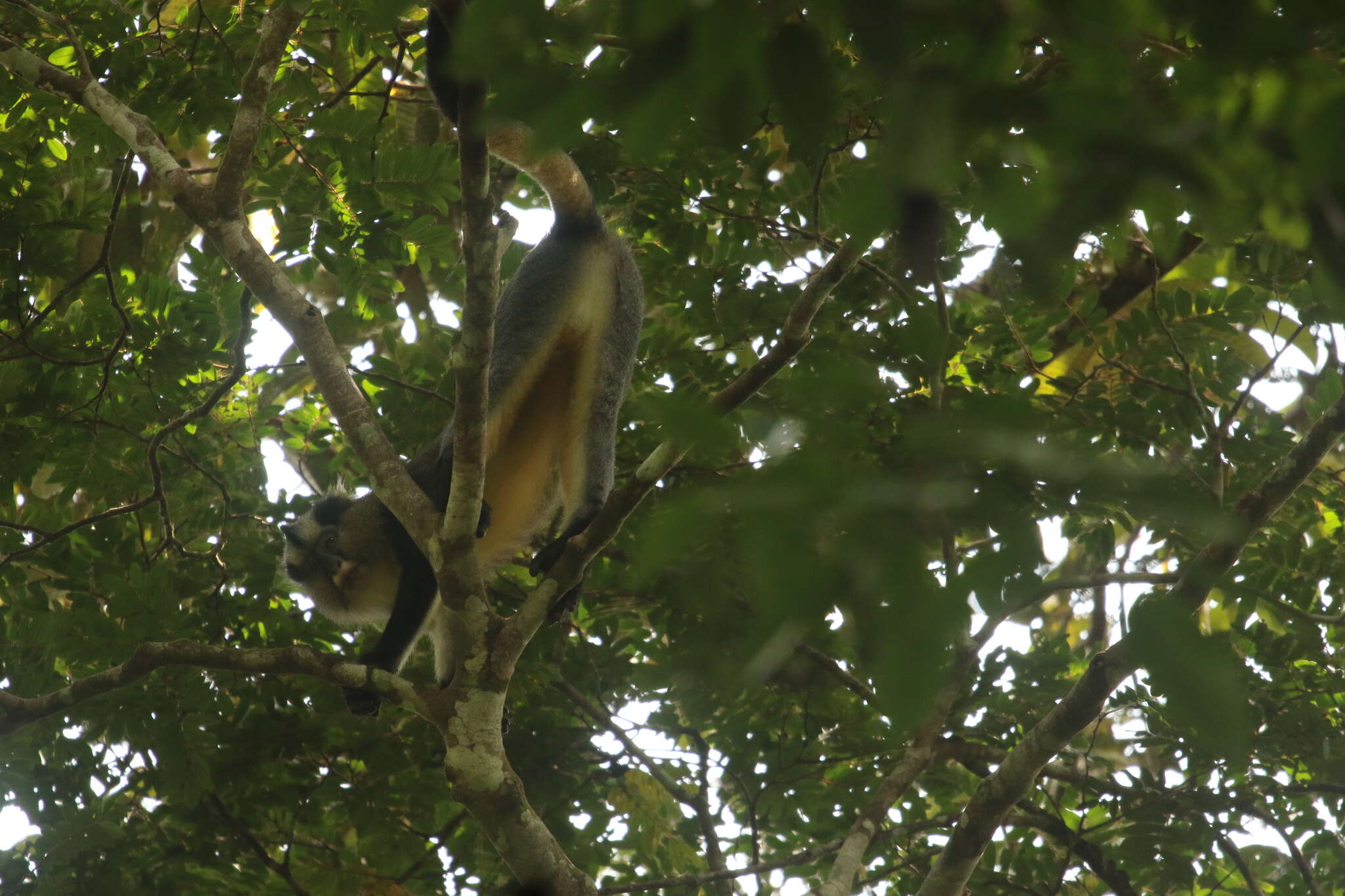
Living high in the forest canopy (8), the crowned guenon is an agile species, capable of leaping across large distances between trees (7). This species is generally found in groups of between 8 and 20 individuals (1), usually comprising a single male, several females and dependent offspring (9). Groups are highly vocal, with the males producing loud, booming calls to announce presence and status, as well as a series of “hacks” to indicate alarm (5). Generally only the dominant males are able to establish groups, and therefore most males lead solitary lives with limited social contact. Amazingly, this appears to drive some males to join groups of other related species such as the black colobus (Colobus satanas), where they form strong group associations, possibly at the expense of ever getting the chance to breed with their own species (9). Associations with other monkey species also frequently occur in crowned guenon groups, usually with moustached and greater spot-nosed guenons (10). The large mixed-species groups help to increase the monkeys' protection from predation, as it increases the likelihood of spotting predators such as birds of prey, and also allows sharing of information about the best foraging sites (11). The majority of the crowned guenon's diet consists of fruit, but insects are also frequently taken, along with small quantities of leaves. Unlike most guenons, populations of crowned guenon in the northern parts of its range make long distance migrations to locate seasonally abundant food supplies (2). Crowned guenon mating systems are usually polygynous, with the lone male in each group having exclusive breeding access to all the females (9). Breeding is likely to occur throughout the year, with the females giving birth to a single young after a gestation period of about five months (2).
Creative Commons Attribution Non Commercial Share Alike 3.0 (CC BY-NC-SA 3.0)

© Wildscreen

Source: ARKive

Trusted

Article rating from 0 people

Average rating: 2.5 of 5

Comprehensive Description

Description

The crowned guenon is a widespread and common African forest monkey, with distinctive facial markings and prominent tufted ears (4) (5). Currently this species encompasses seven different subspecies, which vary in location and, to a small degree, in appearance. Nevertheless, they generally possess a finely speckled brown and grey coat, becoming black on the lower limbs and on the lower part of the long tail (2) (4). In contrast, the rump, belly and the insides of the legs are golden-yellow and, in the male, the scrotum is blue (4). Certain subspecies, such as the Congo Basin Wolf's monkey, have more extensive golden colouration, extending across the entire hindquarters (6). The crowned guenon's face is mostly dark blue, except for the muzzle, which is pink. The fur surrounding the face is yellow, and characteristically marked with a wide black stripe running from the side of the eye to the ear and across the middle of the forehead where it forms a small crest (2) (4). In addition to these markings, the Congo Basin Wolf's monkey has a conspicuous white band running across the brow (7).
Creative Commons Attribution Non Commercial Share Alike 3.0 (CC BY-NC-SA 3.0)

© Wildscreen

Source: ARKive

Trusted

Article rating from 0 people

Average rating: 2.5 of 5

Distribution

Range Description

This widespread species ranges from the Cross River in Nigeria, east and south to the Congo Basin where it is widespread and found throughout, ranging eastwards to Rwanda, and Uganda, and southwards into the forests south of the River Kasai. Also present on Bioko Island, where it has a limited distribution on the southern slopes of the Southern Highlands up to about 1,250 m asl; a small population on the southern slopes of Pico Basile was probably hunted out in 2000 (Hearn et al. 2006).

There are seven subspecies:

The distribution of the nominate subspecies, C. p. pogonias is a little unclear. Gautier-Hion et al. (1999) restrict it to Bioko, Equatorial Guinea, with an unnamed subspecies replacing C. p. pogonias on the mainland north of the Sanaga River. However, Groves (2001) records C. p. pogonias as occurring from the Cross River across the River Sanaga to Río Muni, and includes Bioko. The current treatment considers this subspecies to include the animals on Bioko, as well as the form occurring on the mainland between the Cross and Niger Rivers.

According to Groves (2001), the subspecies C. p. nigripes ranges from Río Muni (Equatorial Guinea), Gabon and Congo, south into Cabinda (Angola). However, this distribution does not conform with that mapped by Gautier-Hion et al. (1999), who map grayi as the form in Cabinda.

C. p. grayi ranges from south Cameroon (middle Sanaga River) east to the Central African Republic, and south into Congo, and the Democratic Republic of the Congo north of the Congo River. It ranges as far eastwards as about the Itimbiri River north of the Congo River. Gautier-Hion et al. (1999) map this species occurring south to the mouth of the Congo River.

C. p. denti is found in the eastern Democratic Republic of the Congo to the east and north of the Congo-Lualaba River, extending north into the Central African Republic, but not found to the west of the Itimbiri River. This subspecies has also been recorded from western Rwanda and Uganda.

The subspecies C. p. wolfi ranges between the Congo and Sankuru Rivers in the Democratic Republic of the Congo.

C. p. elegans ranges between the Lomani and Lualaba Rivers south of 2ºS.

C. p. pyrogaster is found between the Rivers Kwango and Kasai-Lulua in the Democratic Republic of the Congo and northern Angola.
Creative Commons Attribution Non Commercial Share Alike 3.0 (CC BY-NC-SA 3.0)

© International Union for Conservation of Nature and Natural Resources

Source: IUCN

Trusted

Article rating from 0 people

Average rating: 2.5 of 5

Range

The overall range of the crowned guenon, combining the separate distributions of the seven subspecies, extends throughout much of Central Africa, from south-east Nigeria, as far east as Uganda and Rwanda, and as far south as northern Angola. Taken individually, subspecies Cercopithecus pogonias pogonias is found on the island of Bioko and also in Nigeria and northern Cameroon. Cercopithecus pogonias nigripes is found in Equatorial Guinea, Gabon, Congo and extreme north-west Angola, around Cabinda. Cercopithecus pogonias grayi ranges from southern Cameroon, east to the Central African Republic, and south to Congo and the Democratic Republic of Congo north of the Congo River. Cercopithecus pogonias denti occurs in the eastern Democratic Republic of Congo as far east as western Rwanda and Uganda, and as far north as the Central African Republic. Both Cercopithecus pogonias wolfi and Cercopithecus pogonias elegans are only found in the Democratic Republic of Congo, with the former located in the western and central regions, between the Congo and Sankuru Rivers, and the latter in central and southern regions between the Lomami and Lualaba Rivers. Cercopithecus pogonias pyrogaster is found in south-western Democratic Republic of Congo and northern Angola, between the Rivers Kwango and Kasai-Lulua (1).
Creative Commons Attribution Non Commercial Share Alike 3.0 (CC BY-NC-SA 3.0)

© Wildscreen

Source: ARKive

Trusted

Article rating from 0 people

Average rating: 2.5 of 5

Ecology

Habitat

Habitat and Ecology

Habitat and Ecology
It is associated with lowland tropical forest, especially primary high-canopy forest, but may also be found in mature secondary mature up to submontane and montane elevations. This species lives in groups of eight to 20 animals.

Systems
  • Terrestrial
Creative Commons Attribution Non Commercial Share Alike 3.0 (CC BY-NC-SA 3.0)

© International Union for Conservation of Nature and Natural Resources

Source: IUCN

Trusted

Article rating from 0 people

Average rating: 2.5 of 5

Habitat

The crowned guenon is generally found in moist primary and secondary forest, in lowland and montane regions (1) (2).
Creative Commons Attribution Non Commercial Share Alike 3.0 (CC BY-NC-SA 3.0)

© Wildscreen

Source: ARKive

Trusted

Article rating from 0 people

Average rating: 2.5 of 5

Life History and Behavior

Life Expectancy

Lifespan, longevity, and ageing

Maximum longevity: 27 years (captivity) Observations: One wild born female was at least 27 years old when she died in captivity (Richard Weigl 2005).
Creative Commons Attribution 3.0 (CC BY 3.0)

© Joao Pedro de Magalhaes

Source: AnAge

Trusted

Article rating from 0 people

Average rating: 2.5 of 5

Molecular Biology and Genetics

Molecular Biology

Barcode data: Cercopithecus pogonias

The following is a representative barcode sequence, the centroid of all available sequences for this species. 

 
There are 6 barcode sequences available from BOLD and GenBank.  Below is a sequence of the barcode region Cytochrome oxidase subunit 1 (COI or COX1) from a member of the species.  See the BOLD taxonomy browser for more complete information about this specimen and other sequences.
 
BSHMT083-09|1474|Cercopithecus pogonias| ---------------------------------------ACTCTATACCTACTATTCGGGGCATGAGCTGGGGTTATAGGCACAGCTCTA---AGTCTTTTCATCCGAGCCGAGCTAGGTCAACCTGGTAGTCTGCTAGGCAGT---GACCACATCTATAATGTCATCGTAACAGCCCATGCATTTGTCATAATTTTCTTCATGGTCATACCCATTATAATTGGAGGTTTCGGAAACTGACTAGTACCCTTGATA---ATTGGTGCTCCTGACATGGCATTTCCCCGTCTAAACAACATGAGCTTCTGGCTCCTTCCCCCCTCCTTCCTACTACTAATGGCATCAGCCATCGTAGAAGCTGGTGCTGGAACAGGCTGAACGGTATACCCGCCCTTAGCAGGAAACCTCTCCCACCCAGGGGCCTCTGTAGATTTA---GTTATTTTCTCCCTCCATTTAGCAGGAGTTTCCTCCATCCTAGGGGCGATCAATTTCATCACCACCATTATCAACATGAAACCCCCTGCTATATCCCAATACCAGACCCCCCTGTTTGTCTGATCTGTCCTAATTACAGCAATCCTACTACTCCTCTCTTTACCAGTTCTAGCCGCT---GGTATTACTATACTATTAACAGATCGCAACCTCAATACCACTTTCTTTGACCCTACTGGAGGAGGGGATCCTATCCTA------------------------------------------------------------------------------------------------------------------------------------------------------------------------------------------------------------- 
-- end --

Download FASTA File
Creative Commons Attribution 3.0 (CC BY 3.0)

© Barcode of Life Data Systems

Source: Barcode of Life Data Systems (BOLD)

Trusted

Article rating from 0 people

Average rating: 2.5 of 5

Statistics of barcoding coverage: Cercopithecus pogonias

Barcode of Life Data Systems (BOLDS) Stats
Public Records: 6
Species: 6
Species With Barcodes: 1

Creative Commons Attribution 3.0 (CC BY 3.0)

© Barcode of Life Data Systems

Source: Barcode of Life Data Systems (BOLD)

Trusted

Article rating from 0 people

Average rating: 2.5 of 5

Conservation

Conservation Status

IUCN Red List Assessment


Red List Category
LC
Least Concern

Red List Criteria

Version
3.1

Year Assessed
2008

Assessor/s
Oates, J.F., Hart, J., Butynksi, T. & Groves, C.P.

Reviewer/s
Mittermeier, R.A. & Rylands, A.B. (Primate Red List Authority)

Justification
This species is listed as Least Concern in view of its widespread distribution and because it is not likely to be declining fast enough to warrant listing in a higher category of threat.

History
  • 2000
    Lower Risk/least concern
  • 1996
    Lower Risk/least concern
Creative Commons Attribution Non Commercial Share Alike 3.0 (CC BY-NC-SA 3.0)

© International Union for Conservation of Nature and Natural Resources

Source: IUCN

Trusted

Article rating from 0 people

Average rating: 2.5 of 5

Status

Classified as Least Concern (LC) on the IUCN Red List (1) and listed on Appendix II of CITES (3). Subspecies: Cercopithecus pogonias pogonias (golden-bellied crowned monkey) is classified as Vulnerable (VU); C. p. elegans (Lomami River Wolf's monkey) is classified as Near Threatened (NT); C. p. nigripes (black-footed crowned monkey), C. p. grayi (Gray's crowned monkey), C. p. denti (Dent's monkey) and C. p. wolfi (Congo Basin Wolf's monkey) are classified as Least Concern (LC) on the IUCN Red List (1).
Creative Commons Attribution Non Commercial Share Alike 3.0 (CC BY-NC-SA 3.0)

© Wildscreen

Source: ARKive

Trusted

Article rating from 0 people

Average rating: 2.5 of 5

Population

Population
It is common in some parts of its range, but rare in some regions. Unlike for many other primates on Bioko, this island may be one of the strongholds for C. pogonias and especially for the nominate subspecies. In 1992, Mate and Colell (1995) found C. p. pogonias to be by far the most common monkey at their study side on the south-east coast of Bioko, recording densities of 1.8-2.25 individuals/km², perhaps because hunting of primates is lower on the south coast of Bioko as anywhere on the island (T. Butynski pers. obs.). Hearn et al. (2006) did not record any significant decline of the species on Bioko between 1986 and 2006.

Population Trend
Unknown
Creative Commons Attribution Non Commercial Share Alike 3.0 (CC BY-NC-SA 3.0)

© International Union for Conservation of Nature and Natural Resources

Source: IUCN

Trusted

Article rating from 0 people

Average rating: 2.5 of 5

Threats

Threats

Major Threats
This species has been impacted in parts of its range by habitat loss through deforestation, agriculture and human settlement, and it is also hunted for meat across most of its range.

Results of survey work in Korup N. P. in Cameroon suggest that, although C. pogonias is small bodied, it might be more vulnerable to hunting than other guenon species due to its relatively narrow feeding and habitat requirements. Populations of C. p. pogonias appear to be declining in the north-east section of Korup N. P. and might have already been extirpated from areas of the park that are most heavily hunted and where anti-poaching patrols are absent. Results from forests near to Korup N. P. also suggest that hunting has reduced or eliminated populations of C. pogonias. However, populations appear to be increasing in southern Korup N. P. This may be the result of the relatively low hunting pressure (compared with north-east Korup) and/or a potentially more favourable habitat for this species in southern Korup (Linder 2008).
Creative Commons Attribution Non Commercial Share Alike 3.0 (CC BY-NC-SA 3.0)

© International Union for Conservation of Nature and Natural Resources

Source: IUCN

Trusted

Article rating from 0 people

Average rating: 2.5 of 5

Threats

The main threats faced by the crowned guenon are habitat loss, through deforestation for timber and agricultural land, and hunting for meat. Currently, the most seriously affected subspecies is Cercopithecus pogonias pogonias, which has undergone a decline of around 30 percent since the 1980s, and may have been eliminated from certain areas. Although this subspecies is located in protected areas such as Korup National Park in north-west Cameroon, a lack of enforcement of protective measures means that poaching is common (1).
Creative Commons Attribution Non Commercial Share Alike 3.0 (CC BY-NC-SA 3.0)

© Wildscreen

Source: ARKive

Trusted

Article rating from 0 people

Average rating: 2.5 of 5

Management

Conservation Actions

Conservation Actions
This species is listed on Appendix II of CITES and on Class B of the African Convention on the Conservation of Nature and Natural Resources. This widespread species is present in several protected areas, including Korup National Park (Cameroon) - an important stronghold to insure the survival of C. pogonias in the Cameroon-Nigeria border area - Odzala National Park (Congo), Monte Alen National Park (Equatorial Guinea) and Salonga National Park (DR Congo). Further taxonomic work is needed to elucidate the status of the various subspecies, and particularly to ascertain whether some forms merit recognition as distinct species.
Creative Commons Attribution Non Commercial Share Alike 3.0 (CC BY-NC-SA 3.0)

© International Union for Conservation of Nature and Natural Resources

Source: IUCN

Trusted

Article rating from 0 people

Average rating: 2.5 of 5

Conservation

The crowned guenon occurs in a number of protected areas throughout its range, and is therefore safeguarded, to some extent, from habitat loss (1). In order to protect this species against unsustainable levels of international trade, the crowned guenon is listed on Appendix II of the Convention on International Trade in Endangered Species (CITES) (3). In addition, this species is listed on Class B of the African Convention on the Conservation of Nature and Natural Resources, and therefore legal hunting requires authorisation (1) (12). Unfortunately, despite these controls, the bushmeat trade for the crowned guenon—along with many other species—continues to grow (13) (14). To combat this, on Bioko, the Bioko Biodiversity Protection Program is working to protect the island's threatened wildlife by patrolling protected areas to deter hunters, and by developing research and educational programs (13). At an international level, the Bushmeat Crisis Task Force, a consortium of several conservation organisations, is working with governments, organisations and the general public, in order to eliminate unsustainable and illegal bushmeat hunting practices worldwide (14).
Creative Commons Attribution Non Commercial Share Alike 3.0 (CC BY-NC-SA 3.0)

© Wildscreen

Source: ARKive

Trusted

Article rating from 0 people

Average rating: 2.5 of 5

Wikipedia

Crested mona monkey

The crested mona monkey (Cercopithecus pogonias), also known as the crowned guenon, crowned monkey, golden-bellied guenon, or golden-bellied monkey, is a species of primate in the Cercopithecidae family. It is found in Angola, Cameroon, Central African Republic, Republic of the Congo, Democratic Republic of the Congo, Equatorial Guinea, Gabon, and Nigeria.[2]

References

  1. ^ Groves, C. (2005). Wilson, D. E.; Reeder, D. M. eds. Mammal Species of the World (3rd ed.). Baltimore: Johns Hopkins University Press. pp. 158. OCLC 62265494. ISBN 0-801-88221-4. http://www.bucknell.edu/msw3/browse.asp?id=12100490. 
  2. ^ a b Oates, J. F., Hart, J., Butynski, T. & Groves, C. P. (2008). Cercopithecus pogonias. In: IUCN 2008. IUCN Red List of Threatened Species. Downloaded on 4 January 2009.


Creative Commons Attribution Share Alike 3.0 (CC BY-SA 3.0)


Source: Wikipedia

Unreviewed

Article rating from 0 people

Average rating: 2.5 of 5

Disclaimer

EOL content is automatically assembled from many different content providers. As a result, from time to time you may find pages on EOL that are confusing.

To request an improvement, please leave a comment on the page. Thank you!