Articles on this page are available in 1 other language: Dutch (1) (learn more)
Overview
Brief Summary
Description
Trusted
Trusted
Biology
Trusted
Distribution
Range Description
Trusted
Geographic Range
Erinaceus europaeus (European hedgehog) is commonly found across Europe and into central Asia. Native to this region, it can be found from the Archipelago of the Azores and as far east as Khazakstan. It is commonly seen in northern Europe, as far as Scandinavia. While it is generally not found south of the Mediterranean Sea, it has been seen in Lebanon. Erinaceus europaeus is also found in New Zealand, where they were introduced in the late 1800s.
Biogeographic Regions: palearctic (Native ); australian (Introduced )
- National Museum of Natural History, Smithsonian Institution. 2011. "Division of Mammals Collections: Search "Erinaceus europaeus"" (On-line). Accessed April 03, 2011 at http://collections.nmnh.si.edu/search/mammals/.
- Bogdanov, A., A. Bannikova, Y. Pirusskii, N. Formozov. 2009. The first genetic evidence of hybridization between West European and Northern white-breasted hedgehogs (Erinaceus europaeus and E. roumanicus) in Moscow region. Biology Bulletin, 36/6: 647-651. Accessed March 18, 2011 at http://www.springerlink.com/content/p110772hh53p71h7/.
- Brockie, R. 1959. Observations of the food of the hedgehog (Erinaceus europaeus L.) in New Zealand. New Zealand Journal of Science, 2: 121-136.
- Mathias, M., M. Ramalhinho, M. Santos-Reis, F. Petrucci-Fonseca, R. Libios, R. Fons, G. Ferraz de Carvalho, M. Oom, M. Collares-Pereira. 1998. Mammals from the Azores islands (Portugal): An updated overview.. Mammalia, 62: 397-407.
Trusted
Range
Trusted
Physical Description
Morphology
Physical Description
The European hedgehog is a small, round animal with short legs that raise it about 1 inch above the ground. It is plantigrade and has 5 well developed pads and claws on each foot. The first and fifth toes are smaller and weaker than the second, third, and fourth toes. Its coat is white and brown and consists of 3/4 to 1 inch spines, arranged in a radiating pattern, that cover all but its cheeks, throat, stomach, and limbs. Areas not covered in spines are covered in a coarse hair that is yellow-brown in color, though white hedgehogs have been seen. It has an elongated, conical head and snout, a small braincase, a short neck and tail, and well developed eyes and ears. The length of its body ranges from 135 to 265 mm, and males are usually slightly larger than females. The tail is about 20 mm long.
The spines covering the European hedgehog's body have white tips and bases and are covered with alternating brown and black bands. They are hollow and have longitudinal grooves, which decrease their weight. Spines are made of keratin and are attached to the skin in a similar way to hair. Each spine grows from a follicle in the skin that is attached to a small muscle (arrector pili) that is used for piloerection. When a hedgehog rolls into a ball, all of the spines can be erected simultaneously, which is made possible by the panniculus carnosis, a sheet of muscle that covers its back. An adult hedgehog usually has around 5,000 spines covering its body.
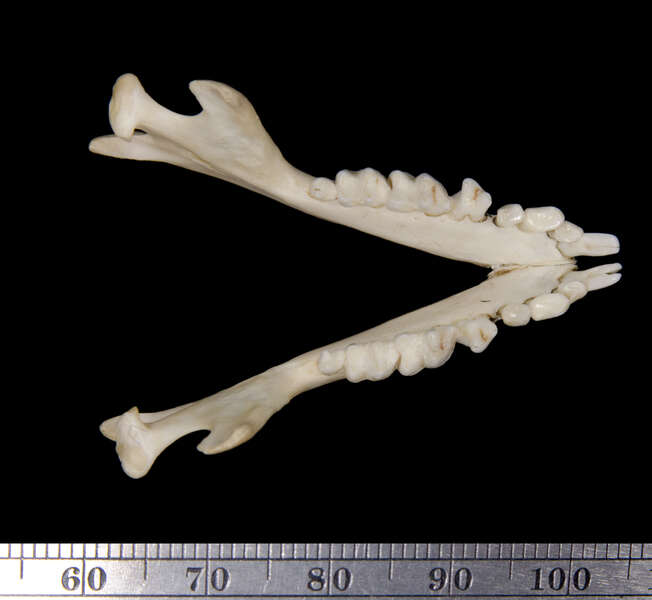
Erinaceus europaeus has lacteal and permanent teeth. The permanent dentition features widely space upper incisors such that the lower incisors fit between them. The dental formula for E. europaeus is 3/2, 1/1, 2/3, 3/3.
Range mass: 800 to 1200 g.
Range length: 135 to 165 mm.
Other Physical Features: endothermic ; homoiothermic; bilateral symmetry
Sexual Dimorphism: male larger
Average basal metabolic rate: 2.434 W.
- Walker, E. 1968. Mammals of the World. Baltimore: Johns Hopkins Press.
- Forrest, E. 1899. The fauna of Shropshire: being an account of all the mammals, birds, reptiles & fishes found in the county of Salop. With an introduction dealing with the physical features of the county, a copious index, a chapter on the principal naturalists who have done work in connection with the subject, and a short account of the Wild birds protection acts.. Shrewsbury, UK: L. Wilding, Castle Street. Accessed March 14, 2011 at http://babel.hathitrust.org/cgi/pt?id=uc1.b3361250.
- Gordon, W. 1904. Our country's animals and how to know them: A guide to the mammals, reptiles and amphibians of Great Britain. London, UK: Simpkin, Marshall, Hamilton, Kent. Accessed March 14, 2011 at http://babel.hathitrust.org/cgi/pt?id=uc1.b3290968.
- Kindahl, M. 1959. The Tooth Development in Erinaceus Europaeus. Acta Odontologica Scandinavica, 17/4: 467-489. Accessed March 14, 2011 at http://informahealthcare.com.proxy.lib.umich.edu/doi/abs/10.3109/00016355908993935.
- Rondinini, C. 2007. Hedgehogs and moonrats. D Macdonald, ed. The Encyclopedia of Mammals, Oxford Reference Online Edition. Oxford: Oxford University Press. Accessed April 03, 2011 at http://www.oxfordreference.com.proxy.lib.umich.edu/views/ENTRY.html?subview=Main&entry=t227.e65.
- Step, E. 1921. Animal life of the British Isles: A pocket guide to the mammals, reptiles and batrachians of wayside and woodland. London, UK: Frederick Warne. Accessed March 14, 2011 at http://babel.hathitrust.org/cgi/pt?id=uc2.ark:/13960/t1bk1864b.
Trusted
Ecology
Habitat
Habitat and Ecology
Systems
- Terrestrial
Trusted
The European hedgehog is found in temperate fields, especially field edges and hedgerows. They prefer drier areas that are not thickly wooded and are occasionally found in scrub and sand dunes. European hedgehogs are commensal and are often found in home gardens, cemeteries, parks, agroecosystems, and other areas that provide appropriate places for hibernation. It commonly occupies elevations from sea level to 2400 m throughout its geographic range.
Range elevation: 0 to 2400 m.
Habitat Regions: temperate ; terrestrial
Terrestrial Biomes: savanna or grassland ; forest ; scrub forest
Other Habitat Features: suburban ; agricultural ; riparian
- Lawrence, M., R. Brown. 1973. Mammals of Britain: Tracks, Signs and Trails. London: Blanford Press.
- Southern, H. 1964. Handbook of British Mammals. Oxford: Blackwell Scientific Publications.
- Beilby, R. 1791. A general history of quadrupeds: The figures engraved on wood By T. Bewick.. Newcastle upon Tyne, UK: S. Hodgson, R. Beilby, & T. Bewick. Accessed March 14, 2011 at http://find.galegroup.com.proxy.lib.umich.edu/ecco/infomark.do?&contentSet=ECCOArticles&type=multipage&tabID=T001&prodId=ECCO&docId=CW3307221348&source=gale&userGroupName=umuser&version=1.0&docLevel=FASCIMILE.
- Burton, M. 1969. The Hedgehog. Worchester and London: Andre Deutch Limited.
- Gaglio, G., S. Allen, L. Bowden, M. Bryant, E. Morgan. 2009. Parasites of European hedgehogs (Erinaceus europaeus) in Britain: epidemiological study and coprological test evaluation. European Journal of Wildlife Research, 56/6: 839-844. Accessed March 14, 2011 at http://www.springerlink.com.proxy.lib.umich.edu/content/aw66l6051n601u56/.
- Hof, A., P. Bright. 2010. The value of agri-environment schemes for macro-invertebrate feeders: hedgehogs on arable farms in Britain. Animal Conservation, 13/5: 467–473. Accessed March 14, 2011 at http://onlinelibrary.wiley.com.proxy.lib.umich.edu/doi/10.1111/j.1469-1795.2010.00359.x/abstract.
- Johnston, H. 1903. British Mammals. London, UK: Hutchinson & Co..
Trusted
Trusted
Trophic Strategy
Food Habits
European hedgehogs are omnivorous, but predominantly feed on insects. They favor beetles, ants, bees, wasps, earwigs, butterflies and moths. Hedgehogs may also eat cockroaches, crickets, grasshoppers, snails, eggs, lizards, snakes, frogs, small rodents, and carrion.
Animal Foods: birds; mammals; amphibians; reptiles; eggs; carrion ; insects; terrestrial non-insect arthropods; terrestrial worms
Plant Foods: seeds, grains, and nuts; fruit
Primary Diet: omnivore
- Jones, C., K. Moss, M. Sanders. 2005. Diet of hedgehogs (Erinaceus europaeus) in the upper Waitaki Basin, New Zealand: Implications for conservation. New Zealand Journal of Ecology, 29/1: 29-35. Accessed April 03, 2011 at http://www.nzes.org.nz.proxy.lib.umich.edu/nzje/free_issues/NZJEcol29_1_29.pdf.
Trusted
Associations
adult of Archaeopsylla erinacei erinacei sucks the blood of ear of Erinaceus europaeus
Animal / pathogen
Foot and Mouth virus (FMD) infects Erinaceus europaeus
Other: minor host/prey
Animal / parasite / ectoparasite / blood sucker
larva of Ixodes hexagonus sucks the blood of face of Erinaceus europaeus
Other: major host/prey
Animal / parasite / ectoparasite / blood sucker
Ixodes ricinus sucks the blood of Erinaceus europaeus
Trusted
Ecosystem Roles
Hedgehogs are omnivorous, feeding on a wide variety of animal (especially insect) and plant material. They may help control insect pest populations in some areas. Hedgehogs are hosts to a variety of parasites including nematodes (Crenosoma striatum, Eucoleus aerophilus, Capillaria erinacei, Capillaria ovoreticulata and Capillaria spp.), trematodes (Brachylaemus erinacei), acanthocephalans (Oliganthorhynchus erinacei), ticks (Ixodes hexagonus), and fleas (Archeopsylla erinacei).
Commensal/Parasitic Species:
- Ixodes hexagonus
- Crenosoma striatum
- Eucoleus aerophilus
- Capillaria erinacei
- Capillaria ovoreticulata
- Capillaria
- Brachylaemus erinacei
- Oliganthorhynchus erinacei
- Archeopsylla erinacei
Trusted
Predation
Predators of the Erinaceus europaeus include dogs, foxes, snakes, large owls, and badgers. To protect themselves, hedgehogs have the ability to curl into a defensive ball that exposes only erected spines. In order to form into a ball, they constriction the panniculus carnosus muscle. When this occurs, the muscles associated with each spine contract, leaving all of the hedgehog’s spines erect. Some predators, such as badgers and foxes, may be able to gain access to the hedgehog by wedging their noses into the crease where the top and bottom of the spiny coat meet. Predators have also been known to drop a balled hedgehog from a height so as to shock or injure the hedgehog long enough for them to take advantage of its exposed underbelly.
Known Predators:
- badgers Meles meles
- foxes Vulpes vulpes
- owls Strigidae
- dogs Canis lupus
- snakes Serpentes
- Vermeulen, F., N. Van den Brink, H. D'Havé, V. Mubiana, R. Blust, L. Bervoets, W. De Coen. 2009. Habitat type-based bioaccumulation and risk assessment of metal and As contamination in earthworms, beetles and woodlice. Environmental Pollution, 157: 3098-3105. Accessed March 14, 2011 at http://www.sciencedirect.com.proxy.lib.umich.edu/science?_ob=ArticleURL&_udi=B6VB5-4WH6KRG-2&_user=99318&_coverDate=11%2F30%2F2009&_rdoc=1&_fmt=high&_orig=gateway&_origin=gateway&_sort=d&_docanchor=&view=c&_acct=C000007678&_version=1&_urlVersion=0&_userid=99318&md5=d2c703f12864cdc895e0969ffdb61108&searchtype=a.
Trusted
Known prey organisms
Isoptera
Coleoptera
Hymenoptera
Auchenorrhyncha
Pteroclididae
Columbidae
Alaudidae
Araneae
Cicindelidae
Camponotus pennsylvanicus
Rodentia
Based on studies in:
India, Rajasthan Desert (Desert or dune)
This list may not be complete but is based on published studies.
- I. K. Sharma, A study of ecosystems of the Indian desert, Trans. Indian Soc. Desert Technol. and Univ. Center Desert Stud. 5(2):51-55, from p. 52 and A study of agro-ecosystems in the Indian desert, ibid. 5:77-82, from p. 79 1980).
Trusted
Known predators
Felis silvestris libyca
Canis lupus familiaris
Based on studies in:
India, Rajasthan Desert (Desert or dune)
This list may not be complete but is based on published studies.
- I. K. Sharma, A study of ecosystems of the Indian desert, Trans. Indian Soc. Desert Technol. and Univ. Center Desert Stud. 5(2):51-55, from p. 52 and A study of agro-ecosystems in the Indian desert, ibid. 5:77-82, from p. 79 1980).
Trusted
Life History and Behavior
Behavior
Communication and Perception
European hedgehogs are not particularly noisy, and make mostly grunting, snorting, and hoarse squeaking sounds. Adults are vocal during mating, while feeding, and occasionally when captured. Young may squeak and whistle while in the nest. Due to its nocturnal behavior, European hedgehogs rely heavily on their senses of smell and hearing. In addition to having a well developed sense of smell, they, like many mammals, have a Jacobson's organ in their palate. The organ may have a role in social behavior as both male and female hedgehogs have a variety of scent glands. While the mechanisms of hearing in E. europaeus have not been well studied, research on a related species, the Long-eared hedgehog, has found it capable of processing high-frequency sounds up to 45kHz.
Communication Channels: tactile ; acoustic ; chemical
Other Communication Modes: pheromones ; scent marks
Perception Channels: visual ; acoustic
Trusted
Life Expectancy
Lifespan/Longevity
In the wild, European hedgehogs can live up to six years. In captivity, they can live as many as ten years.
Range lifespan
Status: wild: 8 (high) years.
Range lifespan
Status: captivity: 11.7 (high) years.
Typical lifespan
Status: wild: 6 (high) years.
Typical lifespan
Status: captivity: 10 (high) years.
Trusted
Lifespan, longevity, and ageing
Trusted
Reproduction
European hedgehogs are solitary and non-territorial. They begin the mating process when a male encounters a female, at which time the male encircles the female while she lowers her head and makes a variety snorts, grunts, and hisses. If the male is successful in courting the female, he attempts to mount her several times. After numerous copulations, the male leaves the female, and does not provide any parental care to his offspring. He continues to roam alone and attempts to mate with other females until he begins preparing for hibernation. Males and females have multiple mates each season.
Mating System: polygynandrous (promiscuous)
Erinaceus europaeus begins mating in late spring (April or May) when the the animal emerges from hibernation. Males, which emerge 3 to 4 weeks before females, expand their home range during mating season to increase chances of finding a mate. When a male finds a mate, he circles her while she lowers her nose and becomes audibly defensive. The male may circle for several hours, making several attempts to mount. If the female continually rejects the male, he eventually leaves to find a receptive female. If she accepts him, she flattens her spines and lowers herself to the ground, which gives the male better access. To copulate, a male climbs onto a female's back and uses his teeth to hold onto her shoulder. Gestation last for about 35 days. Females give birth to four to six offspring per litter, and often have two litters per year. The second litter, which is born later in the year, has a reduced chance of surviving winter. New borns are about 3 inches long and weigh 0.3 to 0.9 oz. At birth, E. europaeus does not appear to have spines, which are concealed beneath their fluid filled skin. 24 hours after birth, the fluid is absorbed and the spines are revealed, and, 2 to 3 days later, the young’s musculature is developed enough to allow it to hold the spines erect. These white adolescent spines are replaced by darker spines after about 1.5 days. Pigmented adult spines replace the first two coats after about 2 to 3 weeks, at which time young begin to open their eyes and learn how to roll into a ball. Young are weaned by 4 to 6 weeks old, after which they become independent of parental care, and are able to mate by about 1 year.
Breeding interval: Hedgehogs breed seasonally, and can have up to two litters per season
Breeding season: April to September
Range number of offspring: 1 to 9.
Range gestation period: 30 to 49 days.
Average birth mass: 14.7 g.
Range weaning age: 4 to 6 weeks.
Range time to independence: 4 to 6 weeks.
Average age at sexual or reproductive maturity (female): 253 days.
Average age at sexual or reproductive maturity (male): 253 days.
Key Reproductive Features: iteroparous ; seasonal breeding ; gonochoric/gonochoristic/dioecious (sexes separate); viviparous
Average birth mass: 14.7 g.
Average number of offspring: 1.5.
Average age at sexual or reproductive maturity (male)
Sex: male: 253 days.
Average age at sexual or reproductive maturity (female)
Sex: female: 253 days.
Weaning usually occurs 6 weeks after birth, at which time young European hedhogs begin venturing out of the nest with their mother. They begin to forage and create an overwintering nest on their own. Most individuals are sexually mature by the first spring after their born.
Parental Investment: precocial ; female parental care ; pre-hatching/birth (Provisioning: Female, Protecting: Female); pre-weaning/fledging (Provisioning: Female)
- Walker, E. 1968. Mammals of the World. Baltimore: Johns Hopkins Press.
- Southern, H. 1964. Handbook of British Mammals. Oxford: Blackwell Scientific Publications.
- Bunnell, T. 2009. Growth rate in early and late litters of the European hedgehog (Erinaceus europaeus). Lutra, 52/1: 15-22.
- Burton, M. 1969. The Hedgehog. Worchester and London: Andre Deutch Limited.
- Hof, A., P. Bright. 2010. The value of agri-environment schemes for macro-invertebrate feeders: hedgehogs on arable farms in Britain. Animal Conservation, 13/5: 467–473. Accessed March 14, 2011 at http://onlinelibrary.wiley.com.proxy.lib.umich.edu/doi/10.1111/j.1469-1795.2010.00359.x/abstract.
- Johnston, H. 1903. British Mammals. London, UK: Hutchinson & Co..
- Rondinini, C. 2007. Hedgehogs and moonrats. D Macdonald, ed. The Encyclopedia of Mammals, Oxford Reference Online Edition. Oxford: Oxford University Press. Accessed April 03, 2011 at http://www.oxfordreference.com.proxy.lib.umich.edu/views/ENTRY.html?subview=Main&entry=t227.e65.
- de Magalhaes, J., J. Costa. 2009. A database of vertebrate longevity records and their relation to other life-history traits. Journal of Evolutionary Biology, 22/8: 1770-1774. Accessed April 03, 2011 at http://genomics.senescence.info/species/entry.php?species=Erinaceus_europaeus.
Trusted
Evolution and Systematics
Functional Adaptations
Functional adaptation
The spines of hedgehogs function as shock-absorbers during falls thanks to their honeycomb-like core and longitudinal stiffening.
"In the second category, comprising animals with masses between about 100 kilograms and 100 grams (4 ounces), falling may be injurious, but the fall must involve a distance greater than the height of the animal…Hedgehogs (about 500--1,000 grams in mass), are also just above the lower limit, but, according to Vincent and Owers (1986), cope with falls by using a special device--spines that can act as shock absorbers." (Vogel 2003:44)
"[T]he hedgehog spine is a shock-absorber…The foam-like structure down the center of spines and quills supports the thin outer walls against local buckling, allowing the structure to bend further without failing…Porcupine quills perform more or less the same as hollow cylinders in buckling as struts with an axial load; in bending they are 40% or so better. But the spines of the hedgehog, with their square honeycomb core and longitudinal stiffening, are three times better than they would be without the core." (Vincent 2002:30-31)
Learn more about this functional adaptation.
- Steven Vogel. 2003. Comparative Biomechanics: Life's Physical World. Princeton: Princeton University Press. 580 p.
- Vincent, JFV. 2002. Survival of the cheapest. Materials Today. 5(12): 28-41.
Trusted
Molecular Biology and Genetics
Molecular Biology
Barcode data: Erinaceus europaeus
There is 1 barcode sequence available from BOLD and GenBank. Below is the sequence of the barcode region Cytochrome oxidase subunit 1 (COI or COX1) from a member of the species. See the BOLD taxonomy browser for more complete information about this specimen. Other sequences that do not yet meet barcode criteria may also be available.
-- end --
Download FASTA File
Trusted
Statistics of barcoding coverage: Erinaceus europaeus
Public Records: 1
Specimens with Barcodes: 1
Species With Barcodes: 1
Trusted
Conservation
Conservation Status
IUCN Red List Assessment
Red List Category
Red List Criteria
Version
Year Assessed
Assessor/s
Reviewer/s
Contributor/s
Justification
History
- 1996Lower Risk/least concern
Trusted
Formerly a common sight in the UK, local populations of Erinaceus europaeus appear to be rapidly declining. Despite this, E. europaeus is listed as a species of least concern on the IUCN's Red List of Threatened Species. The reasons for its decline are unclear, however, E. europaeus has been included in the UK Biodiversity Action Plan.
US Federal List: no special status
CITES: no special status
IUCN Red List of Threatened Species: least concern
Trusted
Status
Trusted
Trends
Population
Population Trend
Trusted
Threats
Trusted
Trusted
Management
Conservation Actions
Trusted
Conservation
Trusted
Relevance to Humans and Ecosystems
Benefits
Economic Importance for Humans: Negative
Hedgehogs are potential vectors for a number of parasites and pathogens including ticks, fleas, mites, ringworm, influenza, yellow fever, Salmonella enteritidis, leptospirosis, and foot and mouth disease.
Negative Impacts: injures humans (carries human disease); causes or carries domestic animal disease
Trusted
Economic Importance for Humans: Positive
Hedgehogs are routinely kept as pets, but the European hedgehog is forbidden as a pet in Europe. Due to their broad diet, hedgehogs may help control insect pests. They have proven useful for the study of numerous diseases including foot and mouth disease, yellow fever, and influenza. Their hair and spines are useful in assessing for environmental pollutants including arsenic, silver, cadmium, lead, cobalt, and Persistant Organic Pollutants (POPs). Traditional remedies have incorporated the blood, entrails, or ashes of European hedgehogs, and some rituals involving hedgehogs have been used to cure baldness and predict the weather. Ancient Romans raised hedgehogs for their meat, and they used parts of the hedgehog, especially their spiny coat, for training work animals.
Positive Impacts: pet trade ; food ; body parts are source of valuable material; research and education; controls pest population
- D'Havé, H., J. Scheirs, V. Kayawe Mubiana, R. Verhagen, R. Blust, W. De Coen. 2006. Non-destructive pollution exposure assessment in the European hedgehog (Erinaceus europaeus): II. Hair and spines as indicators of endogenous metal and As concentrations. Environmental Pollution, 142/3: 438-448. Accessed March 21, 2011 at http://www.sciencedirect.com.proxy.lib.umich.edu/science?_ob=ArticleURL&_udi=B6VB5-4HP6GF9-5&_user=99318&_coverDate=08%2F31%2F2006&_rdoc=1&_fmt=high&_orig=gateway&_origin=gateway&_sort=d&_docanchor=&view=c&_acct=C000007678&_version=1&_urlVersion=0&_userid=99318&md5=e1eddc19725614595973eaef32b307bb&searchtype=a.
- D'Havé, H., J. Scheirs, R. Verhagen, V. Mubianaa, W. De Coen. 2005. Nondestructive pollution exposure assessment in the european hedgehog (Erinaceus europaeus): I. Relationships between concentrations of metals and arsenic in hair, spines, and soil. Environmental Toxicology and Chemistry, 24/9: 2356-2364. Accessed March 14, 2011 at http://onlinelibrary.wiley.com.proxy.lib.umich.edu/doi/10.1897/04-597R.1/abstract;jsessionid=3494EA9BD6CC8AEA24695DBB9D387EEB.d03t04.
Trusted
Wikipedia
European hedgehog
The European hedgehog (Erinaceus europaeus), or common hedgehog, is a hedgehog species found in northern and western Europe. It is a common and well-known species, and is a favourite in European gardens, both for its unique, cute appearance and its insectivorous habits.
Description
This medium-sized mammal has a body of similar length to a large tree squirrel but is more heavily built and can weigh as much as a rabbit. It is considerably larger than the hedgehog species found in tropical and sub-tropical areas. Head-and-body length can range from 20 to 30 cm (7.9 to 12 in), with a vestigal tail adding only 1.5–3 cm (0.59–1.2 in). The adult weight typically ranges from 400 g (0.88 lb), after hibernation, to 1,200 g (2.6 lb), just prior to hibernation. The maximum recorded weight is 2,000 g (4.4 lb), though few specimens exceed 1,600 g (3.5 lb) even in autumn. According to the Guinness Book of World Records, this species is probably the largest species of hedgehog and is possibly the heaviest member of the Erinaceomorpha order, although the similarly-weighted moonrat can attain a considerably greater length.[3] Males tend to be slightly larger than females. The animal appears brownish with most of its body covered by up to 6,000 brown and white spines. In most of its range it is unlike any other creature. However, where it co-exists with the southern white-breasted hedgehog, the two species are difficult to distinguish in the field, the latter having a white spot on its chest.
Color variation
Blonde hedgehogs occasionally occur. Such specimens are believed to have a rare recessive gene, giving rise to their beady, button-black eyes and creamy-coloured spines; however, they are not strictly speaking albino. They are extremely rare except on the Channel Island of Alderney where a population of around a thousand is believed to exist. They allegedly carry no fleas, and are a localised island variant of Erinaceus europaeus.
Range
The European hedgehog is endemic to Europe (including European Russia), with a global distribution extending from the British Isles and the Iberian peninsula eastwards through much of western to central Europe, and from southern Fennoscandia and the northern Baltic to north-west Russia. It has been introduced to various European islands and as an exotic species to New Zealand.
Habitat
The European hedgehog is found in woodland, meadows and grassland, favouring border areas between these various habitats. Now, few hedgehogs reside in truly wild, remote regions. Instead they frequent the green edges of areas inhabited by humans. They are common in orchards, vineyards, farmland, parks and gardens, including those in urban areas. Their range extends to elevations of up to 2,000 m (6,600 ft) in pine zones, however they are not found above the tree line.
Behavior
This species is largely nocturnal. It has a hesitant gait, frequently stopping to smell the air. Unlike the smaller, warmer-climate species, the European hedgehog may hibernate in the winter. However, most wake at least once to move their nests. They are solitary in nature with mature males behaving aggressively towards each other. Occasionally a male and female may share a hibernating spot.
Diet
The European hedgehog is omnivorous, feeding mainly on invertebrates. Its diet includes slugs, earthworms, beetles, caterpillars and other insects. The preferred arthropods are the millipedes Glomeris marginata and Tachypodoiulus niger as well as the ground beetle Carabus nemoralis.[4] It also eats grass snakes, vipers, frogs, fish, small rodents, young birds and birds' eggs. Some fruits and mushrooms may supplement the diet.
Breeding
The breeding season commences after hibernation. Pregnancies peak between May and July, though they have been recorded as late as September. Gestation lasts from for 31 to 35 days. The female alone raises the litter which typically numbers between four and six, though can range from two to ten. Studies have indicated that litter size may increase in more northern climes. The young are born blind with a covering of small spines. By the time they are 36 hours old, the second, outer coat of spines begins to sprout. By 11 days they can roll into a ball. Weaning occurs at four to six weeks of age.
Longevity and mortality
European hedgehogs may live to ten years of age, although the average life expectancy is three years. Starvation is the most common cause of death, usually occurring during hibernation. If alarmed, the animal will roll into a ball to protect itself. Many potential predators are repelled by its spines, but predation does occur. Remains of hedgehogs have been found in the stomachs of European badgers, red foxes and pine martens. A large portion of these may be from hedgehog carcasses, especially road-kill. However, hedgehogs tend to be absent from areas where badgers are numerous. Golden eagles and Eurasian eagle-owls are habitually predators of this species and may even prefer them as prey, such as on the Swedish island of Gotland. The owl, after grabbing the hedgehog by its face, tends to skin the mammal's prickly back with its talons before consumption.[5]
Protection
Generally, the hedgehog is widely distributed and can be found in good numbers where people are tolerant of their residence in gardens. To date, the IUCN classifies the species as Least Concern and currently the population as Stable. In some areas, they are common victims of road kills and may be hunted by dogs, such as in Sardinia.[2] On 28 August 2007, the new Biodiversity Action Plan (BAP) [launched in 1997] included the European hedgehog on the list of species and habitats in the UK that need conservation and greater protection.[6][7]
In Denmark[8] and Poland,[9] hedgehogs are protected by law. It is illegal to capture or hurt them, but it is accepted to house underweight hedgehogs found out during winter.
A low coverage assembly of the genome of Erinaceus europaeus was released by the Broad Institute in June 2006 as part of the Mammalian Genome Project.[10]
Pest status
This species has become a serious pest in areas where it has been introduced outside of its native range. One such location is the Western Isles of Scotland, where introduced hedgehogs eat the eggs of ground-nesting waders such as Common Snipe, Dunlin, Common Redshank and Northern Lapwing. It is also considered a pest in New Zealand where it preys upon various native fauna.[11]
Mutations
There are known animals with albinos or blonde colors.[12] They are extremely rare except on the Channel Island of Alderney, where a blonde pair were released in the 1960s.[12]
See also
References
- ^ Hutterer, R. (2005). "Order Erinaceomorpha". In Wilson, D. E.; Reeder, D. M. Mammal Species of the World (3rd ed.). Johns Hopkins University Press. p. 214. ISBN 978-0-8018-8221-0. OCLC 62265494.
- ^ a b Amori, G., Hutterer, R., Kryštufek, B., Yigit, N., Mitsain, G. & Muñoz, L. J. P. (2008). "Erinaceus europaeus". IUCN Red List of Threatened Species. Version 2011.2. International Union for Conservation of Nature. Retrieved 26 November 2011.
- ^ Wood, Gerald (1983). The Guinness Book of Animal Facts and Feats. ISBN 978-0-85112-235-9.
- ^ B. Lundrigan & J. Bidlingmeyer (2000). "Erinaceus europaeus: European hedgehog". Animal Diversity Web. University of Michigan.
- ^ Owls of the World by Konig, Weick & Becking. Yale University Press (2009), ISBN 0300142277
- ^ Hedgehogs join 'protection' list. BBC News (2007-08-27). Retrieved on 2012-12-29.
- ^ UK List of Priority Species. Biodiversity Action Plan. ukbap.org.uk
- ^ Pindsvin. The Forest and Nature Department of DenMark
- ^ Dz.U. 2004 nr 220 poz. 2237. Internetowy System Aktów Prawnych. Isap.sejm.gov.pl (in Polish). Retrieved on 2012-12-29.
- ^ "Hedgehog". Ensembl Genome Browser. Retrieved 11 June 2007.
- ^ King, Carolyn (1985). Immigrant Killers: Introduced Predators and the Conservation of Birds in New Zealand. Auckland: Oxford University Press. ISBN 978-0-19-558115-7.
- ^ a b Pictured: The rare baby hedgehog who has blonde prickles | Mail Online. Dailymail.co.uk (2008-09-10). Retrieved on 2013-01-04.
Further reading
- The European Hedgehog by Bethany-Jane Stewart. Copyright (2012).
- Mammals of Europe by David W. Macdonald & Priscilla Barrett. Princeton University Press (1993), ISBN 0-691-09160-9.
Unreviewed