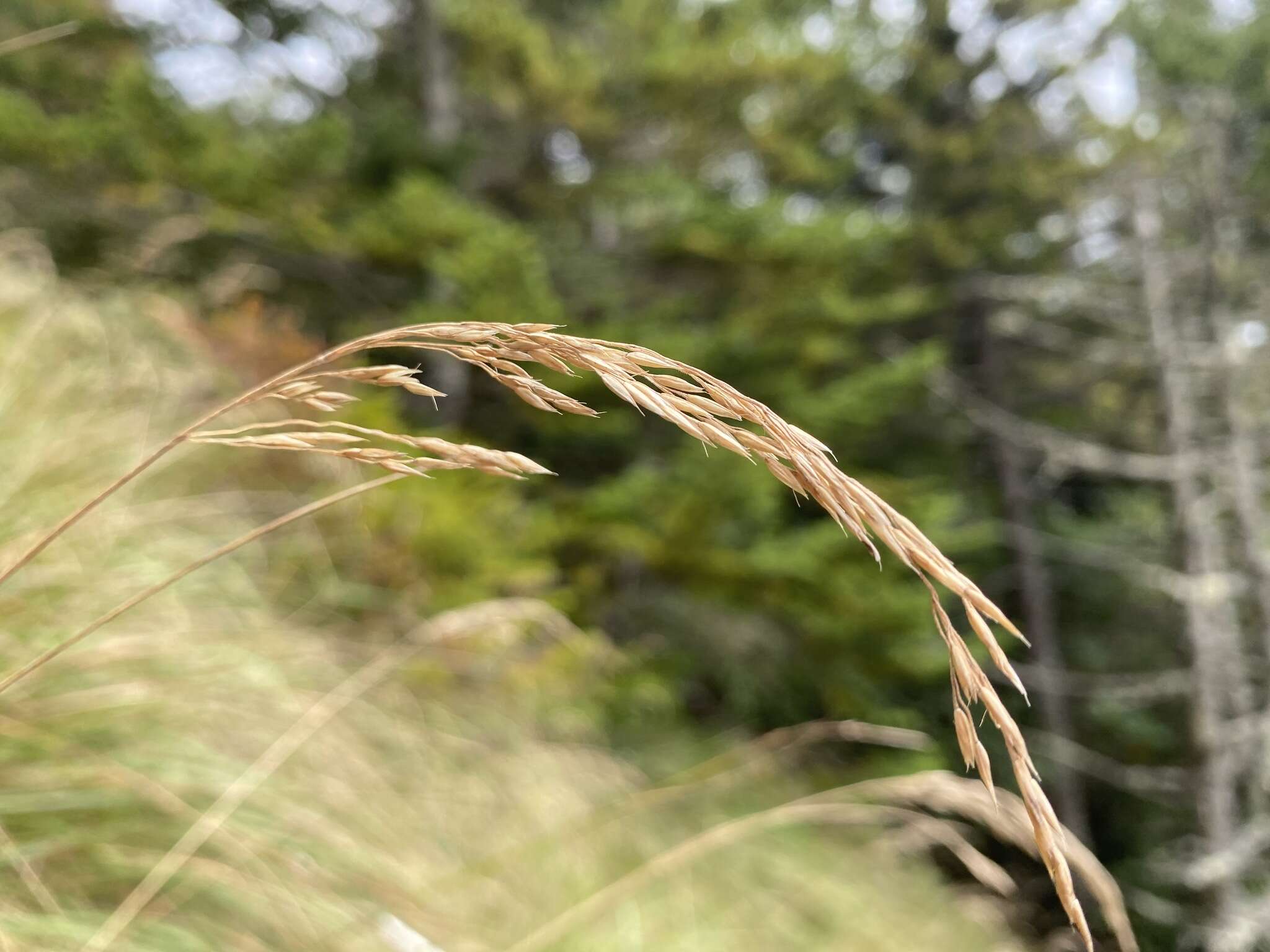
Overview
Distribution
-
Soreng, R. J., G. Davidse, P. M. Peterson, F. O. Zuloaga, E. J. Judziewicz, T. S. Filgueiras & O. Morrone. 2003 and onwards. On-line taxonomic novelties and updates, distributional additions and corrections, and editorial changes since the four published volumes of the Catalogue of New World Grasses (Poaceae) published in Contr. U.S. Natl. Herb. vols. 39, 41, 46, and 48. http://www.tropicos.org/Project/CNWG:. In R. J. Soreng, G. Davidse, P. M. Peterson, F. O. Zuloaga, T. S. Filgueiras, E. J. Judziewicz & O. Morrone Internet Cat. New World Grasses. Missouri Botanical Garden, St. Louis.
http://www.tropicos.org/Reference/1024044
-
Soreng, R. J. & C. W. Greene. 2003. Calamagrostis. In Catalogue of New World Grasses (Poaceae): IV. Subfamily Pooideae. Contr. U.S. Natl. Herb. 48: 191–227.
http://www.tropicos.org/Reference/1003622
Trusted
National Distribution
United States
Origin: Native
Regularity: Regularly occurring
Currently: Present
Confidence: Confident
Type of Residency: Year-round
Trusted
Global Range: Known from Mount LeConte, Tennessee. Discovered on Craggy Pinnacle, North Carolina in 1989 and Mount Craig, North Carolina in 1990 (Wiser 1991).
Trusted
Physical Description
Morphology
Physical Description
Trusted
Type Information
Collection: Smithsonian Institution, National Museum of Natural History, Department of Botany
Verification Degree: Card file verified by examination of alleged type specimen
Preparation: Pressed specimen
Collector(s): S. Cain
Year Collected: 1929
Locality: Heath Bald, top of Mt. Leconte, Smokey Mts., Sevier, Tennessee, United States, North America
Elevation (m): 1981 to 1981
- Holotype: Hitchcock, A. S. 1934. J. Wash. Acad. Sci. 24: 480.
Trusted
Ecology
Habitat
Comments: High elevation open areas such as rocky summits and disturbed areas where landslides have occurred. 4000 to 6500 feet.
Trusted
Population Biology
Number of Occurrences
Note: For many non-migratory species, occurrences are roughly equivalent to populations.
Estimated Number of Occurrences: 1 - 5
Comments: Two populations in Tennessee and two populations in North Carolina (Godt et al. 1996).
Trusted
Conservation
Conservation Status
National NatureServe Conservation Status
United States
Rounded National Status Rank: N1 - Critically Imperiled
Trusted
NatureServe Conservation Status
Rounded Global Status Rank: G1 - Critically Imperiled
Reasons: Endemic to the southern Appalachians and known from only three mountains near the Tennessee-North Carolina border. Trampling is a threat.
Trusted
Threats
Comments: The extremely limited distribution of this species makes it especially vulnerable to human disturbance such as trampling (Southern Appalachian Species Viability Project 2002). Some of the areas where Calamagrostis cainii occurs have a high mortality of fraser fir and disturbance/erosion where old stumps washed away; it is unclear if this is beneficial or detrimental to Calamagrostis cainii.
Trusted
Relevance to Humans and Ecosystems
Risks
Stewardship Overview: Prevent trampling by routing trails away from plants and educating recreational users. Investigate the impact fraser fir mortality has on this species and if there are steps that can be taken to reduce negative effects.
Trusted
Disclaimer
EOL content is automatically assembled from many different content providers. As a result, from time to time you may find pages on EOL that are confusing.
To request an improvement, please leave a comment on the page. Thank you!