Brief Summary
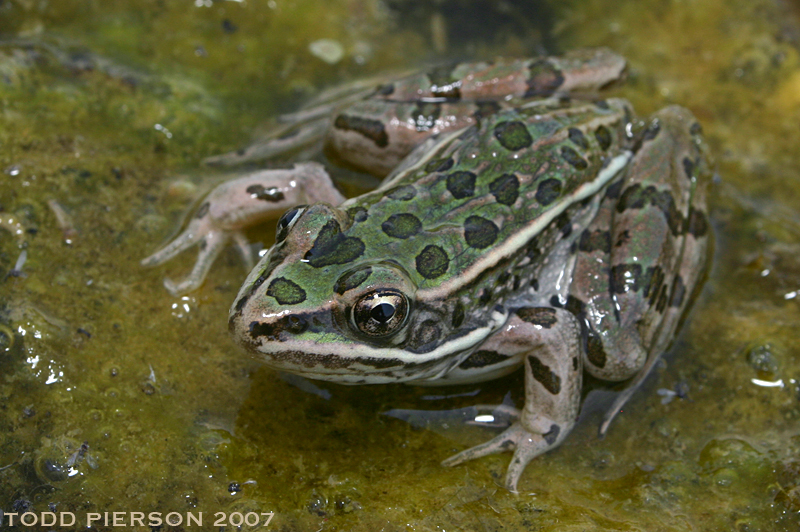
Read full entryColor variations include the Burnsi variant, which may be found in either brown or green and does not have any dorsal spots. It has spots or bars on the limbs and may have black stippling on the back and sides. The second variant Kandiyohi, is brown with dashes of white and brown or black. The spots on the back and legs are still discernable, as well as the dorsolateral fold (LeClere).
Found in a variety of habitats, most cold-adapted of all leopard frogs. May forage far from water, when frightened seeks water in a zigzag pattern of jumps. Like most frogs, leopard frogs are sluggish animals, often staying immobile for long periods of time. Sometimes the males call while underwater. They produce a low-pitched snore often followed by a chuckling noise, or a deep urr, urr, urr. They have internal vocal sacs, so their throats do not appear to move when they call. When they move far from a body of water they may absorb dew to keep moist. Hibernates in deep water. Juvenile leopard frogs often cluster together.
Consumes small invertebrates; rarely eats small vertebrates. Larvae eat algae, plant tissue, organic debris, and probably small invertebrates (TNC 1988).
Trusted